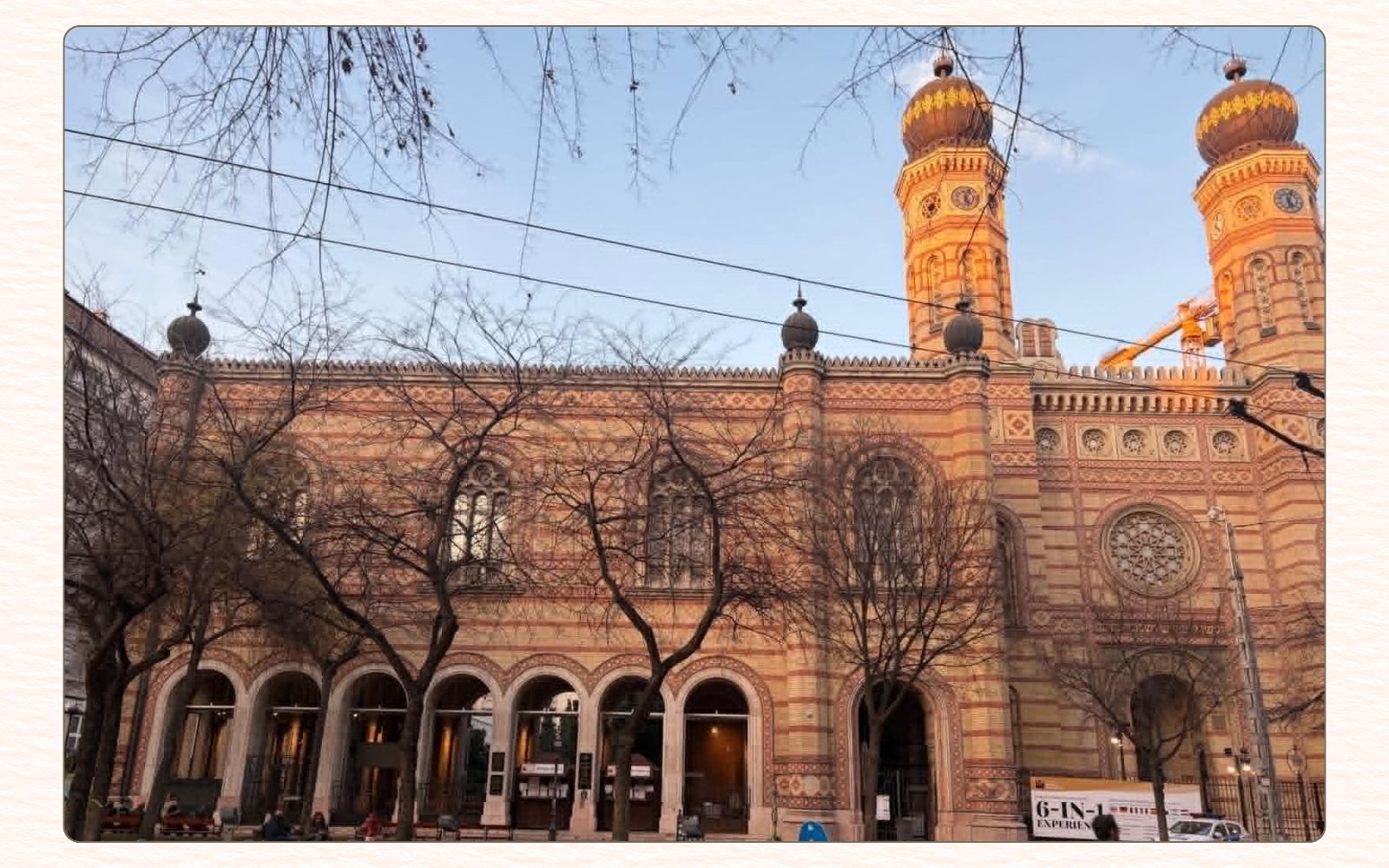
A thoughtful walk through Jewish heritage, living neighbourhood culture, cafés and the changing atmosphere of District VII.
Jewish Quarter Budapest is not a single attraction, and it is not a nightlife district with a historical background added to it.
It is a living part of central Pest where religious heritage, family histories, memorial sites, apartment buildings, cafés, restaurants and late-night streets continue to occupy the same small area.
The change in atmosphere can be striking.
In the morning, you may stand quietly inside a synagogue or beside an important memorial. A few hours later, nearby courtyards fill with restaurant guests. By evening, music and conversation move through streets that still carry signs of a much older city.
A thoughtful Budapest Jewish Quarter guide must make space for all of these layers without confusing them.
The ruin bars are not the whole neighbourhood.
The Holocaust is not a tourist atmosphere.
Modern Mediterranean restaurants are not automatically traditional Hungarian Jewish cuisine.
And the historical Jewish Quarter does not perfectly match every boundary of modern District VII Budapest.
Begin with the history.
Leave space for the living neighbourhood.
Let the evening become a separate chapter.
Quick answer: what should you know before visiting Budapest’s Jewish Quarter?
Budapest’s historic Jewish Quarter lies mainly in the inner part of District VII, around the Dohány Street, Rumbach Street and Kazinczy Street synagogues.
The area is simultaneously:
- a centre of Jewish religious and cultural heritage;
- a place of Holocaust memory;
- a residential neighbourhood;
- a restaurant and café district;
- one of Budapest’s busiest nightlife areas.
Allow at least half a day for a synagogue visit and neighbourhood walk. Dress respectfully at religious sites, check closures for Saturdays and Jewish holidays, and do not move directly from a memorial visit into nightlife without giving yourself time to process the change in tone.
Jewish Quarter Budapest at a glance
| What you want to experience | Where to begin | Time to allow |
|---|---|---|
| Historical introduction | Dohány Street Synagogue area | 1.5–3 hours |
| Synagogues and religious heritage | Dohány, Rumbach and Kazinczy streets | At least half a day |
| Cafés and a slower walk | Side streets, Klauzál tér and nearby courtyards | 1–2 hours |
| Jewish–Hungarian food culture | A carefully chosen restaurant or food walk | 1.5–3 hours |
| Contemporary evening atmosphere | Kazinczy Street, Klauzál Street and Gozsdu | Flexible |
| Deeper historical understanding | Small-group heritage walk | 2–3 hours |
Do not try to move directly from a memorial site into nightlife without allowing the mood of the day to change.
Where is the Jewish Quarter in Budapest?
The term Jewish Quarter Budapest commonly refers to the inner part of District VII, also known as Erzsébetváros.
The central historical area is associated particularly with:
- Dohány utca;
- Rumbach Sebestyén utca;
- Kazinczy utca;
- Király utca;
- Klauzál tér;
- Wesselényi utca;
- Síp utca;
- the streets between Károly körút and Erzsébet körút.
The boundaries are not perfectly fixed.
The modern administrative district is larger than the core historical Jewish area, while Jewish institutions, restaurants and important sites also exist outside District VII.
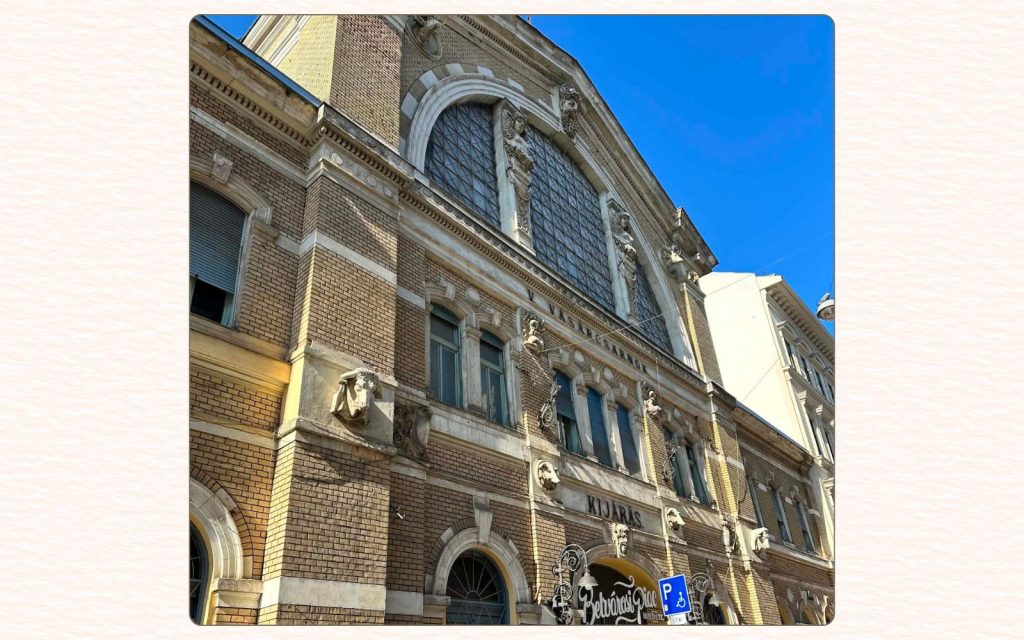
This matters because a visitor can easily make two inaccurate assumptions:
- that everything in the inner seventh district represents Jewish heritage;
- that Jewish life and Jewish food exist only inside the tourist-labelled quarter.
Neither is true.
The neighbourhood is best understood as an overlapping cultural and historical area rather than a sealed tourist zone.
Jewish Quarter Budapest history: a necessary beginning
Jewish communities became an important part of Pest’s commercial, cultural and intellectual life as the city expanded, particularly during the nineteenth century.
Synagogues, schools, businesses, charitable institutions and apartment buildings developed across the area now associated with the Jewish Quarter.
The three major synagogues often introduced to visitors—the Dohány Street, Rumbach Street and Kazinczy Street synagogues—also reflect different currents within Hungarian Jewish religious life.
During the Second World War, Hungarian Jews faced increasing legal exclusion, forced labour, deportation and mass murder. In late 1944, part of the neighbourhood was enclosed as the Pest ghetto.
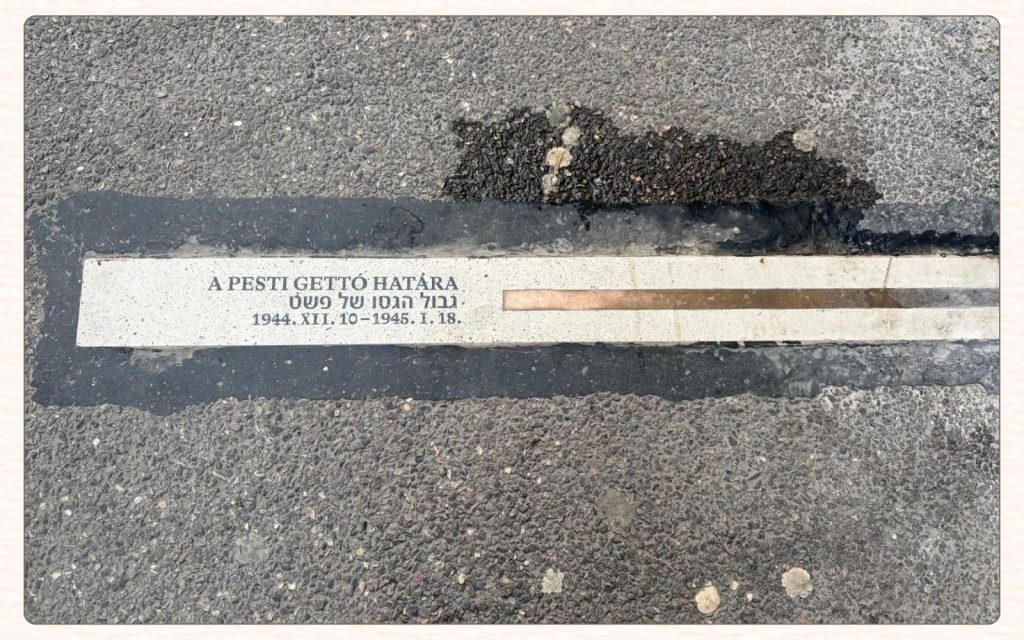
This history should not be condensed into a dramatic background paragraph before returning to restaurants and bars.
It affected real families, homes, religious communities and streets.
The neighbourhood’s post-war history is also complex. Religious life continued, buildings changed use, communities were reduced and transformed, and parts of the area later deteriorated before redevelopment and tourism brought new commercial activity.
Today, Jewish religious, cultural and educational life remains present in Budapest.
Visitors should therefore avoid describing the quarter only in the past tense.
It is a place of memory, but not only memory.
Begin in the Dohány Street Synagogue area
The Great Synagogue on Dohány Street is usually the main starting point for first-time visitors interested in Jewish heritage Budapest.
The visitor complex is associated with:
- the main synagogue;
- the Hungarian Jewish Museum;
- the cemetery;
- memorial spaces;
- the Raoul Wallenberg Memorial Park;
- the Emanuel Memorial Tree.
The exact visitor route and ticket inclusions may change, so check the official information rather than relying on an older travel article.
For 2026, the official visitor programme lists seasonally changing hours. The complex is closed on Saturdays, closes earlier on Fridays and may also close or modify access for Jewish holidays and special events. Entry closes before the site’s final closing time.
Tickets are available through the official Jewish Tour Hungary platform. Current ticket validity, inclusions and tour language options should be checked during booking.
Allow enough time
Do not treat the Dohány Street Synagogue area as a fifteen-minute façade stop.
Allow time for:
- security checks;
- ticket collection;
- the synagogue interior;
- the museum;
- memorial areas;
- reading;
- a guided component, if included;
- quiet reflection afterward.
For many visitors, this is the emotional and historical centre of the day.
Avoid placing a fixed lunch reservation immediately after the estimated minimum visit time.
A personal note from Leja
I have not yet visited the Dohány Street Synagogue—or the other major synagogues in the quarter.
They remain on my Budapest bucket list.
That is important for me to say clearly.
I know the surrounding streets, restaurants and evening atmosphere from personal experience, but I will not write as though I have stood inside religious and memorial spaces that I have not yet entered.
When I do visit, I want to give them enough time rather than adding them quickly to a busy sightseeing day.
Rumbach Street Synagogue: architecture, restoration and cultural use
Rumbach Street Synagogue offers a different scale and atmosphere from the Great Synagogue.
The building was designed by Otto Wagner and opened in the nineteenth century. Its official history also records that Hungarian authorities used the building as an internment site in 1941 and that it later became part of the Pest ghetto in 1944. Religious life ceased there by the end of the 1950s.
The restored building now has religious, exhibition and cultural functions.
This combination requires careful language.
It is architecturally striking, but it is not only an architectural object.
It is also connected to community history, persecution, loss and restoration.
Current public access can vary according to season and events. The published 2026 schedule includes seasonal changes and Saturday closure, with some winter restrictions.
Choose Rumbach when:
- architecture is a central interest;
- you want a smaller synagogue experience;
- the cultural programme fits your date;
- you prefer to see fewer sites with more attention.
Do not assume that every part of the building is accessible whenever the door is open.
Kazinczy Street and Orthodox Jewish heritage
The Kazinczy Street Synagogue is an important centre of Orthodox Jewish life and an Art Nouveau architectural landmark.
This is not merely a decorative stop between cafés and ruin bars.
It is connected to a functioning religious community and should be approached accordingly.
Current visitor information commonly lists Saturday closure, with shorter Friday access and longer hours from Sunday to Thursday, but schedules vary and should be confirmed before visiting.
Remember the difference between visiting and observing
A visitor may be welcome to enter during designated times.
That does not make every religious activity a tourist event.
Be particularly attentive to:
- prayer;
- religious holidays;
- Shabbat;
- clothing guidance;
- photography restrictions;
- instructions from staff;
- areas that are not part of the visitor route.
How to visit Budapest synagogues respectfully
Respectful behaviour is not complicated.
It begins with remembering that you are entering a religious, historical and sometimes memorial space.
Before visiting
Check:
- current opening hours;
- Saturday and holiday closure;
- ticket requirements;
- security procedures;
- dress guidance;
- photography rules;
- whether a service or special event affects access.
Inside
- Keep your phone silent.
- Follow staff instructions.
- Do not photograph people at prayer without permission.
- Avoid loud conversation.
- Do not move ritual or memorial objects.
- Do not pose playfully at memorial sites.
- Wear clothing appropriate to the venue’s current rules.
- Accept any required head covering respectfully.
- Give other visitors room to reflect.
The aim is not to make tourists anxious.
It is to help visitors recognise where they are.
Jewish heritage Budapest beyond the three main synagogues
The three synagogues provide an understandable visitor route, but Jewish heritage Budapest extends beyond them.
Across the city, Jewish history may be connected to:
- schools;
- former communal institutions;
- residential buildings;
- businesses;
- cemeteries;
- museums;
- memorial plaques;
- religious communities;
- restaurants and bakeries;
- family histories that are not marked on buildings.
Not every important place has a large sign.
At the same time, visitors should be cautious about online lists of “hidden Jewish secrets.”
Some locations may be private residential spaces, functioning religious institutions or places whose history has been simplified for tourism.
A knowledgeable, culturally responsible guide can add value here by explaining what remains visible, what has disappeared and what should not be entered casually.
Cafés in the Jewish Quarter: pause without losing the context
The many cafés in the Jewish Quarter make it easy to pause between cultural visits.
That pause can be useful.
A synagogue or memorial visit may leave you with thoughts that should not be hurried away.
Choose a café according to what you need:
- quiet conversation;
- coffee and notes;
- a simple breakfast;
- a light lunch;
- specialty coffee;
- cake;
- time before the evening.
Not every modern café in District VII should be described as part of Jewish culinary heritage.
Many are simply contemporary Budapest businesses operating in the neighbourhood.
That is not a criticism.
It is a distinction.
Choose by route rather than fame
A good café may be the one closest to:
- Dohány Street;
- Rumbach Street;
- Klauzál tér;
- Kazinczy Street;
- your hotel;
- the place where you need to sit quietly.
Do not interrupt a thoughtful neighbourhood walk with a long journey to a café on the other side of Budapest.
For a citywide comparison, read Best Budapest Cafés for a Slow Morning.
Food in the Jewish Quarter: heritage, adaptation and modern interpretation
Jewish food in Budapest cannot be represented by one restaurant or one menu.
Possible cultural references include:
- sólet;
- goose dishes;
- matzo-ball soup;
- flódni;
- dishes shaped by kosher practice;
- Hungarian ingredients and techniques;
- Central European family traditions;
- modern Israeli or Middle Eastern food.
These categories overlap, but they are not identical.
A contemporary Mediterranean restaurant is not automatically a traditional Hungarian Jewish restaurant.
A Jewish-owned or Jewish-themed venue is not necessarily kosher.
A restaurant serving sólet may also offer general Hungarian dishes.
Always read the restaurant’s own description and menu carefully.
Fülemüle: Jewish–Hungarian food outside the tourist quarter
Some of the most memorable Jewish–Hungarian restaurant experiences are found outside the streets most visitors label the Jewish Quarter.
Fülemüle is a good example.
The restaurant’s available English menu includes dishes such as golden goose soup with matzo ball, while its public restaurant profile highlights sólet and house-smoked meat.
A note from Leja
Fülemüle is outside the main tourist route of the Jewish Quarter, but it is one of the places I associate most strongly with Jewish–Hungarian food in Budapest.
Their sólet is wonderful.
I especially love it with smoked goose.
The combination is rich, comforting and deeply satisfying. This is not a meal I would place between several other programmes. It deserves time, and I would keep the rest of the afternoon or evening light.
The restaurant also reminds me of something visitors can easily miss: many genuinely Jewish restaurants, bakeries and food traditions are not located inside the small area marketed as the Jewish Quarter.
The neighbourhood is an important starting point.
It is not the full map.
Leja planning note
Choose Fülemüle when the meal itself is a priority.
Check the current menu, opening hours and reservation conditions before making a special journey, particularly because restaurant schedules and individual dishes may change.
Akácfa Étkezde: traditional Hungarian food in District VII
Akácfa Étkezde is not specifically a Jewish restaurant.
It is a traditional Hungarian lunch-style restaurant in District VII, known for home-style dishes and a daily menu.
Current listings place it at Akácfa utca 59 and indicate weekday lunchtime operation, generally from late morning until the afternoon, with weekend closure. Current menu aggregators continue to show Hungarian dishes and daily-menu pricing, but both opening times and prices should be checked close to the visit.
A note from Leja
Akácfa Étkezde is one of the places I like for traditional Hungarian food without ceremony.
The portions are large, the prices are friendly and there is usually a daily menu.
Their rántott velő—breaded fried brain—is especially good.
It is the kind of dish I enjoy eating in Budapest but do not prepare at home.
This is not an elegant evening restaurant or a heritage attraction.
It is a practical, generous lunch stop, and that is exactly its value.
Because the portions are substantial, I would not plan a thermal bath or steep walk immediately afterward.
Mazel Tov: a contemporary District VII evening
Mazel Tov is a modern restaurant and cultural meeting place in Akácfa Street.
Its official site currently lists a Mediterranean menu, online reservations and opening from noon until late evening, with later closing from Friday to Sunday.
It also makes clear that the venue is not a kosher restaurant.
This distinction matters.
Mazel Tov can be a beautiful part of a modern evening in the Jewish Quarter, but it should not be presented as a complete representation of traditional Jewish–Hungarian cuisine.
Choose Mazel Tov when:
- you want a visually distinctive courtyard;
- Mediterranean food suits you;
- you are planning a modern evening rather than a heritage meal;
- you prefer to reserve a table;
- District VII is already part of the day.
It belongs to the neighbourhood’s contemporary restaurant life.
It is not a substitute for historical understanding.
Gozsdu Udvar: lively, central and often crowded
Gozsdu Udvar connects Király utca and Dob utca through a series of interconnected courtyards.
The official site lists the complex between Király utca 13 and Dob utca 16 and presents it as a dining, nightlife and event area.
Its history is older than its current restaurant identity, and the complex was created through the Gozsdu foundation connected with Manó Gozsdu.
Today, many visitors encounter it mainly as a busy social and hospitality passage.
What to expect
- restaurants;
- bars;
- terraces;
- crowds;
- music;
- different venues sharing one passage;
- long waits during popular periods.
A note from Leja
Gozsdu Udvar can be enjoyable when I want an energetic evening.
But I would always expect the possibility of a long wait, particularly during busy hours.
It is not a place I would combine with several fixed reservations.
The courtyards already contain enough options, noise and movement for one part of the evening.
Go when you want the atmosphere.
Do not go because you believe every visitor must experience it.
Ruin bars are one chapter, not the whole neighbourhood
Ruin bars developed from the reuse of older and often neglected urban spaces.
They became closely associated with District VII and Budapest nightlife.
For visitors, they may offer:
- music;
- dancing;
- drinks;
- courtyards;
- visual experimentation;
- games;
- social spaces;
- events.
They also exist inside a residential neighbourhood.
That means noise, crowding and late-night behaviour affect people who live nearby.
A responsible visit includes:
- keeping voices lower in residential streets;
- not blocking entrances;
- avoiding public drunkenness;
- disposing of rubbish properly;
- choosing one or two venues rather than treating the district as an alcohol challenge.
The phrase “ruin bar” does not automatically describe a place of historical Jewish heritage.
It belongs primarily to the modern nightlife story of the district.
Füge Udvar: billiards and ping-pong instead of only dancing
Füge Udvar is on Klauzál utca and combines the ruin-pub atmosphere with games.
Its official site currently allows visitors to reserve both tables and activities, including billiards and table tennis. It lists the venue at Klauzál utca 19–21.
The venue also advertises billiards, ping-pong, darts and arcade-style games as part of its current offer.
A note from Leja
When I visited Füge Udvar with friends, we did not go mainly to drink or dance.
We played billiards and ping-pong.
We reserved in advance, which was useful because the games were the purpose of the evening rather than something we hoped might be available.
I especially liked the cellar area.
It was thoughtfully designed and gave the evening a different atmosphere from a standard bar visit.
This experience changed how I think about ruin bars.
They are often described only through parties, alcohol and dancing, but some can also be places for games, conversation and spending time with friends.
Leja planning note
Reserve when a particular game or table matters.
Do not assume that arriving at a busy time guarantees immediate access.
Check the current rules, prices and reservation conditions directly with the venue.
An evening in the Jewish Quarter without making it a checklist
A good evening in the Jewish Quarter does not need five bars and three restaurant stops.
Choose one clear centre for the evening.
A quieter version
- dinner;
- a walk through the surrounding streets;
- dessert or tea;
- one calm bar;
- return to the accommodation.
A lively version
- a reserved table at Mazel Tov;
- Gozsdu Udvar;
- one ruin bar;
- billiards or ping-pong at Füge Udvar;
- a late walk back.
Do not combine every option.
The district becomes exhausting when the evening is treated as a venue-collection exercise.
District VII Budapest by day and by night
District VII Budapest changes noticeably through the day.
During the morning and afternoon
You are more likely to notice:
- synagogues;
- memorials;
- apartment buildings;
- small businesses;
- cafés;
- local errands;
- market activity;
- architectural details;
- quieter courtyards.
After dark
The focus shifts toward:
- restaurants;
- bars;
- music;
- queues;
- terraces;
- groups moving between venues;
- louder main streets.
This does not mean the whole district is always loud.
Individual streets and building positions matter greatly.
Travellers choosing accommodation in District VII should check:
- the exact street;
- room orientation;
- proximity to courtyards;
- guest comments about night noise;
- windows and sound insulation.
For the wider accommodation decision, read Where to Stay in Budapest: 7 Best Areas for First-Time Visitors.
How much time do you need in Budapest’s Jewish Quarter?
Two to three hours
Enough for:
- an introductory walk;
- one main synagogue area;
- coffee;
- a small number of streets.
This is only a first impression.
Half a day
Enough for:
- one substantial synagogue or museum visit;
- Rumbach or Kazinczy Street;
- coffee or lunch;
- a slower walk;
- time to read and reflect.
This is the minimum I would recommend for a culturally focused first visit.
A full day
A full day can include:
- historical and religious visits;
- lunch;
- a café;
- rest;
- a separate evening meal or social venue.
The rest between day and evening is useful.
It allows the emotional tone to change without forcing two very different experiences into one continuous tourist route.
A calm half-day Budapest Jewish Quarter guide
Morning route
- Begin in the Dohány Street Synagogue area.
- Visit the synagogue complex or museum.
- Continue toward Rumbach Street.
- Pause for coffee.
- Walk toward Kazinczy Street.
- End near Klauzál tér with lunch.
This route is geographically compact but culturally dense.
Do not add Parliament or Castle Hill to the same half-day.
Full-day route
Morning
- Dohány Street;
- museum or guided visit;
- Rumbach Street.
Lunch
Choose:
- a simple nearby meal;
- Akácfa Étkezde on a suitable weekday;
- another restaurant that fits your cultural and dietary priorities.
Afternoon
- Kazinczy Street;
- Klauzál tér;
- café;
- return to the accommodation.
Evening
Choose one:
- Mazel Tov;
- Gozsdu Udvar;
- Füge Udvar;
- one ruin bar;
- dinner outside the quarter, including Fülemüle when Jewish–Hungarian food is the priority.
What should you book in advance?
Consider advance booking for:
- the Dohány Street Synagogue visitor programme;
- a responsible Jewish heritage tour;
- a specific cultural event;
- Mazel Tov;
- Füge Udvar games;
- a special restaurant;
- a larger group.
Keep flexible:
- a café;
- Klauzál tér;
- side streets;
- Gozsdu passage walk-through;
- an ordinary lunch;
- one unplanned evening stop.
Choosing a Jewish heritage tour
A guide can be valuable when the tour:
- uses reliable historical sources;
- distinguishes the different Jewish communities and religious traditions;
- treats Holocaust history respectfully;
- recognises contemporary Jewish life;
- avoids sensational language;
- does not trespass into private or functioning community spaces;
- keeps the group small enough for thoughtful discussion.
Do not choose a tour because it promises “dark secrets” or a dramatic ghetto experience.
Frequently asked questions
Where is the Jewish Quarter in Budapest?
It lies mainly in the inner part of District VII, around Dohány Street, Rumbach Street, Kazinczy Street, Király Street and Klauzál tér.
The historical and administrative boundaries do not match perfectly.
How much time do you need in Budapest’s Jewish Quarter?
Allow at least half a day for a synagogue visit, cultural context, coffee and a neighbourhood walk.
A full day works well when you also want dinner or an evening venue.
Is Budapest’s Jewish Quarter only about ruin bars?
No.
It is a centre of Jewish religious heritage, Holocaust memory, residential life, food, cafés and contemporary nightlife.
Ruin bars are only one modern layer.
Which synagogues should first-time visitors consider?
The Dohány Street Synagogue offers the most extensive visitor complex.
Rumbach Street is important for architecture, history and restoration.
Kazinczy Street is connected to Orthodox Jewish heritage and a functioning religious community.
Current access must be checked individually.
Do I need tickets for the Dohány Street Synagogue?
Visitor access is generally ticketed.
Purchase and current inclusions should be checked through the official visitor platform.
Is the Dohány Street Synagogue open on Saturdays?
The official visitor programme is closed on Saturdays and may also change for Jewish holidays. Friday hours are shorter.
What should I wear to a synagogue in Budapest?
Wear respectful clothing and follow the current instructions of each site.
Shoulders and knees should generally be appropriately covered, and visitors may be asked to wear a head covering or follow other religious-site rules.
Is it respectful to visit the Jewish Quarter as a tourist?
Yes.
Respectful visits support cultural understanding when travellers follow religious rules, treat memorials seriously and avoid reducing the neighbourhood to trauma or nightlife.
Is Mazel Tov traditional Jewish food?
Not exactly.
It is a contemporary Mediterranean restaurant and cultural venue. Its own public information states that it is not kosher.
Is Fülemüle inside the Jewish Quarter?
It is outside the core tourist route commonly presented as the Jewish Quarter.
That is precisely why it is a useful reminder that Jewish–Hungarian food and community history extend beyond District VII.
What should I try at Fülemüle?
Sólet and goose dishes are among the restaurant’s best-known food directions, but the current menu should always be checked directly.
Is Akácfa Étkezde a Jewish restaurant?
No.
It is a traditional Hungarian étkezde in District VII, suited to a generous weekday lunch rather than a Jewish heritage meal.
Is Gozsdu Udvar worth visiting?
It may suit travellers who want a busy central courtyard with multiple restaurant and bar options.
Expect crowds and possible waiting during popular periods.
Can you do more than drink at Budapest ruin bars?
Yes.
Füge Udvar currently offers reservable games such as billiards and table tennis in addition to its pub and nightlife spaces.
Are ruin bars part of Jewish heritage?
Not directly.
They belong mainly to the district’s modern urban and nightlife development, although they occupy buildings and streets within the wider historical neighbourhood.
Should I book a guided Jewish heritage tour?
It can be worthwhile when you want deeper historical context.
Choose a guide who is culturally sensitive, historically responsible and clear about the places included.
Final thoughts
Budapest’s Jewish Quarter cannot be reduced to one mood.
It contains sacred spaces and crowded courtyards.
It contains memories of persecution and signs of living community life.
It contains traditional food, modern Mediterranean restaurants, practical Hungarian lunch places and ruin bars where friends play ping-pong in a carefully designed cellar.
I have not yet entered the three major synagogues.
They remain on my list, and I hope to visit them with enough time to listen and learn.
My personal memories belong mainly to the food and evening layers: sólet and smoked goose at Fülemüle, a generous Hungarian lunch at Akácfa Étkezde, and billiards with friends at Füge Udvar.
These experiences do not make me an authority on the neighbourhood’s religious history.
They make me more aware of how many different lives one part of Budapest can contain.
Begin with the history.
Respect the religious spaces.
Eat with curiosity.
Notice what belongs to heritage and what belongs to the present-day entertainment district.
Allow the tone of the day to change.
Budapest’s Jewish Quarter asks for more than attention to buildings.
It asks us to notice how memory, faith, ordinary life and the present city continue to share the same streets.
Travel. Taste. Feel.
That is the Leja way.
Your next step: choose how deeply you want to explore
For Hungarian dishes and Jewish–Hungarian food context, continue with Budapest Food Guide: What to Eat and Where to Begin.
For café planning, read Best Budapest Cafés for a Slow Morning.
For a calmer city structure, continue with:
- Things to Do in Budapest Without Overbooking Yourself
- How to Plan a Budapest Trip Without Overbooking Yourself
- First Time in Budapest: A Calm 3-Day Itinerary
Compare official synagogue tickets and culturally responsible small-group Jewish heritage walks.