Author: Edith at Leja Travel Notes

  • Jewish Quarter Budapest: History, Cafés and Evening Streets

    Jewish Quarter Budapest: History, Cafés and Evening Streets

    A thoughtful walk through Jewish heritage, living neighbourhood culture, cafés and the changing atmosphere of District VII.

    Jewish Quarter Budapest is not a single attraction, and it is not a nightlife district with a historical background added to it.

    It is a living part of central Pest where religious heritage, family histories, memorial sites, apartment buildings, cafés, restaurants and late-night streets continue to occupy the same small area.

    The change in atmosphere can be striking.

    In the morning, you may stand quietly inside a synagogue or beside an important memorial. A few hours later, nearby courtyards fill with restaurant guests. By evening, music and conversation move through streets that still carry signs of a much older city.

    A thoughtful Budapest Jewish Quarter guide must make space for all of these layers without confusing them.

    The ruin bars are not the whole neighbourhood.

    The Holocaust is not a tourist atmosphere.

    Modern Mediterranean restaurants are not automatically traditional Hungarian Jewish cuisine.

    And the historical Jewish Quarter does not perfectly match every boundary of modern District VII Budapest.

    Begin with the history.

    Leave space for the living neighbourhood.

    Let the evening become a separate chapter.

    Quick answer: what should you know before visiting Budapest’s Jewish Quarter?

    Budapest’s historic Jewish Quarter lies mainly in the inner part of District VII, around the Dohány Street, Rumbach Street and Kazinczy Street synagogues.

    The area is simultaneously:

    • a centre of Jewish religious and cultural heritage;
    • a place of Holocaust memory;
    • a residential neighbourhood;
    • a restaurant and café district;
    • one of Budapest’s busiest nightlife areas.

    Allow at least half a day for a synagogue visit and neighbourhood walk. Dress respectfully at religious sites, check closures for Saturdays and Jewish holidays, and do not move directly from a memorial visit into nightlife without giving yourself time to process the change in tone.

    Jewish Quarter Budapest at a glance

    What you want to experienceWhere to beginTime to allow
    Historical introductionDohány Street Synagogue area1.5–3 hours
    Synagogues and religious heritageDohány, Rumbach and Kazinczy streetsAt least half a day
    Cafés and a slower walkSide streets, Klauzál tér and nearby courtyards1–2 hours
    Jewish–Hungarian food cultureA carefully chosen restaurant or food walk1.5–3 hours
    Contemporary evening atmosphereKazinczy Street, Klauzál Street and GozsduFlexible
    Deeper historical understandingSmall-group heritage walk2–3 hours

    Do not try to move directly from a memorial site into nightlife without allowing the mood of the day to change.

    Where is the Jewish Quarter in Budapest?

    The term Jewish Quarter Budapest commonly refers to the inner part of District VII, also known as Erzsébetváros.

    The central historical area is associated particularly with:

    • Dohány utca;
    • Rumbach Sebestyén utca;
    • Kazinczy utca;
    • Király utca;
    • Klauzál tér;
    • Wesselényi utca;
    • Síp utca;
    • the streets between Károly körút and Erzsébet körút.

    The boundaries are not perfectly fixed.

    The modern administrative district is larger than the core historical Jewish area, while Jewish institutions, restaurants and important sites also exist outside District VII.
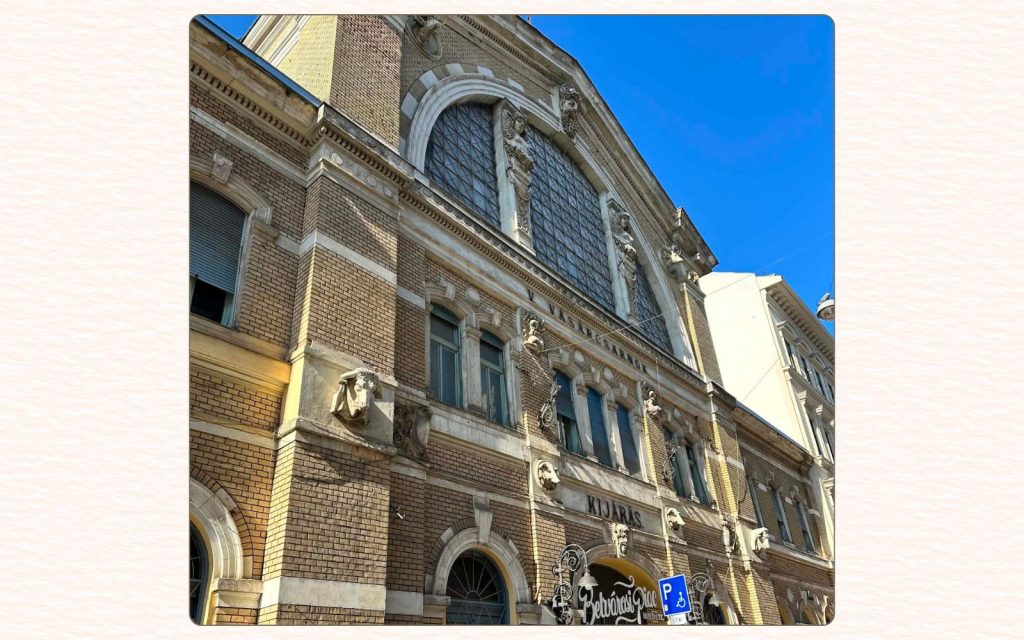
    Exterior of Klauzál Market Hall in Budapest’s Jewish Quarter
    Klauzál Market Hall shows the everyday side of Budapest’s Jewish Quarter beyond its major historical landmarks.

    This matters because a visitor can easily make two inaccurate assumptions:

    1. that everything in the inner seventh district represents Jewish heritage;
    2. that Jewish life and Jewish food exist only inside the tourist-labelled quarter.

    Neither is true.

    The neighbourhood is best understood as an overlapping cultural and historical area rather than a sealed tourist zone.

    Jewish Quarter Budapest history: a necessary beginning

    Jewish communities became an important part of Pest’s commercial, cultural and intellectual life as the city expanded, particularly during the nineteenth century.

    Synagogues, schools, businesses, charitable institutions and apartment buildings developed across the area now associated with the Jewish Quarter.

    The three major synagogues often introduced to visitors—the Dohány Street, Rumbach Street and Kazinczy Street synagogues—also reflect different currents within Hungarian Jewish religious life.

    During the Second World War, Hungarian Jews faced increasing legal exclusion, forced labour, deportation and mass murder. In late 1944, part of the neighbourhood was enclosed as the Pest ghetto.
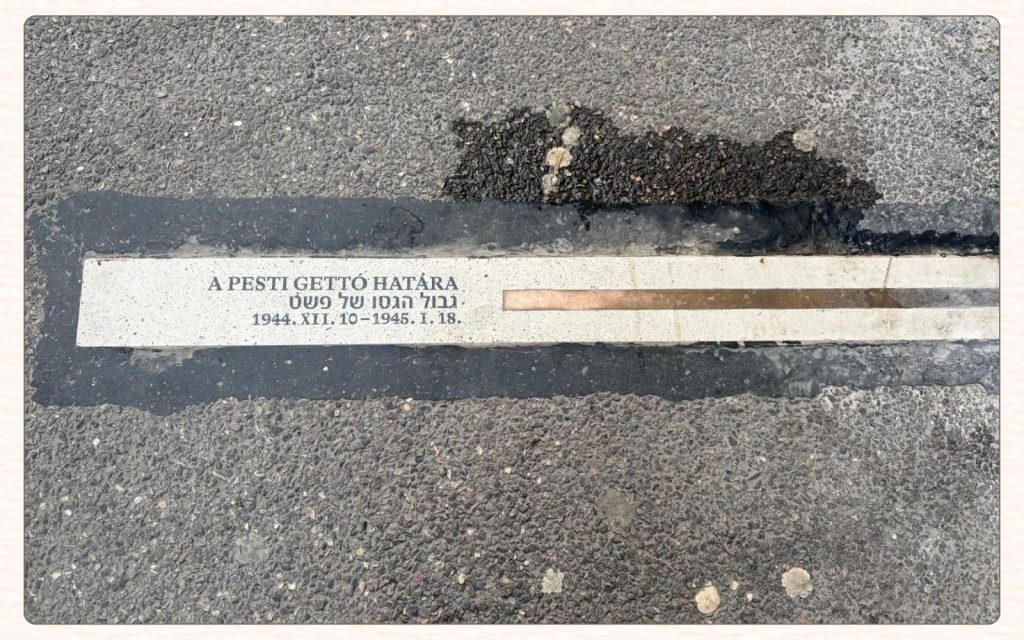
    Former Pest ghetto boundary memorial plaque in the Jewish Quarter of Budapest
    Small memorials throughout District VII preserve layers of history in the everyday streetscape.

    This history should not be condensed into a dramatic background paragraph before returning to restaurants and bars.

    It affected real families, homes, religious communities and streets.

    The neighbourhood’s post-war history is also complex. Religious life continued, buildings changed use, communities were reduced and transformed, and parts of the area later deteriorated before redevelopment and tourism brought new commercial activity.

    Today, Jewish religious, cultural and educational life remains present in Budapest.

    Visitors should therefore avoid describing the quarter only in the past tense.

    It is a place of memory, but not only memory.

    Begin in the Dohány Street Synagogue area

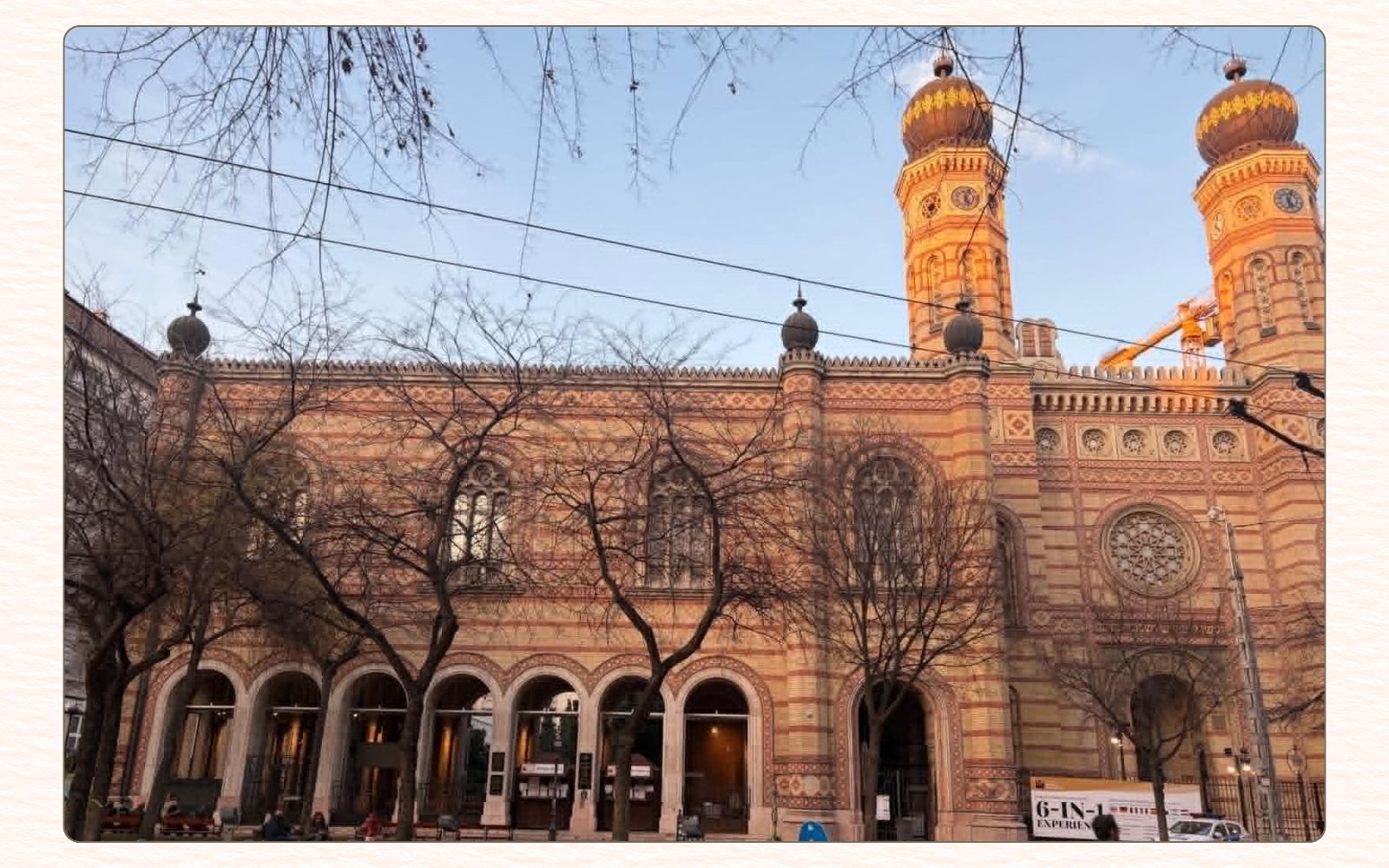
    The Great Synagogue on Dohány Street is usually the main starting point for first-time visitors interested in Jewish heritage Budapest.

    The visitor complex is associated with:

    • the main synagogue;
    • the Hungarian Jewish Museum;
    • the cemetery;
    • memorial spaces;
    • the Raoul Wallenberg Memorial Park;
    • the Emanuel Memorial Tree.

    The exact visitor route and ticket inclusions may change, so check the official information rather than relying on an older travel article.

    For 2026, the official visitor programme lists seasonally changing hours. The complex is closed on Saturdays, closes earlier on Fridays and may also close or modify access for Jewish holidays and special events. Entry closes before the site’s final closing time.

    Tickets are available through the official Jewish Tour Hungary platform. Current ticket validity, inclusions and tour language options should be checked during booking.

    Allow enough time

    Do not treat the Dohány Street Synagogue area as a fifteen-minute façade stop.

    Allow time for:

    • security checks;
    • ticket collection;
    • the synagogue interior;
    • the museum;
    • memorial areas;
    • reading;
    • a guided component, if included;
    • quiet reflection afterward.

    For many visitors, this is the emotional and historical centre of the day.

    Avoid placing a fixed lunch reservation immediately after the estimated minimum visit time.

    A personal note from Leja

    I have not yet visited the Dohány Street Synagogue—or the other major synagogues in the quarter.

    They remain on my Budapest bucket list.

    That is important for me to say clearly.

    I know the surrounding streets, restaurants and evening atmosphere from personal experience, but I will not write as though I have stood inside religious and memorial spaces that I have not yet entered.

    When I do visit, I want to give them enough time rather than adding them quickly to a busy sightseeing day.

    Rumbach Street Synagogue: architecture, restoration and cultural use

    Rumbach Street Synagogue offers a different scale and atmosphere from the Great Synagogue.

    The building was designed by Otto Wagner and opened in the nineteenth century. Its official history also records that Hungarian authorities used the building as an internment site in 1941 and that it later became part of the Pest ghetto in 1944. Religious life ceased there by the end of the 1950s.

    The restored building now has religious, exhibition and cultural functions.

    This combination requires careful language.

    It is architecturally striking, but it is not only an architectural object.

    It is also connected to community history, persecution, loss and restoration.

    Current public access can vary according to season and events. The published 2026 schedule includes seasonal changes and Saturday closure, with some winter restrictions.

    Choose Rumbach when:

    • architecture is a central interest;
    • you want a smaller synagogue experience;
    • the cultural programme fits your date;
    • you prefer to see fewer sites with more attention.

    Do not assume that every part of the building is accessible whenever the door is open.

    Kazinczy Street and Orthodox Jewish heritage

    The Kazinczy Street Synagogue is an important centre of Orthodox Jewish life and an Art Nouveau architectural landmark.

    This is not merely a decorative stop between cafés and ruin bars.

    It is connected to a functioning religious community and should be approached accordingly.

    Current visitor information commonly lists Saturday closure, with shorter Friday access and longer hours from Sunday to Thursday, but schedules vary and should be confirmed before visiting.

    Remember the difference between visiting and observing

    A visitor may be welcome to enter during designated times.

    That does not make every religious activity a tourist event.

    Be particularly attentive to:

    • prayer;
    • religious holidays;
    • Shabbat;
    • clothing guidance;
    • photography restrictions;
    • instructions from staff;
    • areas that are not part of the visitor route.

    How to visit Budapest synagogues respectfully

    Respectful behaviour is not complicated.

    It begins with remembering that you are entering a religious, historical and sometimes memorial space.

    Before visiting

    Check:

    • current opening hours;
    • Saturday and holiday closure;
    • ticket requirements;
    • security procedures;
    • dress guidance;
    • photography rules;
    • whether a service or special event affects access.

    Inside

    • Keep your phone silent.
    • Follow staff instructions.
    • Do not photograph people at prayer without permission.
    • Avoid loud conversation.
    • Do not move ritual or memorial objects.
    • Do not pose playfully at memorial sites.
    • Wear clothing appropriate to the venue’s current rules.
    • Accept any required head covering respectfully.
    • Give other visitors room to reflect.

    The aim is not to make tourists anxious.

    It is to help visitors recognise where they are.

    Jewish heritage Budapest beyond the three main synagogues

    The three synagogues provide an understandable visitor route, but Jewish heritage Budapest extends beyond them.

    Across the city, Jewish history may be connected to:

    • schools;
    • former communal institutions;
    • residential buildings;
    • businesses;
    • cemeteries;
    • museums;
    • memorial plaques;
    • religious communities;
    • restaurants and bakeries;
    • family histories that are not marked on buildings.

    Not every important place has a large sign.

    At the same time, visitors should be cautious about online lists of “hidden Jewish secrets.”

    Some locations may be private residential spaces, functioning religious institutions or places whose history has been simplified for tourism.

    A knowledgeable, culturally responsible guide can add value here by explaining what remains visible, what has disappeared and what should not be entered casually.

    Cafés in the Jewish Quarter: pause without losing the context

    The many cafés in the Jewish Quarter make it easy to pause between cultural visits.

    That pause can be useful.

    A synagogue or memorial visit may leave you with thoughts that should not be hurried away.

    Choose a café according to what you need:

    • quiet conversation;
    • coffee and notes;
    • a simple breakfast;
    • a light lunch;
    • specialty coffee;
    • cake;
    • time before the evening.

    Not every modern café in District VII should be described as part of Jewish culinary heritage.

    Many are simply contemporary Budapest businesses operating in the neighbourhood.

    That is not a criticism.

    It is a distinction.

    Choose by route rather than fame

    A good café may be the one closest to:

    • Dohány Street;
    • Rumbach Street;
    • Klauzál tér;
    • Kazinczy Street;
    • your hotel;
    • the place where you need to sit quietly.

    Do not interrupt a thoughtful neighbourhood walk with a long journey to a café on the other side of Budapest.

    For a citywide comparison, read Best Budapest Cafés for a Slow Morning.

    Food in the Jewish Quarter: heritage, adaptation and modern interpretation

    Jewish food in Budapest cannot be represented by one restaurant or one menu.

    Possible cultural references include:

    • sólet;
    • goose dishes;
    • matzo-ball soup;
    • flódni;
    • dishes shaped by kosher practice;
    • Hungarian ingredients and techniques;
    • Central European family traditions;
    • modern Israeli or Middle Eastern food.

    These categories overlap, but they are not identical.

    A contemporary Mediterranean restaurant is not automatically a traditional Hungarian Jewish restaurant.

    A Jewish-owned or Jewish-themed venue is not necessarily kosher.

    A restaurant serving sólet may also offer general Hungarian dishes.

    Always read the restaurant’s own description and menu carefully.

    Fülemüle: Jewish–Hungarian food outside the tourist quarter

    Some of the most memorable Jewish–Hungarian restaurant experiences are found outside the streets most visitors label the Jewish Quarter.

    Fülemüle is a good example.

    The restaurant’s available English menu includes dishes such as golden goose soup with matzo ball, while its public restaurant profile highlights sólet and house-smoked meat.

    A note from Leja

    Fülemüle is outside the main tourist route of the Jewish Quarter, but it is one of the places I associate most strongly with Jewish–Hungarian food in Budapest.

    Their sólet is wonderful.

    I especially love it with smoked goose.

    The combination is rich, comforting and deeply satisfying. This is not a meal I would place between several other programmes. It deserves time, and I would keep the rest of the afternoon or evening light.

    The restaurant also reminds me of something visitors can easily miss: many genuinely Jewish restaurants, bakeries and food traditions are not located inside the small area marketed as the Jewish Quarter.

    The neighbourhood is an important starting point.

    It is not the full map.

    Leja planning note

    Choose Fülemüle when the meal itself is a priority.

    Check the current menu, opening hours and reservation conditions before making a special journey, particularly because restaurant schedules and individual dishes may change.

    Akácfa Étkezde: traditional Hungarian food in District VII

    Akácfa Étkezde is not specifically a Jewish restaurant.

    It is a traditional Hungarian lunch-style restaurant in District VII, known for home-style dishes and a daily menu.

    Current listings place it at Akácfa utca 59 and indicate weekday lunchtime operation, generally from late morning until the afternoon, with weekend closure. Current menu aggregators continue to show Hungarian dishes and daily-menu pricing, but both opening times and prices should be checked close to the visit.

    A note from Leja

    Akácfa Étkezde is one of the places I like for traditional Hungarian food without ceremony.

    The portions are large, the prices are friendly and there is usually a daily menu.

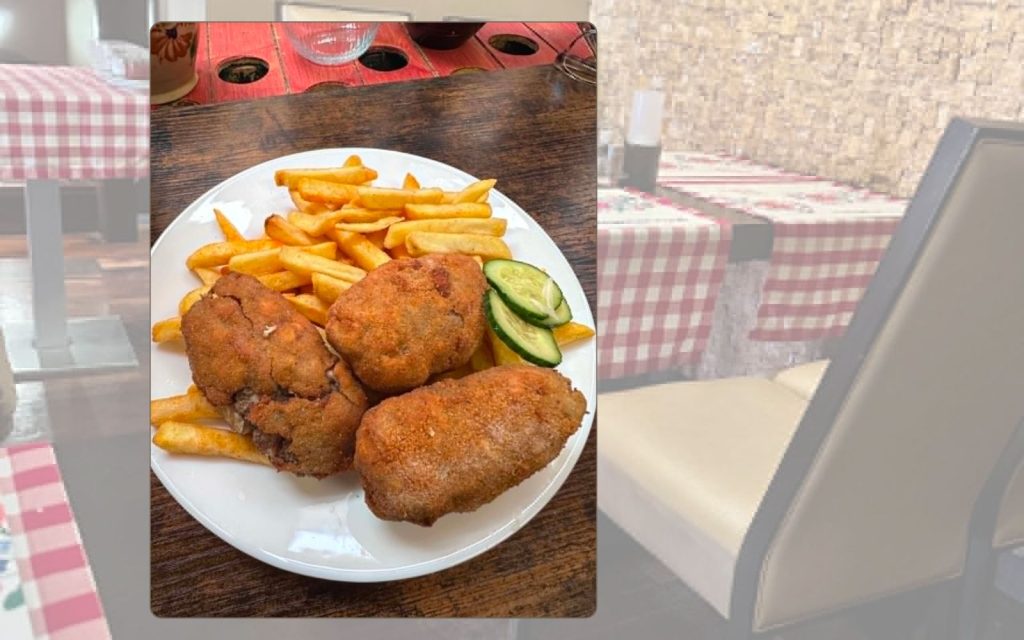
    Their rántott velő—breaded fried brain—is especially good.

    It is the kind of dish I enjoy eating in Budapest but do not prepare at home.

    This is not an elegant evening restaurant or a heritage attraction.

    It is a practical, generous lunch stop, and that is exactly its value.

    Because the portions are substantial, I would not plan a thermal bath or steep walk immediately afterward.

    Mazel Tov: a contemporary District VII evening

    Mazel Tov is a modern restaurant and cultural meeting place in Akácfa Street.

    Its official site currently lists a Mediterranean menu, online reservations and opening from noon until late evening, with later closing from Friday to Sunday.

    It also makes clear that the venue is not a kosher restaurant.

    This distinction matters.

    Mazel Tov can be a beautiful part of a modern evening in the Jewish Quarter, but it should not be presented as a complete representation of traditional Jewish–Hungarian cuisine.

    Choose Mazel Tov when:

    • you want a visually distinctive courtyard;
    • Mediterranean food suits you;
    • you are planning a modern evening rather than a heritage meal;
    • you prefer to reserve a table;
    • District VII is already part of the day.

    It belongs to the neighbourhood’s contemporary restaurant life.

    It is not a substitute for historical understanding.

    Gozsdu Udvar: lively, central and often crowded

    Gozsdu Udvar connects Király utca and Dob utca through a series of interconnected courtyards.

    The official site lists the complex between Király utca 13 and Dob utca 16 and presents it as a dining, nightlife and event area.

    Its history is older than its current restaurant identity, and the complex was created through the Gozsdu foundation connected with Manó Gozsdu.

    Today, many visitors encounter it mainly as a busy social and hospitality passage.

    What to expect

    • restaurants;
    • bars;
    • terraces;
    • crowds;
    • music;
    • different venues sharing one passage;
    • long waits during popular periods.

    A note from Leja

    Gozsdu Udvar can be enjoyable when I want an energetic evening.

    But I would always expect the possibility of a long wait, particularly during busy hours.

    It is not a place I would combine with several fixed reservations.

    The courtyards already contain enough options, noise and movement for one part of the evening.

    Go when you want the atmosphere.

    Do not go because you believe every visitor must experience it.

    Ruin bars are one chapter, not the whole neighbourhood

    Ruin bars developed from the reuse of older and often neglected urban spaces.

    They became closely associated with District VII and Budapest nightlife.

    For visitors, they may offer:

    • music;
    • dancing;
    • drinks;
    • courtyards;
    • visual experimentation;
    • games;
    • social spaces;
    • events.

    They also exist inside a residential neighbourhood.

    That means noise, crowding and late-night behaviour affect people who live nearby.

    A responsible visit includes:

    • keeping voices lower in residential streets;
    • not blocking entrances;
    • avoiding public drunkenness;
    • disposing of rubbish properly;
    • choosing one or two venues rather than treating the district as an alcohol challenge.

    The phrase “ruin bar” does not automatically describe a place of historical Jewish heritage.

    It belongs primarily to the modern nightlife story of the district.

    Füge Udvar: billiards and ping-pong instead of only dancing

    Füge Udvar is on Klauzál utca and combines the ruin-pub atmosphere with games.

    Its official site currently allows visitors to reserve both tables and activities, including billiards and table tennis. It lists the venue at Klauzál utca 19–21.

    The venue also advertises billiards, ping-pong, darts and arcade-style games as part of its current offer.

    A note from Leja

    When I visited Füge Udvar with friends, we did not go mainly to drink or dance.

    We played billiards and ping-pong.

    We reserved in advance, which was useful because the games were the purpose of the evening rather than something we hoped might be available.

    I especially liked the cellar area.

    It was thoughtfully designed and gave the evening a different atmosphere from a standard bar visit.

    This experience changed how I think about ruin bars.

    They are often described only through parties, alcohol and dancing, but some can also be places for games, conversation and spending time with friends.

    Leja planning note

    Reserve when a particular game or table matters.

    Do not assume that arriving at a busy time guarantees immediate access.

    Check the current rules, prices and reservation conditions directly with the venue.

    An evening in the Jewish Quarter without making it a checklist

    A good evening in the Jewish Quarter does not need five bars and three restaurant stops.

    Choose one clear centre for the evening.

    A quieter version

    • dinner;
    • a walk through the surrounding streets;
    • dessert or tea;
    • one calm bar;
    • return to the accommodation.

    A lively version

    • a reserved table at Mazel Tov;
    • Gozsdu Udvar;
    • one ruin bar;
    • billiards or ping-pong at Füge Udvar;
    • a late walk back.

    Do not combine every option.

    The district becomes exhausting when the evening is treated as a venue-collection exercise.

    District VII Budapest by day and by night

    District VII Budapest changes noticeably through the day.

    During the morning and afternoon

    You are more likely to notice:

    • synagogues;
    • memorials;
    • apartment buildings;
    • small businesses;
    • cafés;
    • local errands;
    • market activity;
    • architectural details;
    • quieter courtyards.

    After dark

    The focus shifts toward:

    • restaurants;
    • bars;
    • music;
    • queues;
    • terraces;
    • groups moving between venues;
    • louder main streets.

    This does not mean the whole district is always loud.

    Individual streets and building positions matter greatly.

    Travellers choosing accommodation in District VII should check:

    • the exact street;
    • room orientation;
    • proximity to courtyards;
    • guest comments about night noise;
    • windows and sound insulation.

    For the wider accommodation decision, read Where to Stay in Budapest: 7 Best Areas for First-Time Visitors.

    How much time do you need in Budapest’s Jewish Quarter?

    Two to three hours

    Enough for:

    • an introductory walk;
    • one main synagogue area;
    • coffee;
    • a small number of streets.

    This is only a first impression.

    Half a day

    Enough for:

    • one substantial synagogue or museum visit;
    • Rumbach or Kazinczy Street;
    • coffee or lunch;
    • a slower walk;
    • time to read and reflect.

    This is the minimum I would recommend for a culturally focused first visit.

    A full day

    A full day can include:

    • historical and religious visits;
    • lunch;
    • a café;
    • rest;
    • a separate evening meal or social venue.

    The rest between day and evening is useful.

    It allows the emotional tone to change without forcing two very different experiences into one continuous tourist route.

    A calm half-day Budapest Jewish Quarter guide

    Morning route

    1. Begin in the Dohány Street Synagogue area.
    2. Visit the synagogue complex or museum.
    3. Continue toward Rumbach Street.
    4. Pause for coffee.
    5. Walk toward Kazinczy Street.
    6. End near Klauzál tér with lunch.

    This route is geographically compact but culturally dense.

    Do not add Parliament or Castle Hill to the same half-day.

    Full-day route

    Morning

    • Dohány Street;
    • museum or guided visit;
    • Rumbach Street.

    Lunch

    Choose:

    • a simple nearby meal;
    • Akácfa Étkezde on a suitable weekday;
    • another restaurant that fits your cultural and dietary priorities.

    Afternoon

    • Kazinczy Street;
    • Klauzál tér;
    • café;
    • return to the accommodation.

    Evening

    Choose one:

    • Mazel Tov;
    • Gozsdu Udvar;
    • Füge Udvar;
    • one ruin bar;
    • dinner outside the quarter, including Fülemüle when Jewish–Hungarian food is the priority.

    What should you book in advance?

    Consider advance booking for:

    • the Dohány Street Synagogue visitor programme;
    • a responsible Jewish heritage tour;
    • a specific cultural event;
    • Mazel Tov;
    • Füge Udvar games;
    • a special restaurant;
    • a larger group.

    Keep flexible:

    • a café;
    • Klauzál tér;
    • side streets;
    • Gozsdu passage walk-through;
    • an ordinary lunch;
    • one unplanned evening stop.

    Choosing a Jewish heritage tour

    A guide can be valuable when the tour:

    • uses reliable historical sources;
    • distinguishes the different Jewish communities and religious traditions;
    • treats Holocaust history respectfully;
    • recognises contemporary Jewish life;
    • avoids sensational language;
    • does not trespass into private or functioning community spaces;
    • keeps the group small enough for thoughtful discussion.

    Do not choose a tour because it promises “dark secrets” or a dramatic ghetto experience.

    Frequently asked questions

    Where is the Jewish Quarter in Budapest?

    It lies mainly in the inner part of District VII, around Dohány Street, Rumbach Street, Kazinczy Street, Király Street and Klauzál tér.

    The historical and administrative boundaries do not match perfectly.

    How much time do you need in Budapest’s Jewish Quarter?

    Allow at least half a day for a synagogue visit, cultural context, coffee and a neighbourhood walk.

    A full day works well when you also want dinner or an evening venue.

    Is Budapest’s Jewish Quarter only about ruin bars?

    No.

    It is a centre of Jewish religious heritage, Holocaust memory, residential life, food, cafés and contemporary nightlife.

    Ruin bars are only one modern layer.

    Which synagogues should first-time visitors consider?

    The Dohány Street Synagogue offers the most extensive visitor complex.

    Rumbach Street is important for architecture, history and restoration.

    Kazinczy Street is connected to Orthodox Jewish heritage and a functioning religious community.

    Current access must be checked individually.

    Do I need tickets for the Dohány Street Synagogue?

    Visitor access is generally ticketed.

    Purchase and current inclusions should be checked through the official visitor platform.

    Is the Dohány Street Synagogue open on Saturdays?

    The official visitor programme is closed on Saturdays and may also change for Jewish holidays. Friday hours are shorter.

    What should I wear to a synagogue in Budapest?

    Wear respectful clothing and follow the current instructions of each site.

    Shoulders and knees should generally be appropriately covered, and visitors may be asked to wear a head covering or follow other religious-site rules.

    Is it respectful to visit the Jewish Quarter as a tourist?

    Yes.

    Respectful visits support cultural understanding when travellers follow religious rules, treat memorials seriously and avoid reducing the neighbourhood to trauma or nightlife.

    Is Mazel Tov traditional Jewish food?

    Not exactly.

    It is a contemporary Mediterranean restaurant and cultural venue. Its own public information states that it is not kosher.

    Is Fülemüle inside the Jewish Quarter?

    It is outside the core tourist route commonly presented as the Jewish Quarter.

    That is precisely why it is a useful reminder that Jewish–Hungarian food and community history extend beyond District VII.

    What should I try at Fülemüle?

    Sólet and goose dishes are among the restaurant’s best-known food directions, but the current menu should always be checked directly.

    Is Akácfa Étkezde a Jewish restaurant?

    No.

    It is a traditional Hungarian étkezde in District VII, suited to a generous weekday lunch rather than a Jewish heritage meal.

    Is Gozsdu Udvar worth visiting?

    It may suit travellers who want a busy central courtyard with multiple restaurant and bar options.

    Expect crowds and possible waiting during popular periods.

    Can you do more than drink at Budapest ruin bars?

    Yes.

    Füge Udvar currently offers reservable games such as billiards and table tennis in addition to its pub and nightlife spaces.

    Are ruin bars part of Jewish heritage?

    Not directly.

    They belong mainly to the district’s modern urban and nightlife development, although they occupy buildings and streets within the wider historical neighbourhood.

    Should I book a guided Jewish heritage tour?

    It can be worthwhile when you want deeper historical context.

    Choose a guide who is culturally sensitive, historically responsible and clear about the places included.

    Final thoughts

    Budapest’s Jewish Quarter cannot be reduced to one mood.

    It contains sacred spaces and crowded courtyards.

    It contains memories of persecution and signs of living community life.

    It contains traditional food, modern Mediterranean restaurants, practical Hungarian lunch places and ruin bars where friends play ping-pong in a carefully designed cellar.

    I have not yet entered the three major synagogues.

    They remain on my list, and I hope to visit them with enough time to listen and learn.

    My personal memories belong mainly to the food and evening layers: sólet and smoked goose at Fülemüle, a generous Hungarian lunch at Akácfa Étkezde, and billiards with friends at Füge Udvar.

    These experiences do not make me an authority on the neighbourhood’s religious history.

    They make me more aware of how many different lives one part of Budapest can contain.

    Begin with the history.

    Respect the religious spaces.

    Eat with curiosity.

    Notice what belongs to heritage and what belongs to the present-day entertainment district.

    Allow the tone of the day to change.

    Budapest’s Jewish Quarter asks for more than attention to buildings.

    It asks us to notice how memory, faith, ordinary life and the present city continue to share the same streets.

    Travel. Taste. Feel.

    That is the Leja way.

    Your next step: choose how deeply you want to explore

    For Hungarian dishes and Jewish–Hungarian food context, continue with Budapest Food Guide: What to Eat and Where to Begin.

    For café planning, read Best Budapest Cafés for a Slow Morning.

    For a calmer city structure, continue with:

    Compare official synagogue tickets and culturally responsible small-group Jewish heritage walks.
  • Things to Do in Budapest Without Overbooking Yourself

    Things to Do in Budapest Without Overbooking Yourself

    Meaningful walks, baths, cafés and neighbourhood experiences for a calm Budapest city break.

    The best things to do in Budapest without overbooking yourself are often the experiences that already contain enough movement, atmosphere and time on their own.

    Budapest does not need to be divided into twenty small tasks.

    A walk from City Park to the Basilica can become an entire day. A thermal bath can fill an afternoon. One historic café may deserve a morning, while one neighbourhood may hold enough architecture, food and street life to keep you interested until evening.

    This guide is not another long list of things to do in Budapest.

    It is a selection of experiences that work well for Budapest first-time visitors, couples and anyone planning a calm Budapest city break.

    The aim is not to avoid important sights.

    It is to choose experiences that allow you to notice where you are.

    Quick answer: what are the best things to do in Budapest without rushing?

    Choose one larger Budapest experience, such as Castle Hill or a thermal bath, then add one neighbourhood walk and one place to pause nearby.

    Good options for Budapest without rushing include:

    • walking beside the Danube;
    • spending a morning on Castle Hill;
    • choosing one thermal bath;
    • exploring City Park and Andrássy Avenue;
    • sitting in a café;
    • visiting the Great Market Hall;
    • walking through the Jewish Quarter;
    • crossing the Chain Bridge after dark;
    • spending half a day on Margaret Island.

    Do not try to combine them all.

    Choose one experience to enter, one neighbourhood to walk and one place to pause.

    Choose a calm Budapest day by mood

    The day you wantMain experienceLighter addition
    Classic first Budapest dayParliament or BasilicaDanube walk
    Slow Buda dayCastle HillBatthyány tér and riverfront
    Wellness dayOne thermal bathPark or easy dinner
    Cultural neighbourhood dayJewish QuarterCoffee and evening walk
    Food dayGreat Market HallCake or café
    Green dayMargaret IslandDanube or tram ride
    City Park daySzéchenyi or BalloonFlyAndrássy Avenue
    Romantic eveningBuda riverfront and Chain BridgeDinner or cruise
    Rainy dayBath, market or museumLong café stop

    You do not need to combine the rows.

    Each one can become a complete Budapest day.

    1. Walk the Pest riverfront without turning it into a route to finish

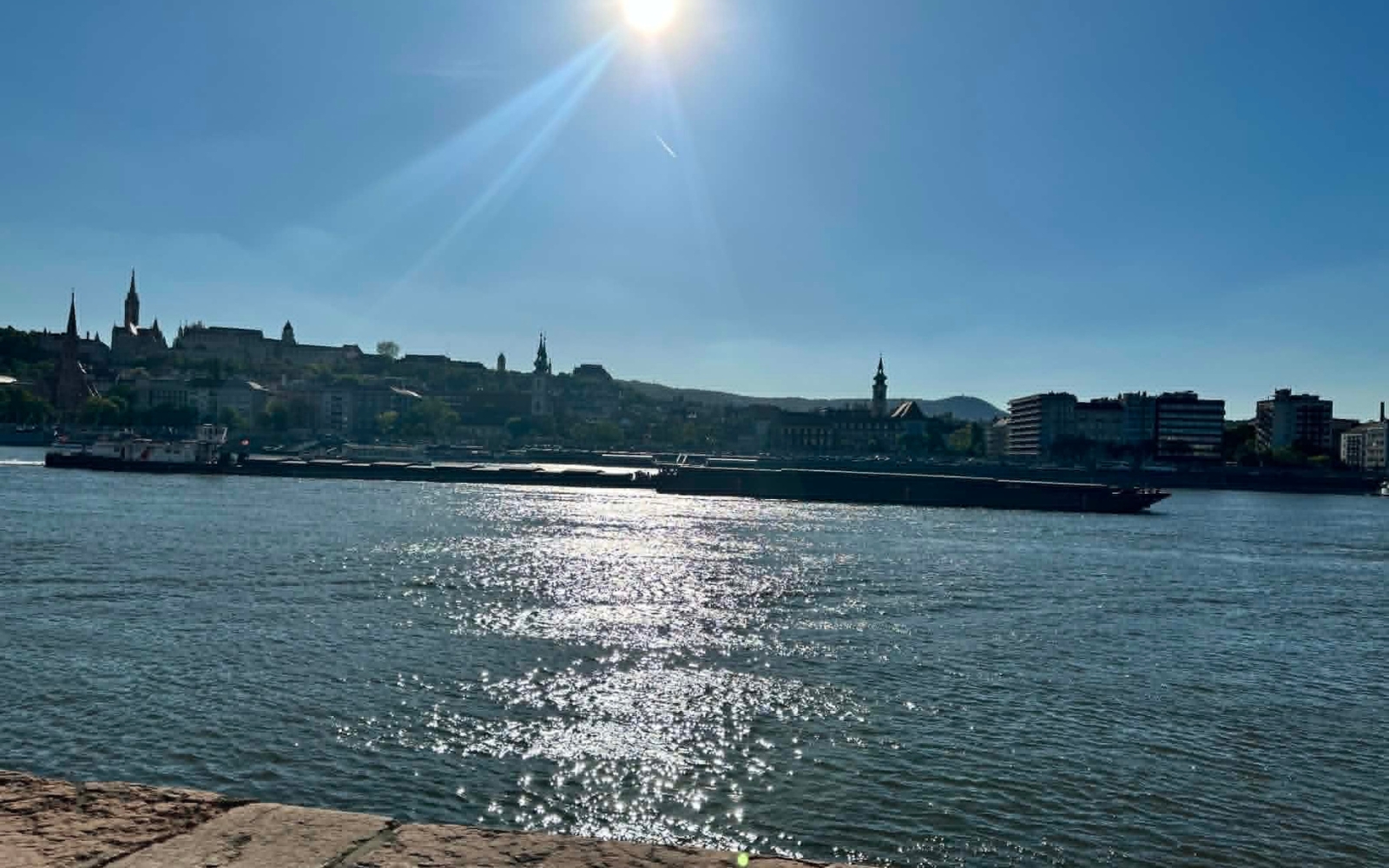
    The Pest riverfront is one of the simplest and most rewarding experiences in the city.

    You can begin near Parliament, continue beside the Danube, watch the trams and boats, then stop whenever the walk feels complete.

    You do not need a precise endpoint.

    Along the way, you may see:

    • Parliament;
    • the Buda hills;
    • bridges;
    • riverboats;
    • ferries and docks;
    • people walking, cycling and sitting beside the water.

    When you reach the Shoes on the Danube Bank memorial, approach it as a place of remembrance.

    Do not treat it as a romantic backdrop or casual photo stop.

    Pause, understand what the memorial represents and allow the tone of the walk to change.

    A note from Leja

    I can spend hours beside the Danube.

    I walk past Parliament and often remain near the docks, watching the boats arrive, leave and turn on the water.

    The riverfront may be busy and full of movement, but it still calms me.

    I never feel that this time should have been used for another attraction.

    The walk is already the experience.

    This is one of the clearest examples of slow travel in Budapest: nothing needs to happen for the city to feel present.

    2. Give Castle Hill a morning, not forty minutes

    Castle Hill is often compressed into a short photo stop.

    It deserves more space than that.

    A calm Buda morning can include:

    • Fisherman’s Bastion;
    • the area around Matthias Church;
    • quiet Castle District streets;
    • viewpoints toward Pest;
    • a café or early lunch;
    • time to notice the residential and cultural character of the area.

    Vajdahunyad Castle is in City Park, not Castle Hill, so keep the two castle experiences separate in your planning.

    Castle Hill is historic, religious, residential and political.

    It is not only a decorative platform for photographs.

    Arriving earlier can make the experience quieter, especially before larger groups reach the main viewpoints.

    A note from Leja

    Fisherman’s Bastion is beautiful.

    But what stays with me most is the view toward Pest, especially in the evening.

    Parliament, the river and the lights across the flat city create a wider feeling than the monument itself.

    Sometimes the most memorable part of a famous place is what you see from it.

    3. Choose one thermal bath and let it be enough

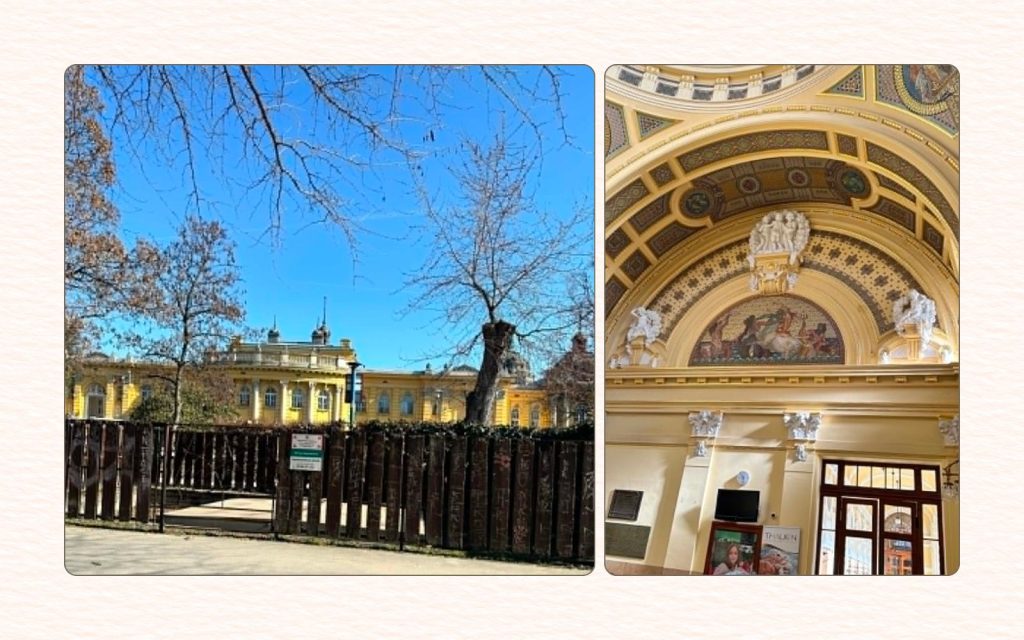
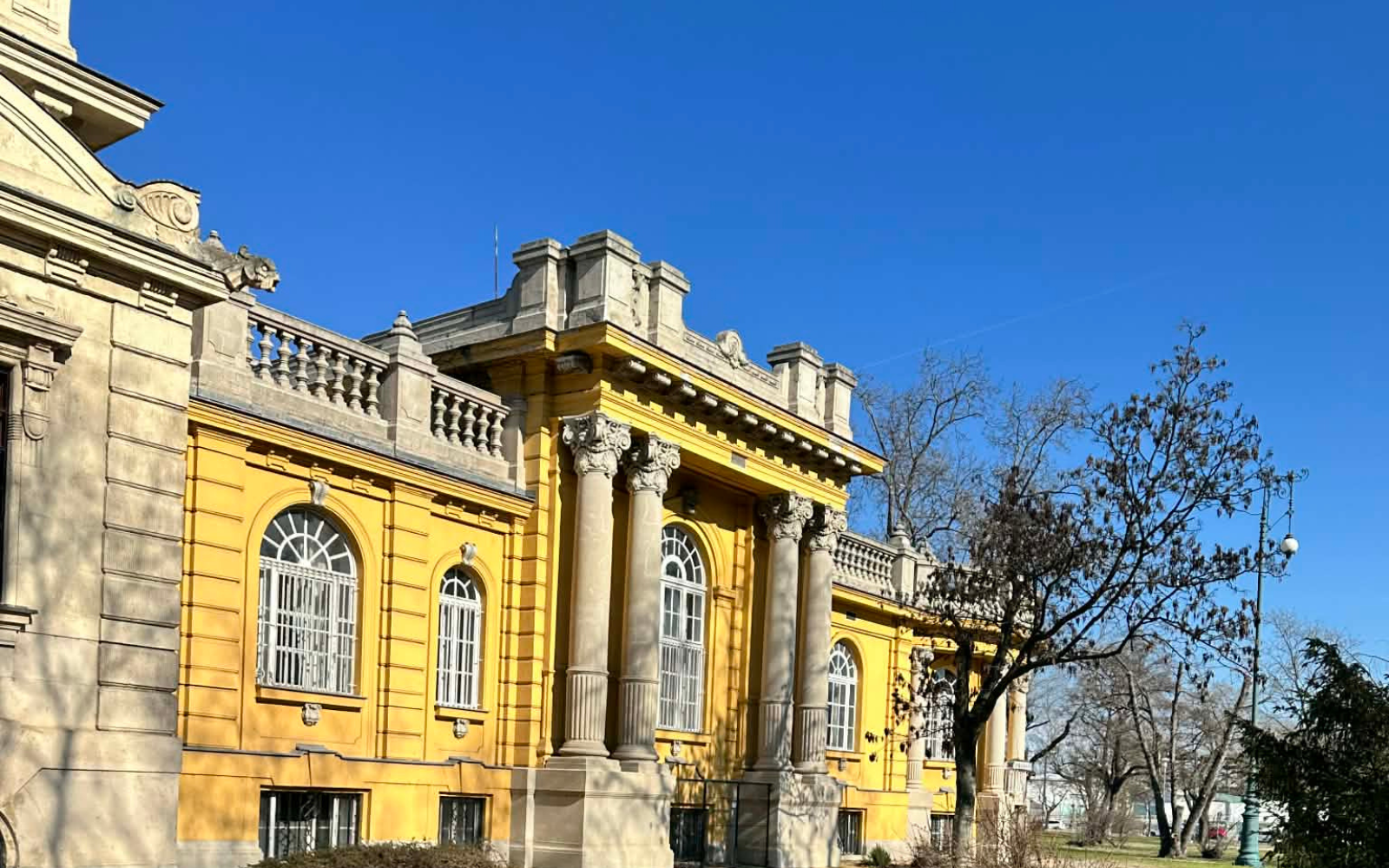
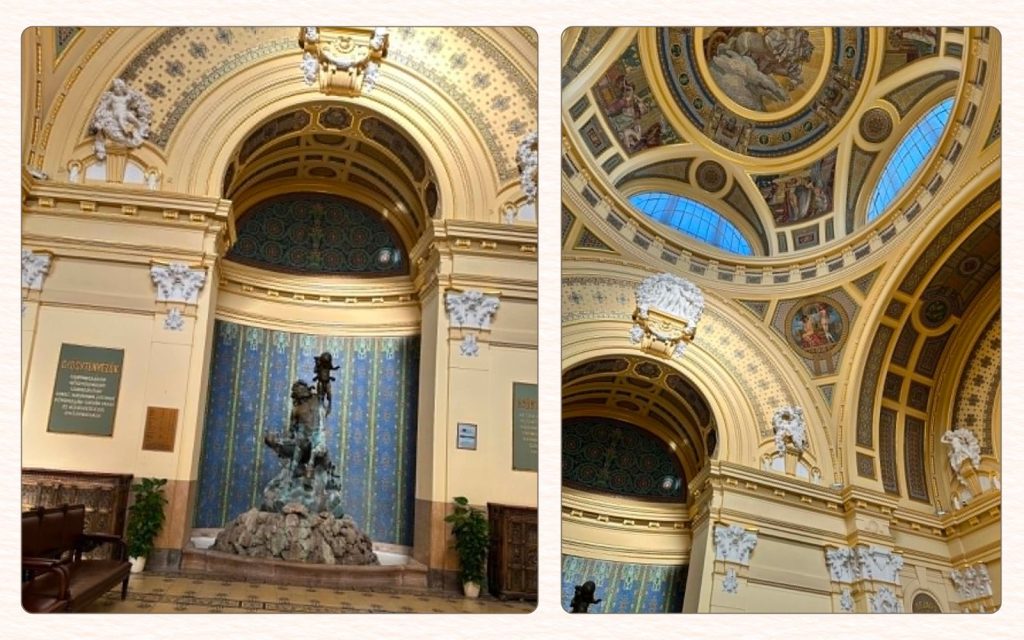
    Széchenyi Thermal Bath exterior and ornate interior architecture in Budapest
    One thermal bath is enough when you allow time for the whole experience.

    A Budapest thermal bath is not a quick attraction.

    The full experience includes:

    • travelling there;
    • buying or checking the ticket;
    • changing;
    • learning the building;
    • bathing;
    • resting;
    • showering;
    • dressing again;
    • adjusting to how your body feels afterward.

    Treat it as a half-day experience.

    Choose Széchenyi for:

    • a first visit;
    • outdoor pools;
    • City Park;
    • a lively social atmosphere;
    • grand architecture.

    Choose Rudas for:

    • historical atmosphere;
    • a Buda location;
    • a rooftop Danube view;
    • a more complex bathing schedule.

    Choose Lukács for:

    • a quieter experience;
    • a more traditional rhythm;
    • less emphasis on spectacle.

    Do not try to visit two or three baths during a short trip simply because Budapest is famous for them.

    One carefully chosen bath is enough.

    For current rules, age restrictions and ticket details, read Budapest Thermal Baths: What to Know Before You Go.

    4. Turn City Park into a complete Budapest day

    City Park is not only the place where Széchenyi Bath happens to stand.

    It can support an entire day.

    A natural route may include:

    • Heroes’ Square;
    • City Park;
    • Vajdahunyad Castle;
    • the boating lake or winter ice rink;
    • Széchenyi Bath;
    • BalloonFly;
    • a park walk;
    • the beginning of Andrássy Avenue.

    Vajdahunyad Castle was designed as a representation of different periods in Hungarian architectural history and now houses the Museum and Library of Hungarian Agriculture.

    Winter: skate beside Vajdahunyad Castle

    In winter, the City Park lake becomes a large outdoor ice rink.

    The official City Park information describes it as a seasonal open-air rink with Vajdahunyad Castle behind it. Opening dates, ticket prices and exact hours change each season, so they must be checked before visiting.

    Skate rental is available on site according to the current visitor information.

    This is not a small decorative Christmas rink.

    Allow time for:

    • ticketing;
    • skate rental;
    • changing;
    • skating;
    • warming up afterward.

    Warmer months: BalloonFly above City Park

    BalloonFly offers a very different perspective over Budapest.

    It is a tethered helium balloon rather than a free-flying hot-air balloon. It rises vertically while remaining attached to the ground and can reach approximately 150 metres, subject to weather and operating conditions.

    Choose BalloonFly when:

    • you want a panorama without climbing a hill;
    • the weather is suitable;
    • City Park is already part of your route;
    • you enjoy viewpoint experiences.

    Check the official weather and operation information on the day.

    Do not build the whole itinerary around it, because wind and weather can affect balloon operation.

    Summer alternative: boating

    In warmer months, the City Park lake may operate as a boating lake, with Vajdahunyad Castle creating the background. Seasonal opening and pricing vary.

    The key is not to do everything.

    Choose one seasonal experience and let the park remain spacious.

    5. Walk from City Park to the Basilica

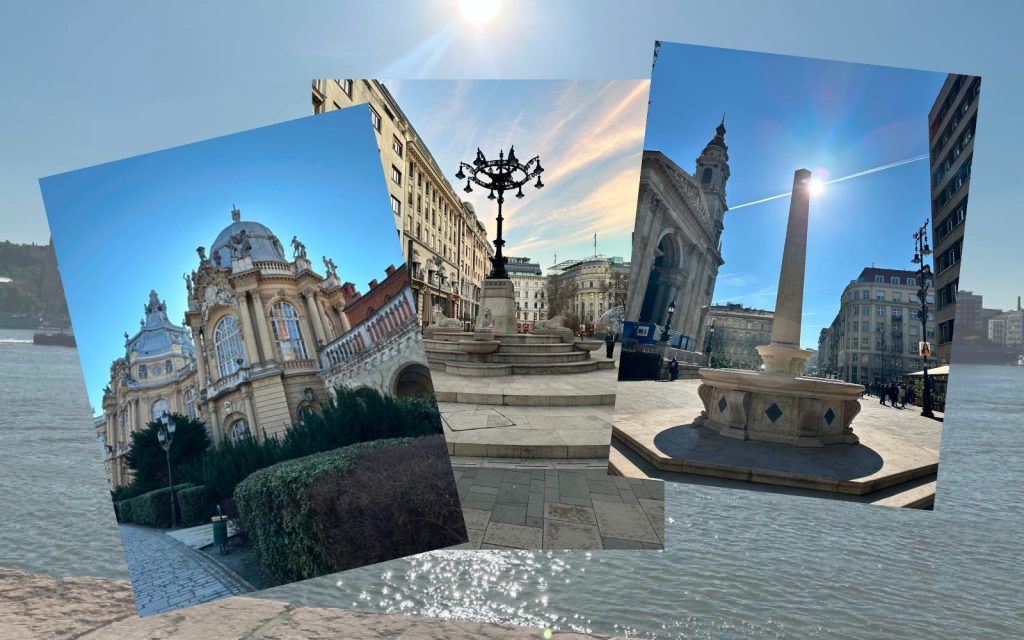
    Budapest architecture and central squares along a relaxed city walk
    Central Budapest changes gradually when you walk it instead of treating each sight as a separate task.

    One of my favourite ways to understand central Pest is to walk from the City Park area toward the Basilica.

    The route can naturally connect:

    • Heroes’ Square;
    • Andrássy Avenue;
    • Oktogon;
    • the Opera;
    • central Pest;
    • St. Stephen’s Basilica.

    Andrássy Avenue gives the day a clear direction without making it feel like a race.

    You can stop for coffee, look at façades, sit near Oktogon or leave the avenue when a side street interests you.

    A note from Leja

    Walking through central Pest is an experience in itself.

    I like the route from Széchenyi and Heroes’ Square toward the Basilica.

    Vajdahunyad Castle, Andrássy Avenue, Oktogon and the Opera do not feel like separate boxes to complete. They become parts of one long city walk.

    By the time I reach the Basilica, I have not only moved between sights.

    I have watched Budapest change street by street.

    6. Walk Andrássy Avenue—or ride the M1

    You do not have to walk the entire distance.

    The M1 Millennium Underground follows the Andrássy Avenue corridor and is an experience in its own right.

    The line opened in 1896 and was the first underground railway on the European continent. It remains part of Budapest’s everyday public transport system as well as a historic element of the city.

    Ride it when:

    • your feet need rest;
    • the weather changes;
    • you want to move between City Park, Oktogon, Opera and central Pest;
    • transport history interests you.

    Treat it as normal public transport.

    Use a valid ticket or pass, allow local passengers to move freely and do not turn the carriage or platform into a private photo set.

    You can also visit the Millennium Underground Museum at Deák Ferenc tér if the history interests you and the current opening hours suit your day.

    7. Spend a morning in a café without apologising for it

    A café can be a complete Budapest experience.

    You might choose:

    • New York Café for grand architecture and a formal breakfast;
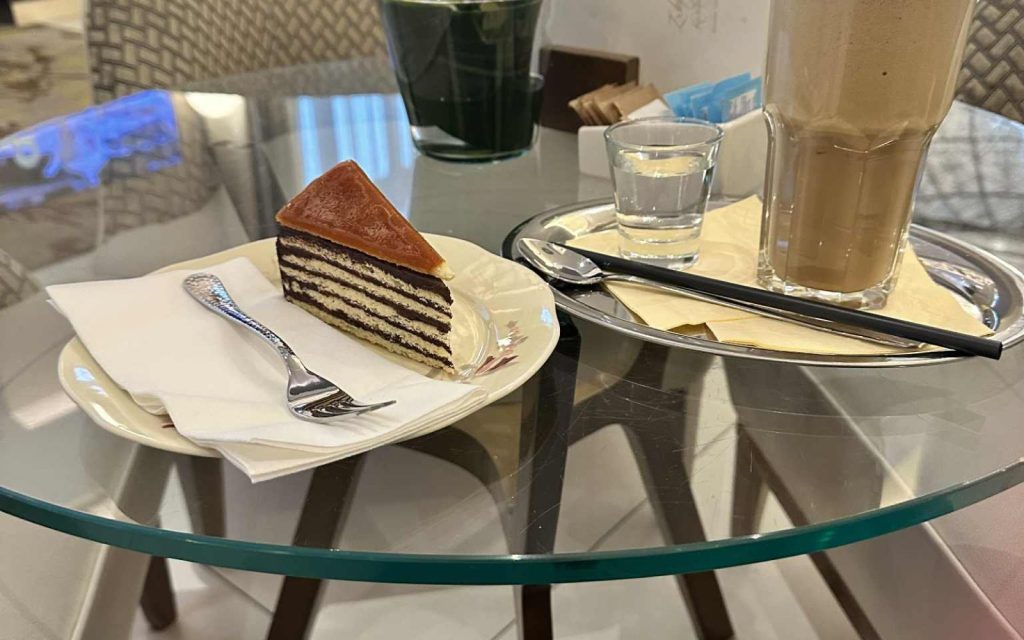
    • Gerbeaud for Dobos-torta;
    • Szamos for an easier central cake stop;
    • Zsolnay for a quieter table;
    • a specialty coffee shop near the route you are already following.

    You do not need to visit all of them.

    One carefully chosen café may say more about the morning you want than a list of five addresses.

    A note from Leja

    My first coffee often belongs to the apartment.

    The second belongs to Budapest.

    Sometimes that means a grand coffeehouse. Sometimes it means Dobos-torta in a quiet room. Sometimes it is simply a table near the street I am already walking.

    For specific café choices, read Best Budapest Cafés for a Slow Morning.

    8. Visit the Great Market Hall without pretending it is a secret

    The Great Market Hall at Vámház körút is both a functioning market and a major visitor attraction.

    Expect:

    • food stalls;
    • meat and sausages;
    • spices;
    • produce;
    • souvenirs;
    • prepared food;
    • crowds around popular hours.

    Compare prices and look before ordering.

    The upper and lower levels can feel very different.

    Do not arrive expecting an untouched local secret. The market’s tourism is part of its current reality.

    A note from Leja

    The Vámház körúti market remains compulsory for me.

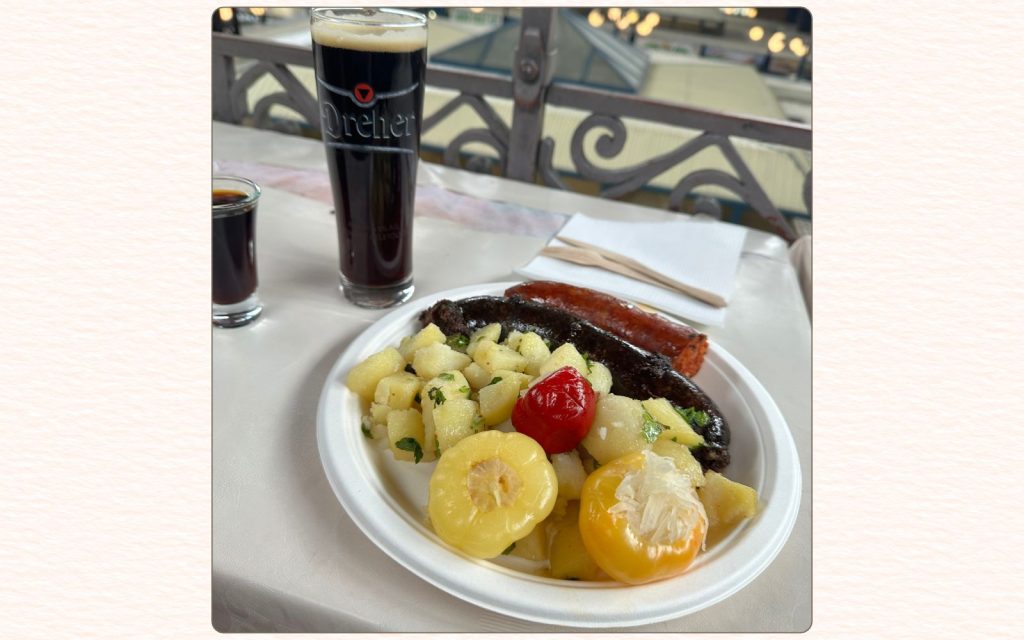
    I go for véres hurka and sült kolbász—blood sausage and grilled sausage.

    For me, this is direct Hungarian street food: hot, rich and filling.

    I know the market is heavily visited. That does not prevent me from enjoying a specific food ritual there.

    At the Great Market Hall, I return for véres hurka and sült kolbász.

    Afterward, the Liberty Bridge, southern Pest or Kálvin tér can continue the day naturally.

    For more food context, read Budapest Food Guide: What to Eat and Where to Begin.

    9. Explore the Jewish Quarter beyond ruin bars

    The Jewish Quarter is one of Budapest’s most layered areas.

    It contains:

    • synagogues;
    • memorial sites;
    • Jewish cultural and religious life;
    • residential streets;
    • cafés;
    • restaurants;
    • bars;
    • nightlife;
    • contemporary businesses.

    Do not reduce the district to ruin pubs.

    Do not reduce it to tragedy either.

    A thoughtful visit can include a synagogue or historical walk earlier in the day, followed by food, a café or evening streets.

    The change in tone should be conscious.

    Mazel Tov

    Mazel Tov describes itself as a cultural meeting place and Mediterranean restaurant in the old Pest Jewish Quarter, with an inner garden atmosphere, food, drinks and evening events. It currently accepts online table reservations.

    Choose it when:

    • you want a visually distinctive evening setting;
    • Mediterranean food suits the group;
    • you prefer a planned table to an uncertain walk-in;
    • you are already spending the day in District VII.

    It is not a traditional Hungarian restaurant, and it should not be used as the sole representation of Jewish–Hungarian food or history.

    Gozsdu Udvar

    Gozsdu Udvar is a popular nightlife and dining passage in central District VII.

    It can be lively and enjoyable, but popular restaurants and terraces may involve long waiting times, especially in the evening and on weekends.

    Treat the area as one possible evening layer, not a required attraction.

    Check individual restaurant reservation options rather than assuming you can walk directly into any venue.

    For the full neighbourhood context, continue to Jewish Quarter Budapest: History, Cafés and Evening Streets.

    10. Let one Hungarian or Transylvanian meal become the programme

    A full meal can be the main event of an afternoon or evening.

    Traditional Hungarian and Transylvanian food is often substantial.

    Allow time to eat without immediately rushing toward a bath, hill or timed tour.

    Székely food in Budapest at SZÉK Restaurant & Bar

    For Transylvanian and Székely food in Budapest, one of my personal favourites is SZÉK Restaurant & Bar on Andrássy Avenue.

    The restaurant focuses specifically on Transylvanian cuisine and dishes connected to Székely culinary traditions, rather than treating them as a general extension of Hungarian food. It is currently located at Andrássy út 41.

    A note from Leja

    SZÉK Restaurant & Bar is one of the places I genuinely enjoy returning to.

    The food feels close to the Transylvanian flavours I know, which is important to me because Székely cooking has its own character. The seasoning, sourness, smoked ingredients, herbs and family traditions can make it quite different from what visitors may expect from a general Hungarian restaurant.

    What makes the experience especially memorable is not only the food.

    The service has always felt first class to me. The meal is cared for rather than simply brought to the table, and that attention makes the restaurant feel suitable for both a relaxed dinner and a more special evening.

    Because menus, opening hours and reservation conditions may change, check the current details before making a special journey.

    Do not plan too much afterward

    After a rich traditional meal, choose:

    • a slow walk;
    • tea or coffee;
    • the river;
    • an easy tram ride;
    • the route back to the accommodation.

    Do not make every meal the beginning of another programme.

    Székely food in Budapest at SZÉK Restaurant & Bar

    For Transylvanian and Székely food in Budapest, one of my personal favourites is SZÉK Restaurant & Bar on Andrássy Avenue.

    The restaurant focuses specifically on Transylvanian cuisine and dishes connected to Székely culinary traditions, rather than treating them as a general extension of Hungarian food. It is currently located at Andrássy út 41.

    A note from Leja

    SZÉK Restaurant & Bar is one of the places I genuinely enjoy returning to.

    The food feels close to the Transylvanian flavours I know, which is important to me because Székely cooking has its own character. The seasoning, sourness, smoked ingredients, herbs and family traditions can make it quite different from what visitors may expect from a general Hungarian restaurant.

    What makes the experience especially memorable is not only the food.

    The service has always felt first class to me. The meal is cared for rather than simply brought to the table, and that attention makes the restaurant feel suitable for both a relaxed dinner and a more special evening.

    Because menus, opening hours and reservation conditions may change, check the current details before making a special journey.

    11. Ride tram 2 one way—and walk back along the Danube

    Tram 2 follows the Pest side of the Danube and connects several central riverfront areas.

    It can offer views of:

    • Parliament;
    • the Buda riverbank;
    • the Chain Bridge area;
    • central Pest;
    • the southern stretches of the Danube;
    • working parts of the city beyond the most photographed centre.

    The tram is useful when you want to rest your feet, travel along the river or understand how central Pest continues beyond its most famous landmarks.

    But do not treat the journey as a short sightseeing performance.

    It is normal public transport, used by people going to work, school and everyday appointments. Travel with a valid ticket or pass, keep the doors clear and allow other passengers to use the space normally.

    A note from Leja

    I often take tram 2 from the area near Margaret Bridge and continue along the riverfront.

    But I usually make only one part of the journey by tram.

    On the way back, I walk.

    This is not a small addition to the day. It becomes a long programme, especially when I stop beside the Danube, look at the buildings or follow something unexpected that catches my attention.

    The tram helps me understand the length of the riverfront first. Walking back allows me to experience it more closely.

    It was during one of these journeys that I discovered the Zwack Unicum museum almost by accident.

    Unicum is my favourite Hungarian aperitif, so once I realised what I had found, visiting felt natural rather than planned.

    That accidental discovery became part of the day precisely because I had not filled every hour in advance.

    Visit the Unicum House near the southern tram route

    The Unicum House, also known as the Zwack Museum and Visitor Centre, is in District IX at Dandár utca 1, close to the southern part of the riverside tram corridor.

    The visitor experience presents:

    • the history of the Zwack family;
    • the development of Unicum;
    • historic bottles, posters and family objects;
    • the old distillery building;
    • the cellar;
    • guided tastings included with certain ticket types.

    Unicum has been produced at the site since the late nineteenth century, and the museum connects the history of the drink with wider chapters of Hungarian history. Visits currently take place through advertised tour times and depend on availability, so this is one discovery that should be checked and booked once you decide to enter.

    Because tastings may be included, the experience is intended for adults and should be approached with responsible alcohol consumption in mind.

    Leja planning note

    A tram 2 journey, the Unicum House and a long walk back should not be treated as three tiny checklist items.

    Together, they can become most of an afternoon.

    You might combine them with:

    • a simple lunch;
    • the southern Pest riverfront;
    • the Great Market Hall on a separate part of the route;
    • one café stop;
    • an easy dinner near your accommodation.

    Check the current BKK route and service information before travelling, because tram operations and temporary diversions can change.

    The value of tram 2 is not only the view from the window.

    It is the way the line can introduce you to a longer part of Budapest—and give you somewhere unexpected to begin walking back from.

    12. Spend an evening between Astoria and Ferenciek tere

    Not every memorable Budapest evening needs to centre on District VII nightlife or the river.

    The Astoria–Ferenciek tere area creates a different kind of city atmosphere.

    You can walk through:

    • Kossuth Lajos utca;
    • Ferenciek tere;
    • nearby side streets;
    • the streets leading toward the Danube;
    • the area around Párisi Udvar.

    Párisi Udvar

    Párisi Udvar is now home to a hotel and the Párisi Passage Café & Restaurant, inside a restored arcade with Gothic, Moorish and Art Nouveau influences. It is close to Ferenciek tere and the Danube.

    You do not need to stay in the hotel to appreciate the building.

    Choose it for:

    • an architectural pause;
    • coffee or dinner;
    • a more formal evening atmosphere;
    • a central stop between Astoria and the river.

    Check current dining access and opening information before planning a special visit.

    A note from Leja

    I love the Astoria–Ferenciek tere area in the evening.

    Párisi Udvar changes the mood of the walk.

    The light, the arcade and the details inside create a sense of arrival even when I have only walked a few streets through the centre.

    This is one of those Budapest experiences that does not need a full itinerary around it.

    The building can simply become the moment when an ordinary evening turns memorable.

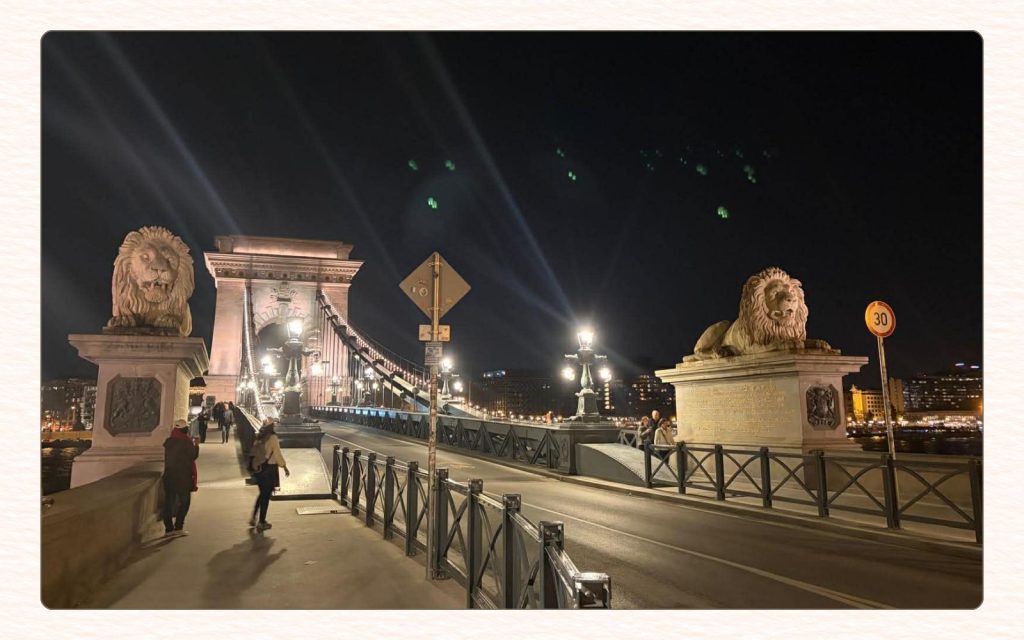
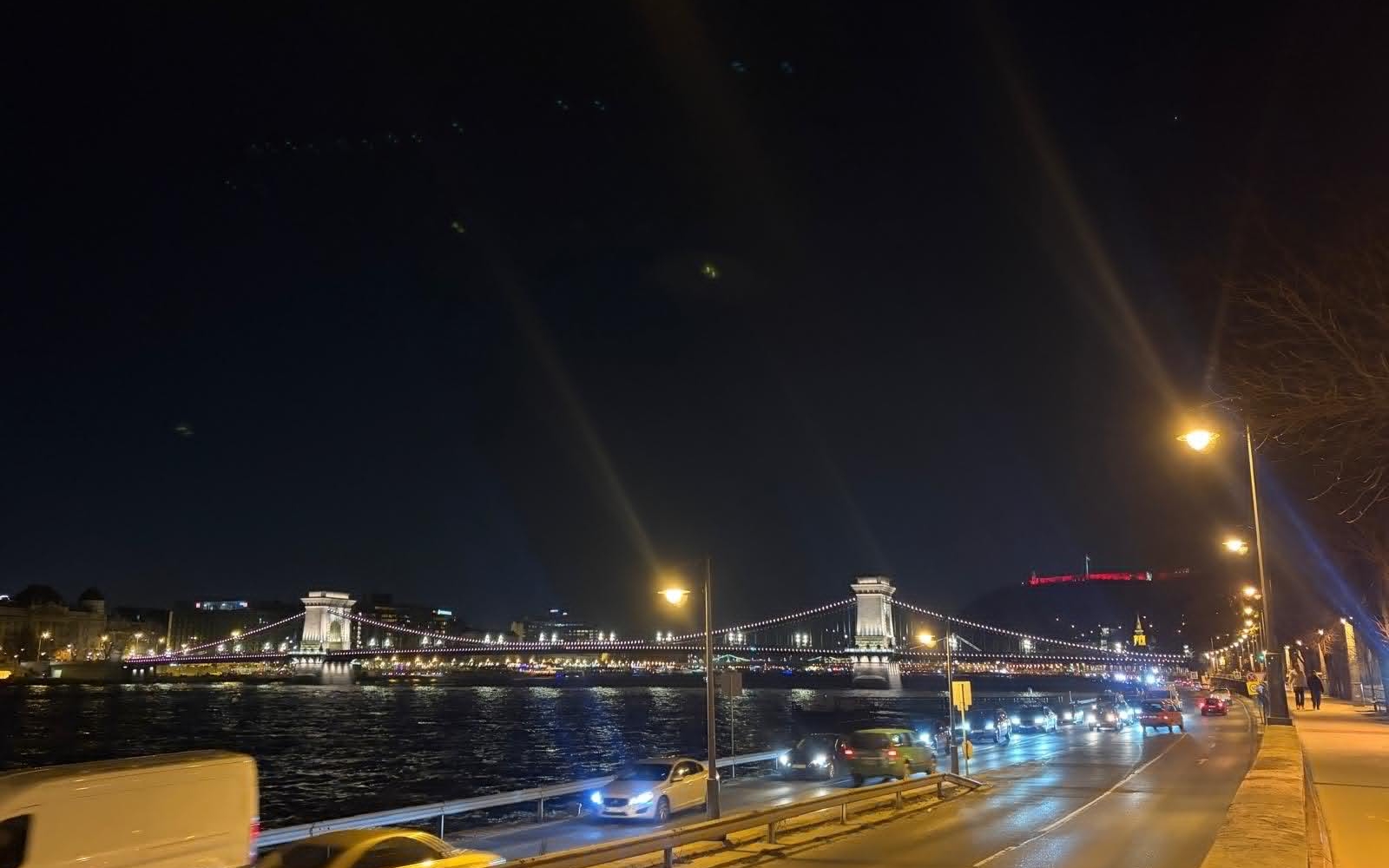
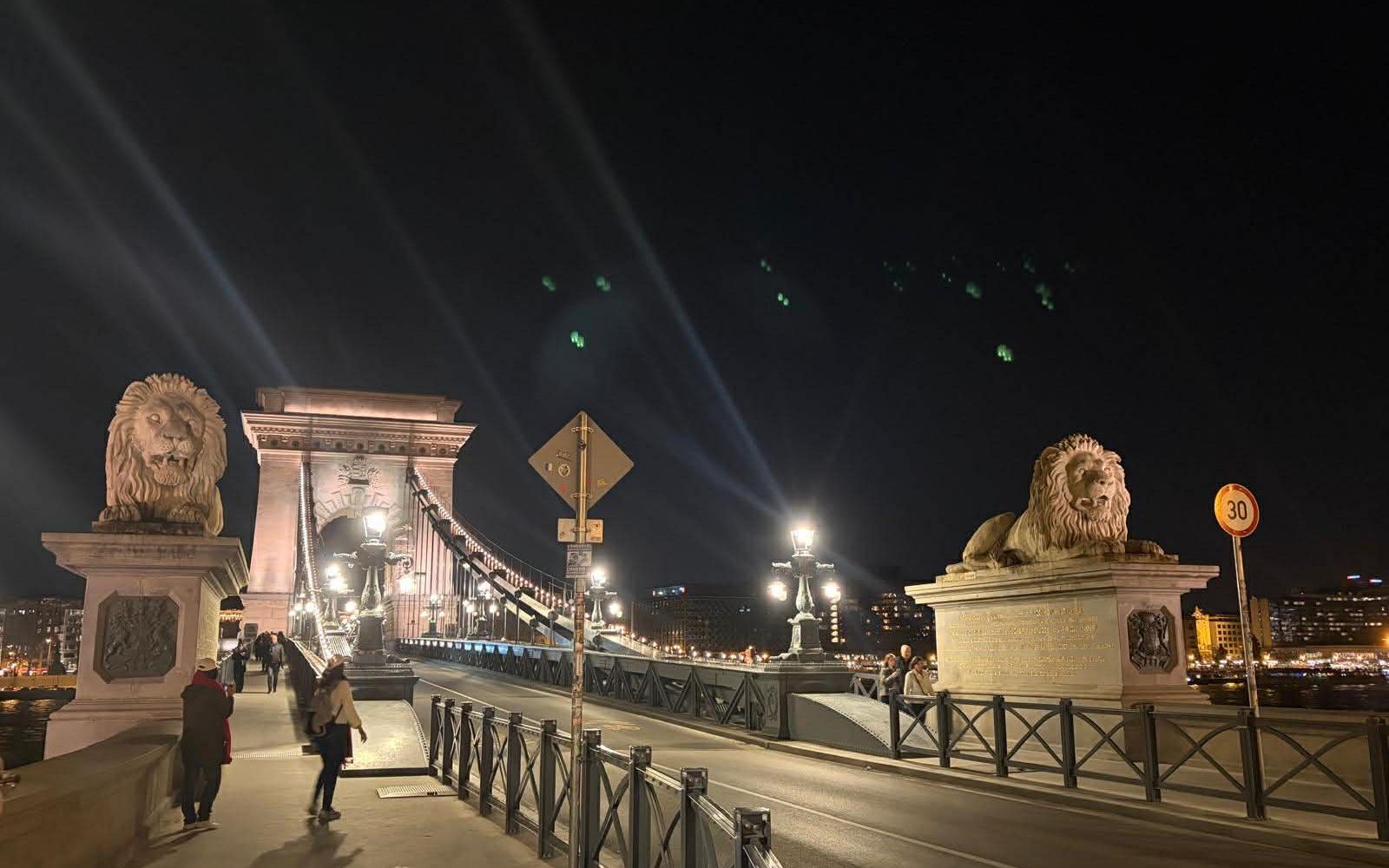
    13. Cross the Chain Bridge after dark

    The Chain Bridge connects more than two riverbanks.

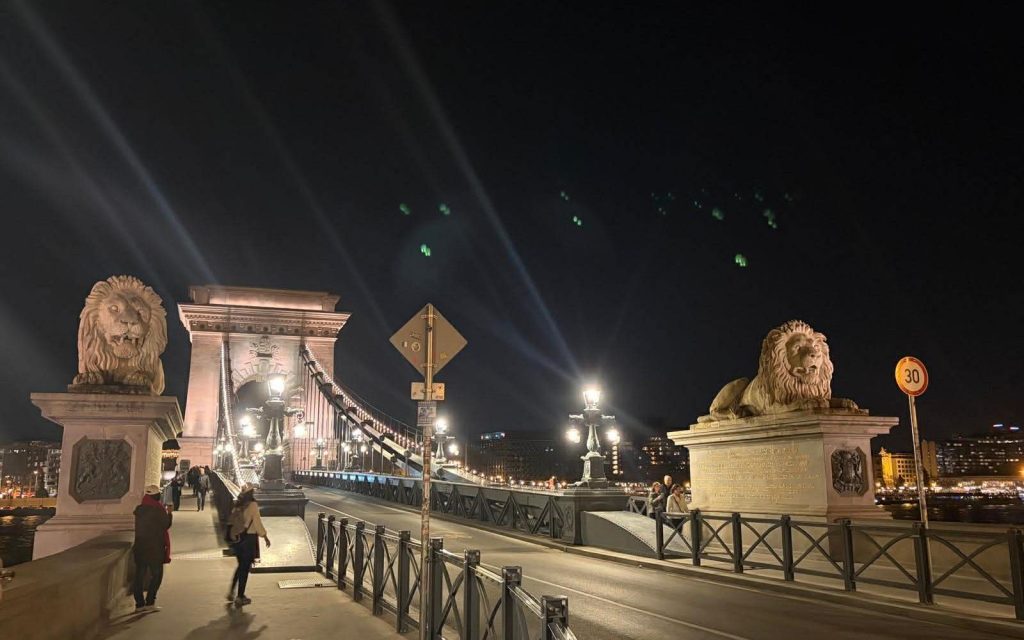
    Couples walking across the illuminated Chain Bridge during a romantic weekend in Budapest
    Some Budapest walks are worth repeating on every visit.

    After dark, it creates one of the clearest views of Budapest as a whole.

    A calm evening route can begin on the Buda riverfront, continue toward the bridge and end in central Pest.

    You will see:

    • Parliament across the water;
    • the Buda hills;
    • the bridges;
    • the Pest riverfront;
    • the Danube below.

    Check current pedestrian access when major events or temporary restrictions affect the bridge.

    A note from Leja

    I repeat this walk on almost every visit.

    I walk beside the Buda riverfront after dark and then cross the Chain Bridge.

    From the bridge, both sides remain visible.

    This is one of the few Budapest experiences I repeat without ever feeling that I am repeating myself.

    The light changes, the river changes and I arrive with a different day behind me.

    For a couples’ version, read Romantic Weekend in Budapest: A Slow 2-Day Itinerary.

    14. Use Margaret Island as a real half-day

    Margaret Island offers a slower alternative to central sightseeing.

    Depending on the season, you can:

    • walk;
    • sit on the grass;
    • visit the Rose Garden;
    • continue to the Japanese Garden;
    • rent a bicycle or pedal vehicle;
    • have a picnic;
    • stay beside the river.

    In spring and summer, the Rose Garden can be especially pleasant.

    Do not try to cover every marked point on the island.

    Choose one or two areas and allow the green space to change the day.

    Margaret Island works particularly well when:

    • you need a quieter afternoon;
    • the city feels intense;
    • you are travelling as a couple;
    • you want a low-cost experience;
    • the weather is mild.

    15. Return to the same place

    One of the least discussed things to do in Budapest is to return.

    You may want to see:

    • Parliament from Pest and Buda;
    • the same riverfront in the morning and at night;
    • one bridge in different weather;
    • the same café twice;
    • a market stall you enjoyed;
    • the same cake.

    Repetition is not the absence of discovery.

    Sometimes it is how a city becomes familiar.

    A note from Leja

    I have fixed places for particular foods, cakes and walks.

    I return to the market, Batthyány tér, favourite Dobos-torta places and the riverfront.

    At the same time, every trip includes somewhere new.

    The familiar places make Budapest feel continuous.

    The new places prevent it from becoming finished.

    Choose Budapest experiences by the day you actually want

    For a first-time visitor

    Choose:

    • central Pest;
    • the Danube;
    • Castle Hill;
    • one thermal bath;
    • one café.

    Do not add every museum and viewpoint.

    For a couple

    Choose:

    • Buda breakfast;
    • riverfront;
    • one bath;
    • the Chain Bridge;
    • a dinner or evening cruise.

    For a food-focused traveller

    Choose:

    • Great Market Hall;
    • one traditional meal;
    • one cake;
    • Jewish Quarter food and cultural context;
    • an open evening.

    For a quiet traveller

    Choose:

    • early city walks;
    • a calmer café;
    • Lukács;
    • Margaret Island;
    • Buda;
    • an M1 or tram ride when energy is lower.

    For a bad-weather day

    Choose one indoor anchor:

    • thermal bath;
    • café;
    • market;
    • museum;
    • restaurant.

    Do not replace every outdoor plan with a new indoor reservation.

    What should you book in advance?

    Book ahead for:

    • Parliament;
    • private thermal-bath packages;
    • special dinners;
    • dinner cruises;
    • synagogue or historical guided visits;
    • popular small-group tours;
    • celebration experiences;
    • restaurants known for long waits.

    Keep spontaneous:

    • the Danube;
    • Chain Bridge;
    • Margaret Island;
    • City Park walks;
    • markets;
    • ordinary cafés;
    • tram 2;
    • the M1;
    • an evening around Astoria and Ferenciek tere.

    Use this rule:

    Book what has a door, a ticket or a fixed starting time. Leave the streets open.

    What can you skip on a short Budapest trip?

    You can skip:

    • the second similar viewpoint;
    • visiting every famous café;
    • more than one thermal bath;
    • several large markets;
    • a distant restaurant that does not fit the route;
    • multiple ruin bars;
    • a museum included only because a list called it essential;
    • treating every bridge as a separate attraction.

    Skip according to your own interests.

    Do not skip food, rest or sleep to preserve a weak item on the list.

    Four relaxed Budapest itinerary ideas

    One calm day in Pest

    • Basilica;
    • coffee;
    • Parliament;
    • Danube;
    • dinner nearby.

    One calm day in Buda

    • Batthyány tér;
    • Castle Hill;
    • lunch;
    • Buda riverfront;
    • Chain Bridge.

    One calm City Park day

    • Heroes’ Square;
    • Vajdahunyad Castle;
    • seasonal skating, boating or BalloonFly;
    • Széchenyi or a park walk;
    • Andrássy Avenue or M1.

    One calm food-and-culture day

    • Great Market Hall;
    • Kálvin tér or Palace District;
    • Jewish Quarter;
    • cake or coffee;
    • Mazel Tov, a Székely meal or another deliberately chosen dinner.

    These are frameworks, not commands.

    For the complete planning method, read How to Plan a Budapest Trip Without Overbooking Yourself.

    Frequently asked questions

    How many activities should I plan per day in Budapest?

    Plan one larger experience, one lighter activity and an open period.

    Two major timed experiences in one day are usually enough.

    What are the best things to do in Budapest for first-time visitors?

    Begin with:

    • the Danube;
    • central Pest;
    • Castle Hill;
    • one thermal bath;
    • one café;
    • one market or neighbourhood.

    Can I see Budapest without a packed itinerary?

    Yes.

    Central Budapest works well when explored by neighbourhood, with walking, cafés and transport connecting the larger experiences.

    What can I skip during a short Budapest trip?

    Skip repeated viewpoints, distant recommendations and attractions that do not match your interests.

    Do not visit somewhere only because it appears on every list.

    Which Budapest attractions need advance booking?

    Parliament, some bath packages, dinner cruises, special restaurants and guided cultural visits may require advance booking.

    Is Budapest good for slow travel?

    Yes.

    The Danube, parks, thermal baths, markets, cafés, historic transport and walkable neighbourhoods all support a slower rhythm.

    Is tram 2 worth taking?

    Yes, especially when it fits naturally into your riverfront route.

    Treat it as public transport and use a valid ticket or pass.

    Is the M1 worth taking?

    Yes.

    It is useful transport along the Andrássy Avenue corridor and a living part of Budapest’s transport history.

    Can you skate in City Park in winter?

    Yes, when the seasonal City Park Ice Rink is open.

    Exact dates, opening hours and prices vary each winter and should be checked on the official site.

    Can you go up in a balloon in City Park?

    BalloonFly operates as a tethered helium observation balloon that can rise to approximately 150 metres when weather and operating conditions allow.

    Is Margaret Island worth half a day?

    Yes, particularly in mild weather when you want green space, walking and a quieter rhythm.

    Should I visit more than one thermal bath?

    For a short first trip, one is generally enough.

    Choose according to atmosphere rather than trying to collect several bath visits.

    What should I do in Budapest when it rains?

    Choose one bath, market, café, museum or restaurant.

    Keep the rest of the day simple.

    Final thoughts

    Budapest does not become more memorable because every hour has a destination.

    Walk from City Park toward the Basilica.

    Ride the M1 when your feet are tired.

    Watch boats beside Parliament.

    Spend an afternoon in warm water.

    Eat one meal slowly.

    Let Párisi Udvar change the mood of an ordinary evening.

    Cross the Chain Bridge after dark.

    Return to the place you liked yesterday.

    A relaxed Budapest itinerary does not contain less of the city.

    It gives the city more room to become visible.

    Choose one experience to enter.

    Choose one neighbourhood to walk.

    Choose one place to pause.

    Then allow the rest of the day to remain open.

    Travel. Taste. Feel.

    That is the Leja way.

    Your next step: build a calmer plan

    Continue with How to Plan a Budapest Trip Without Overbooking Yourself.

    For a complete route, read First Time in Budapest: A Calm 3-Day Itinerary.

    Use these supporting guides:

    Compare small-group cultural walks, thermal-bath tickets and evening Danube experiences.

  • Budapest Airport to City Centre: A Calm Arrival Guide

    Budapest Airport to City Centre: A Calm Arrival Guide

    Budapest Airport to City Centre: A clear comparison of the 100E airport bus, taxis and transfers for a calmer first arrival.

    Your first hour in Budapest does not need to feel complicated.

    After a flight, most travellers are carrying more than luggage. There may be tiredness, unfamiliar signs, a check-in deadline and the quiet pressure to make the correct decision immediately.

    You do not need to understand Budapest’s entire transport system before leaving the airport.

    For many first-time visitors staying in central Pest, the 100E Airport Express is the simplest public transport option. It runs directly between Budapest Airport and the city centre.

    A taxi or pre-booked transfer may be more comfortable when you are carrying several bags, travelling with children, arriving late or staying somewhere that requires further connections.

    The best route is not automatically the cheapest one. It is the route that suits your arrival time, accommodation address, luggage and remaining energy.

    Quick answer: what is the easiest way from Budapest Airport to the city centre?

    For most solo travellers and couples staying in central Pest, take the 100E Airport Express. It currently operates around the clock between Budapest Airport and Deák Ferenc tér, travelling via Kálvin tér. A standard airport-bus ticket currently costs 2,500 HUF.

    Choose an official taxi or private transfer when you want door-to-door transport, have heavy luggage, are travelling as a family or need to reach a Buda or outer-district address.

    Always check current fares, schedules and ticket rules shortly before travelling.

    Budapest Airport transport at a glance

    OptionBest forMain advantageMain compromise
    100E Airport ExpressSolo travellers, couples and central Pest staysDirect, simple and relatively affordableYou may still need to walk or transfer after the bus
    Official taxiHeavy luggage, late arrival and direct travelDoor-to-door transportFinal price and journey time depend on traffic and distance
    Uber TaxiTravellers who prefer app-based bookingFamiliar app and designated airport pickupIt operates within Budapest’s regulated taxi system
    miniBUDSolo travellers wanting a shared transferMore direct than ordinary public transportOther passenger drop-offs may make the journey longer
    Private transferFamilies, groups and complex arrivalsPre-arranged pickup and direct transportUsually more expensive
    200E and metroPass holders or specific routesUses the ordinary public transport networkSlower and involves more steps

    Choose the 100E for a simple central arrival. Choose a taxi or transfer when door-to-door ease matters more than the lowest price.

    Before choosing transport, check where your accommodation actually is

    “Budapest city centre” is not one exact point.

    A hotel or apartment in District V may be within an easy walk of Deák Ferenc tér. Accommodation near the Great Market Hall or the Palace District may be better connected from Kálvin tér.

    A Buda address may require a metro, tram, bus, taxi or a longer walk after you reach central Pest.

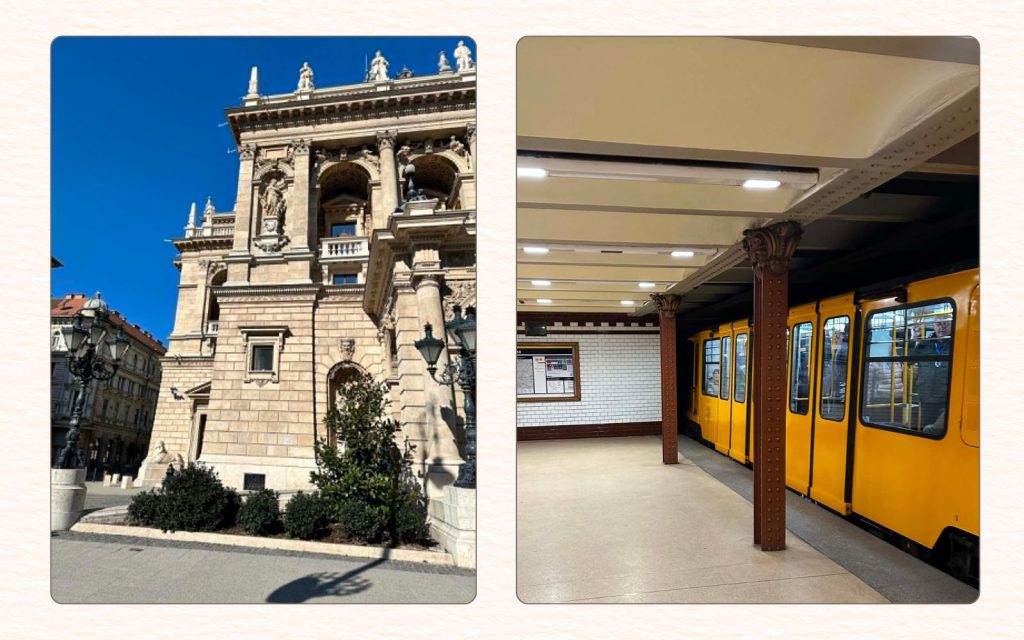
    Hungarian State Opera and yellow M1 metro train at Opera station in Budapest

    Before landing, save:

    • the complete accommodation address;
    • the building number;
    • the check-in instructions;
    • the closest useful transport stop;
    • the host or hotel telephone number;
    • an offline map or screenshot of the final route.

    Do not rely only on the hotel or apartment name. Budapest can have similarly named properties, buildings with several entrances and accommodation located inside residential courtyards.

    Still choosing your base? Read Where to Stay in Budapest: 7 Best Areas for First-Time Visitors.

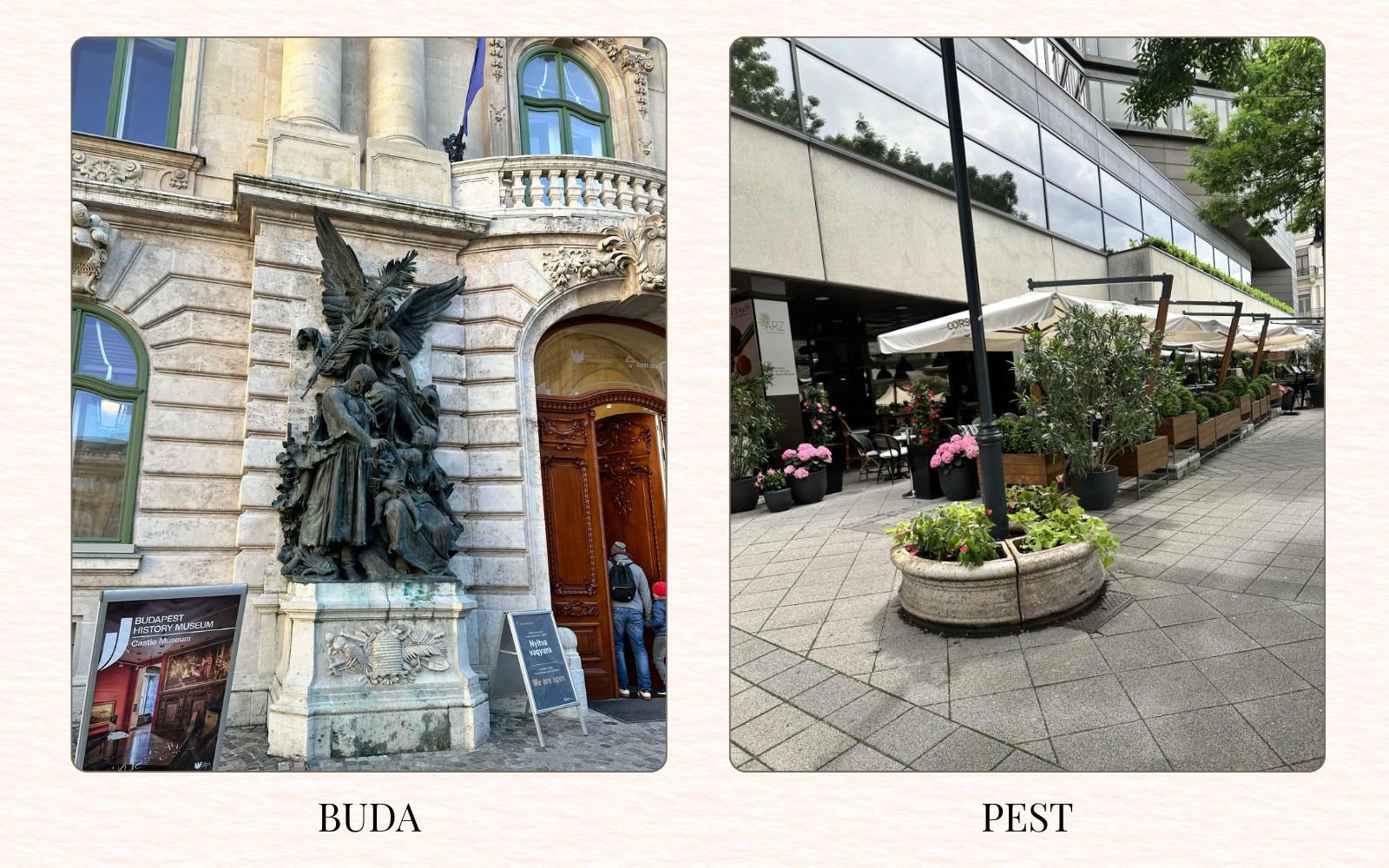
    For the Buda–Pest decision, continue to Buda or Pest: Which Side Should You Stay On?.

    100E Airport Express: the easiest public transport choice for many visitors

    The 100E Airport Express is the most straightforward public transport connection between Budapest Airport and the central city.

    It currently runs:

    • between Budapest Airport Terminal 2 and Deák Ferenc tér;
    • via Kálvin tér;
    • 24 hours a day;
    • seven days a week;
    • with a special airport ticket rather than an ordinary single ticket.

    This makes it a strong choice when:

    • you are staying in central Pest;
    • you have manageable luggage;
    • you want to avoid several transfers;
    • you are travelling alone or as a couple;
    • you arrive late but still feel comfortable using public transport;
    • your accommodation is near Kálvin tér, Deák Ferenc tér or a direct connecting line.

    Why the 100E works well for a first arrival

    You do not need to navigate several buses and metro platforms immediately after landing.

    The bus leaves from the airport terminal area and reaches two useful central transport points. Once you arrive at Kálvin tér or Deák Ferenc tér, you can walk, continue by metro or take another short connection.

    The main question is not whether the 100E reaches “the centre.”

    It is whether its central stop is practical for your exact accommodation.

    Which 100E airport ticket should you buy?

    The 100E uses a special fare.

    An ordinary Budapest single ticket or an ordinary 24-hour travelcard is not sufficient by itself. The standard airport shuttle-bus ticket is valid for one uninterrupted journey on the 100E and does not include transfers to other lines.

    Standard airport shuttle-bus ticket

    The standard ticket currently costs:

    2,500 HUF

    Choose this ticket when:

    • you do not hold an eligible Budapest or regional pass;
    • you are making a single airport journey;
    • you want the simplest ticket choice;
    • you are not entitled to free travel.

    Add-on airport shuttle-bus ticket

    A reduced 1,000 HUF add-on ticket is currently available through BudapestGO to holders of specified valid passes, including eligible Budapest, Pest County and Hungary passes. It is not a general discounted airport ticket available to every visitor.

    Before purchasing it, confirm:

    • that your pass is eligible;
    • that the pass will be valid during the airport journey;
    • that both products are available correctly in BudapestGO.

    When in doubt, the standard airport shuttle-bus ticket is the clearer option.

    Free travel eligibility

    Current BKK information states that passengers under 14 and over 65 can use the 100E free of charge, provided they meet the relevant eligibility and identification conditions. Other local free-travel entitlements may also apply.

    Carry the appropriate identification or documentation.

    Fare rules can change. Check the official BKK information before travelling rather than relying on an older blog post or screenshot.

    How to buy the ticket without creating extra stress

    There are several ways to purchase a 100E ticket.

    BudapestGO app

    BudapestGO can be used to plan the route and purchase digital tickets.

    Download the app and set up your payment method before travelling when possible. Doing this at home is usually calmer than creating an account while standing beside the bus with luggage.

    Follow the app’s current activation or validation instructions carefully.

    BKK ticket machine or customer point

    Ticket machines and BKK sales points are available at the airport.

    Check that you are buying the airport shuttle-bus single ticket, not an ordinary Budapest single ticket.

    Pay&GO contactless payment

    Pay&GO allows travellers to buy and validate the airport-bus ticket with one bank-card or compatible-device tap. No advance registration or app is required. The same card or device is used to prove the ticket during inspection.

    This can be one of the simplest options when:

    • your card supports contactless payment;
    • you are buying the standard ticket;
    • you do not need the pass-holder add-on fare;
    • you prefer not to download another app.

    Pay&GO purchases the ticket and validates it in the same action. Do not buy a separate second ticket because you are unsure whether the tap worked. Check the terminal response.

    Can several people pay with one card?

    Current BKK information allows multiple airport-bus tickets to be bought in one Pay&GO transaction on the 100E. Confirm the number selected before payment and keep the same card or device available during the trip.

    A calm ticket rule

    Choose one purchase method and understand it.

    Do not buy a paper ticket, a digital ticket and a bank-card ticket at the same time simply because the system feels unfamiliar.

    Kálvin tér or Deák Ferenc tér: where should you get off?

    Both are useful central stops, but they serve different parts of the city.

    Get off at Kálvin tér for:

    • the Great Market Hall area;
    • the Palace District;
    • southern District V;
    • parts of District VIII and IX;
    • connections to metro lines M3 and M4;
    • accommodation near the National Museum;
    • hotels or apartments around Ferenciek tere that are easier from the southern direction.

    Get off at Deák Ferenc tér for:

    • central District V;
    • St. Stephen’s Basilica;
    • District VI;
    • the western part of the Jewish Quarter;
    • accommodation around Vörösmarty tér;
    • connections to metro lines M1, M2 and M3;
    • central hotels near the Danube and Chain Bridge area.

    Use BudapestGO or another reliable route planner with the complete accommodation address.

    A property described as “near the city centre” may still be a 15- or 20-minute walk from the stop. That can be pleasant with a small bag and uncomfortable with a suitcase on a hot afternoon.

    Late arrival: choose the option that asks the least of you

    The 100E currently operates throughout the night, so a late flight does not automatically require a taxi.

    Public transport can still be a good option when:

    • your accommodation is close to Kálvin tér or Deák Ferenc tér;
    • check-in instructions are clear;
    • you have mobile data;
    • you are carrying light luggage;
    • you are comfortable walking the final streets;
    • you are not exhausted.

    A taxi or pre-booked transfer may be better when:

    • your accommodation is in Buda;
    • the final route requires several changes;
    • you are arriving with children;
    • your luggage is heavy;
    • the apartment entrance may be difficult to find;
    • someone in the group has limited mobility;
    • the check-in deadline is approaching;
    • you are too tired to make another series of decisions.

    Sometimes the calmest choice is not the cheapest one.

    It is the one that brings the journey to a simple end.

    Taxi: when door-to-door simplicity is worth paying for

    An official taxi can be the most practical way to reach your accommodation directly.

    Budapest Airport currently identifies Főtaxi and Uber as contracted taxi partners. Traditional taxi ranks are located on the arrivals level of Terminals 2A and 2B.

    Choose a taxi when:

    • you have large or several bags;
    • you are travelling in a small group;
    • your accommodation is not near the 100E route;
    • you are going to Buda;
    • you arrive very early or late;
    • someone in the group has limited mobility;
    • you want to avoid a final walk or transfer.

    Use the official taxi system

    Follow the signs to the authorised taxi rank or use the official service application.

    Avoid accepting an unsolicited ride from someone approaching you inside the arrivals area.

    Have the complete address ready, preferably written rather than only spoken. When your apartment has a difficult entrance, also save the host’s instructions.

    Főtaxi states that card payment is available in its vehicles, although it is sensible to confirm the payment method before departure.

    Do not rely on one fixed taxi price

    The final cost can depend on:

    • the exact destination;
    • traffic;
    • road works;
    • the route;
    • waiting time;
    • current regulated tariffs.

    A price quoted in an older article may no longer be accurate.

    Request or keep the receipt, especially when the journey is part of business travel or when you may need to contact the company afterward.

    Uber at Budapest Airport: familiar app, local taxi system

    Uber is currently available at Budapest Airport, but its Budapest operation belongs to the city’s regulated taxi framework rather than the private-car model travellers may know from other destinations.

    Budapest Airport’s June 2026 guidance states that standard Uber pickups use the Terminal 2A side, while larger or special vehicle requests such as XXL pickups use the Terminal 2B side.

    Choose Uber when:

    • you already use the application;
    • you prefer seeing booking details on your phone;
    • you want an app-based pickup process;
    • the designated vehicle type suits your group and luggage.

    Check the pickup instructions shown in the application after booking. Airport pickup arrangements can change during construction, major events or operational updates.

    Do not assume that Uber will always be cheaper than another official Budapest taxi. Compare convenience and current information rather than relying on how the service works in another country.

    miniBUD: a shared or private airport shuttle

    miniBUD provides airport-transfer services for Budapest, including shared and private options.

    A shared shuttle may be useful when:

    • you are travelling alone;
    • you want to reach the accommodation directly;
    • you prefer not to navigate public transport;
    • a private taxi feels unnecessarily expensive;
    • you do not mind waiting for or travelling with other passengers.

    The main compromise is time.

    A shared door-to-door service may make several stops for different passengers. It can be more direct than ordinary public transport without necessarily being faster than a taxi.

    miniBUD also offers private vehicle options for groups. Its current service information includes private minibuses for up to eight travellers, subject to vehicle and luggage conditions.

    Before booking, check:

    • whether the service is shared or private;
    • the estimated pickup window;
    • how flight delays are handled;
    • the permitted luggage;
    • the meeting point;
    • the destination area;
    • cancellation conditions;
    • whether child seats must be requested.

    A departure transfer may need to be booked in advance. miniBUD’s current FAQ asks passengers to order its airport-shuttle service at least five hours before the flight departure time.

    Private transfer: useful when certainty matters more than price

    A pre-booked private transfer can remove several small uncertainties from the arrival.

    It may be genuinely worthwhile for:

    • families;
    • groups;
    • birthday or anniversary trips;
    • travellers carrying unusual luggage;
    • guests arriving at night;
    • people staying in a hillside Buda property;
    • travellers with mobility requirements;
    • anyone who wants a driver waiting with the flight details;
    • apartment arrivals with a narrow check-in window.

    Before booking, verify:

    • whether the vehicle is private;
    • the maximum passenger and luggage allowance;
    • child-seat availability;
    • how long the driver waits;
    • whether flight delays are monitored;
    • the precise meeting point;
    • night or holiday surcharges;
    • cancellation terms;
    • whether the driver takes you to the exact building.

    A private transfer is not automatically the best Budapest arrival option.

    It may be the most comfortable option when your journey has several moving parts.

    Compare private Budapest airport transfers.

    The slower alternative: 200E and the metro

    Bus 200E connects the airport with Kőbánya-Kispest, where travellers can continue toward the city on metro line M3 during metro operating hours.

    The 200E itself currently runs 24 hours a day. At night, onward travel may involve night-bus connections rather than the metro.

    This route may be useful when:

    • you already have a valid Budapest pass;
    • your destination is convenient from the M3 line;
    • you are travelling toward Kőbánya-Kispest;
    • you do not mind transferring;
    • saving money matters more than having the simplest route;
    • you already understand the city’s public transport.

    It is usually not my first recommendation for a tired first-time visitor because it involves more steps:

    1. airport bus;
    2. transfer at Kőbánya-Kispest;
    3. metro or night transport;
    4. possibly another walk or connection.

    With several bags, a direct 100E bus or taxi may provide better value even when it costs more.

    Is there a train directly from Budapest Airport?

    There is no direct rail service from the passenger terminal to central Budapest.

    Ferihegy railway station is separate from Terminal 2 and requires a bus connection. For most first-time visitors going to central Budapest, this makes the journey less straightforward than the 100E.

    Do not confuse:

    • Budapest Airport Terminal 2;
    • Ferihegy railway station;
    • Budapest’s central railway stations.

    A route involving rail may make sense for a particular onward destination, but it is not the simplest default airport-to-centre journey.

    Getting to Buda: do not stop planning at the city centre

    The 100E brings you into central Pest.

    When your accommodation is in Buda, reaching Deák Ferenc tér is only the first part of the journey.

    Depending on the address, you may need:

    • a metro;
    • a tram;
    • a bus;
    • a river crossing;
    • a longer walk;
    • a taxi for the final section.

    The distance shown on the map does not reveal hills, steps or a difficult building entrance.

    Taxi or private transfer may be preferable when your Buda accommodation is:

    • on Castle Hill;
    • above the riverfront;
    • far from a direct transport stop;
    • difficult to access with luggage;
    • expecting a late check-in;
    • located along a steep walking route.

    For the practical difference between the two city sides, read Buda or Pest: Which Side Should You Stay On?.

    A note from Leja: my Budapest arrivals are usually by train

    I do not have a personal Budapest Airport arrival story.

    I usually travel to Budapest by Railjet and choose first class. From my starting point, the journey is around 250 kilometres and often takes about one hour and forty-five minutes, depending on the service and timetable.

    First-class Railjet seat with luggage during a train journey to Budapest
    My calmest Budapest arrivals usually begin on the train.

    For me, it feels simpler and more comfortable than flying. I can sit down, watch the landscape pass and arrive without airport procedures or a final transfer from outside the city.

    The train is often filled with cheerful groups from Germany, Switzerland, Spain and other places, across many age groups. Their excitement changes the atmosphere of the carriage. Budapest seems to begin before we arrive.

    That is my own route, not a reason for every traveller to avoid flying.

    It is also why I believe the first arrival choice should fit the journey you are actually making. Some travellers need the 100E. Others need a taxi. For me, the calmest arrival begins on the train.

    ÖBB currently operates regular Railjet and EuroCity connections between Austria and Budapest, but exact travel times depend on the departure station and service.

    Small arrival mistakes that create unnecessary stress

    Buying an ordinary ticket for the 100E

    The 100E needs its specific airport fare or an eligible add-on product.

    Not checking the best central stop

    Kálvin tér and Deák Ferenc tér serve different accommodation areas.

    Accepting an unsolicited ride

    Use the official taxi rank, contracted taxi provider or a clearly booked transfer.

    Saving only the hotel name

    Save the full address, building number and check-in instructions.

    Reading apartment access instructions after arrival

    Residential-building check-in may involve a gate code, lockbox, courtyard or a separate staircase.

    Read the instructions before the flight.

    Assuming you will have mobile data

    Download an offline map or screenshot the route.

    Planning a demanding first evening

    Flight delays, baggage waits and transfers can quietly remove several hours from the day.

    Avoid placing a fixed river cruise, theatre ticket or important dinner too close to the scheduled landing time.

    Choosing the cheapest option without considering the final walk

    A small saving may not be worthwhile when it leaves you carrying luggage for twenty minutes in unfamiliar streets.

    What to do after check-in

    Your first evening does not need to become the first sightseeing day.

    After checking in:

    • drink water;
    • charge your phone;
    • confirm the next morning’s plan;
    • eat something simple;
    • take a short walk nearby;
    • avoid crossing the whole city because a list says you should;
    • sleep when the journey has been long.

    Budapest will still be there after you have rested.

    For a balanced first visit, continue with First Time in Budapest: A Calm 3-Day Itinerary.

    For a gentler planning rhythm, read How to Plan a Calm Budapest Trip Without Overbooking Yourself.

    Frequently asked questions

    What is the cheapest way from Budapest Airport to the city centre?

    Public transport is generally cheaper than a taxi or private transfer.

    The 100E is direct but has a special airport fare. The 200E and metro combination may cost less for some travellers, particularly those with an eligible pass, but it requires more steps.

    Check current BKK prices for your exact ticket situation.

    How much is the 100E airport bus?

    The standard airport shuttle-bus ticket currently costs 2,500 HUF.

    An eligible pass holder may be able to buy the 1,000 HUF add-on ticket in BudapestGO. The add-on fare is not available without an eligible valid pass.

    Does the 100E run at night?

    Yes. The 100E currently operates 24 hours a day, seven days a week. Frequency may vary by time and on public holidays.

    Can I pay by card on the 100E?

    Yes. Pay&GO allows the standard airport-bus ticket to be purchased and validated with a contactless bank card or compatible device.

    Ticket machines and BudapestGO also offer card-payment options.

    Do I need to validate my 100E ticket?

    Yes, but the process depends on how you purchased it.

    Pay&GO purchases and validates the ticket in one tap. Digital and paper tickets must be used according to the current instructions for that product.

    Can I use a normal Budapest ticket on the 100E?

    No.

    An ordinary single ticket is not valid on the 100E. Use the standard airport shuttle-bus ticket, an eligible add-on ticket or another recognised entitlement.

    Can I use a Budapest travelcard on the 100E?

    Most ordinary Budapest travelcards do not include the 100E by themselves. Some eligible passes can be combined with the add-on airport ticket.

    Certain Budapest Card products may include defined airport-bus use, but the exact product conditions must be checked before purchase.

    Where does the 100E stop in central Budapest?

    Its principal central route currently includes Kálvin tér and Deák Ferenc tér.

    Check live route information because temporary traffic changes can affect stops.

    Is a taxi safe from Budapest Airport?

    Use the official airport taxi rank or a contracted service’s official booking method.

    Do not accept unsolicited transport from someone approaching you in the terminal.

    Is Uber available at Budapest Airport?

    Yes. Budapest Airport currently lists Uber as a contracted taxi partner, with designated pickup arrangements at Terminal 2.

    Should I book a private airport transfer?

    Consider one when you have several bags, are travelling in a group, arrive late, need a child seat or have accommodation that is difficult to reach.

    For a solo traveller staying close to the 100E route, it may be unnecessary.

    How long does it take to reach central Budapest?

    The time varies according to:

    • traffic;
    • waiting time;
    • transport choice;
    • central stop;
    • final accommodation address;
    • road or public transport disruption.

    Treat any single journey-time estimate as approximate.

    Should I exchange cash at the airport?

    You can use cards for many transport purchases, including Pay&GO and official app-based services.

    You do not need to exchange a large amount of cash simply to leave the airport. Check your bank’s foreign-transaction terms and keep a small backup payment option.

    Do I need to change hotels during a short Budapest stay?

    No.

    A well-placed hotel or apartment is usually enough for a three- or four-night visit.

    Compare options in Best Hotels in Budapest for First-Time Visitors.

    Final thoughts

    A calm Budapest arrival begins with one clear decision.

    Take the 100E when you want a simple public transport journey into central Pest.

    Choose a taxi when luggage, fatigue or the final address makes direct transport more sensible.

    Book a private transfer when several small arrival details would otherwise need to be managed at once.

    There is no prize for choosing the cheapest possible route after a long journey.

    There is also no reason to pay for a private car when the direct airport bus fits your plans perfectly.

    Choose the option you understand.

    Reach your accommodation.

    Put down your bags.

    The city does not need your full attention the moment the plane lands. Budapest can begin when you are ready.

    Travel. Taste. Feel.

    That is the Leja way.

    Your next step: plan the first days

    Once your arrival route is clear, continue with First Time in Budapest: A Calm 3-Day Itinerary.

    Still choosing accommodation? Read:

    Future affiliate CTA: Compare Budapest airport transfer options.

  • Buda or Pest: Which Side Should You Stay On?

    Buda or Pest: Which Side Should You Stay On?

    A calm comparison of convenience, atmosphere, nightlife, views and the rhythm of your Budapest stay.

    The Danube divides Budapest into two sides, but choosing between Buda and Pest is about more than geography.

    It changes how your mornings begin, how easily you return after dinner and what you see when you step outside your accommodation.

    Pest places you closer to many restaurants, cafés, central sights and evening programmes. Buda offers hills, historic streets, quieter nights and some of the city’s most memorable views.

    Neither side is better for every traveller.

    The right choice depends on whether you want Budapest to feel active and immediately accessible, or quieter and more reflective at the beginning and end of each day.

    Quick answer: is it better to stay in Buda or Pest?

    For most first-time visitors, Pest is the more practical place to stay.

    Central Pest offers a larger choice of accommodation, restaurants, cafés and evening activities. Its main visitor areas are flatter, and many important sights are connected by easy walks or direct public transport.

    Choose Buda when quiet evenings, historic atmosphere and views across the Danube matter more than having Budapest’s busiest restaurant and nightlife areas outside your door.

    Choose Pest for convenience and energy. Choose Buda for quiet, views and atmosphere.

    Buda or Pest at a glance

    ConsiderationPestBuda
    First visitUsually more practicalMore atmospheric, but requires slightly more planning
    WalkingFlatter central routesHillier, with slopes and steps
    Restaurants and cafésLarger and more spontaneous choiceFewer in some areas, often quieter
    NightlifeStronger and easier to reachMore limited
    ViewsLooks toward Buda and Castle HillLooks toward Pest and Parliament
    Romantic atmosphereLively evenings and river walksHistoric streets and quieter panoramas
    Public transportSimple central connectionsGood, but more river crossings may be needed
    Short weekendUsually the easier choiceBest when the Buda atmosphere is a priority
    Quiet sleepDepends strongly on the streetOften easier to find
    Accommodation pricesWide rangeDepends on the exact neighbourhood and view

    For most short first visits, choose Pest.

    Choose Buda when its quieter rhythm is part of the reason you want to visit Budapest.

    The Danube divides the map, not the city

    Buda and Pest have distinct characters, but they are not separate travel destinations.

    Bridges, trams, metros, buses and walking routes connect the two sides. Even when you stay in Pest, you will almost certainly spend time in Buda. If you sleep in Buda, many of your meals and evening activities may still take place across the river.

    Your accommodation side mainly shapes:

    • the first hour of the morning;
    • the final journey after dinner;
    • how much spontaneous choice surrounds you;
    • whether your daily routes begin on flat streets or hills;
    • the atmosphere immediately outside your door.

    Buda is often described as old and quiet, while Pest is described as young and lively. There is some truth in the contrast, but it is too simple.

    Pest also has old courtyards, historic cafés, memorial sites and calm residential streets.

    Buda is not silent or frozen in history. It contains homes, schools, restaurants, transport hubs and everyday city life.

    The difference is one of rhythm, not authenticity.

    Pest: when you want Budapest outside your door

    Pest is usually the easier choice for a first Budapest trip.

    Many of the city’s best-known central sights are here, including Parliament, St. Stephen’s Basilica, the Hungarian State Opera, Andrássy Avenue and the Jewish Quarter.

    It also has a larger concentration of:

    • hotels and apartments;
    • restaurants;
    • cafés and bakeries;
    • evening venues;
    • shops;
    • public transport connections;
    • flat central walking routes.

    When you stay in central Pest, you can often begin the day without planning.

    You may walk to the Danube, stop for coffee, continue toward the Opera or change direction when another street seems more interesting.

    This flexibility is especially valuable during a short visit.

    Why Pest works well for first-time visitors

    Choose Pest if:

    • this is your first Budapest trip;
    • you have only two or three full days;
    • you want restaurants and cafés nearby;
    • evening life matters to you;
    • you prefer flatter walking routes;
    • you want simple transport connections;
    • you enjoy leaving your plans partly open;
    • you do not want every evening to end with a river crossing.

    Pest is not one uniform neighbourhood.

    District V is the simplest classic choice.

    District VI offers a central but slightly softer balance of architecture, cafés and city life.

    District VII is stronger for food and nightlife, although the exact street can make a significant difference to sleep.

    The Palace District can suit travellers looking for a quieter Pest atmosphere.

    For a detailed comparison, read Where to Stay in Budapest: 7 Best Areas for First-Time Visitors.

    A note from Leja

    I rarely return to the same apartment, but I return to the same part of Pest.

    The property changes; the freedom does not.

    I like waking early, making coffee and walking into the city while the streets are still quiet. From central Pest, I can reach the Danube, Parliament, the Opera, cafés and transport connections without turning the morning into a planned journey.

    In the evening, I often walk back after dinner. For me, this is the real advantage of Pest: the city remains available at my own rhythm.

    The Pest riverfront: movement that can still feel calming

    Pest is the livelier side, but liveliness and calm are not always opposites.

    The Danube embankment near Parliament can be full of walkers, trams, visitors, cyclists and city sounds. Yet the river creates space around all that movement.

    A note from Leja

    Every time I visit Budapest, I spend hours walking along the Pest riverfront and past Parliament. I can also remain near the docks for a long time, watching the boats arrive, leave and turn on the water.

    There is always movement around me, but I find it deeply calming. The city is alive without asking me to hurry with it.

    That feeling is one of the reasons I continue to choose Pest. I can step into its energy, then find stillness beside the river without leaving the centre.

    When Pest may feel too busy

    Pest may not be the right base if:

    • you are extremely sensitive to street noise;
    • quiet evenings matter more than spontaneous dining;
    • you want your accommodation area to feel like a retreat;
    • nightlife does not interest you;
    • hills and historic views are part of your Budapest image;
    • you prefer a slower residential atmosphere.

    You do not necessarily need to cross to Buda to find calm.

    Within Pest, consider:

    • a side street instead of a main road;
    • a courtyard-facing room;
    • District VI rather than the busiest part of District VII;
    • the Palace District;
    • accommodation a short walk from the main nightlife streets.

    Check the exact location and recent guest comments rather than judging an entire district by its reputation.

    Buda: when the view is part of the stay

    Buda rises above the western side of the Danube.

    Its hills, historic streets and views give it a more spacious and reflective atmosphere than much of central Pest.

    Castle Hill is the best-known part, with Matthias Church, Fisherman’s Bastion and streets that become noticeably quieter after daytime visitors leave.

    Other parts of Buda feel more residential, green and removed from the busiest city routes.

    Choose Buda if you want:

    • quiet mornings;
    • historic surroundings;
    • views toward Parliament and Pest;
    • a romantic setting;
    • a slower end to the day;
    • accommodation that feels slightly removed from nightlife;
    • hills and scenic walks;
    • the Buda atmosphere to be part of the trip itself.

    Buda is not only a place to visit during the day.

    For the right traveller, staying there changes the emotional shape of the whole trip.

    A Budapest breakfast on the Buda side

    Even when I stay in Pest, I cross to Buda for at least one early breakfast.

    A note from Leja

    On every visit, I try to have breakfast once at Nagyi Palacsintázója near Batthyány tér, opposite Parliament.

    I like arriving around seven in the morning. The city still feels half asleep, and the early sun reaches the terrace. Across the Danube, Parliament stands in the soft morning light.

    There are sweet and savoury pancakes—simple, filled, layered, with meat, cheese or túró. I never need anything elaborate. A warm pancake, the river and the quiet view are enough to make the morning feel complete.

    At the time of writing, the Batthyány tér location is listed as open around the clock, but confirm the current hours before making an early-morning journey.

    This is also a reminder that you do not need to sleep in Buda to experience its mornings.

    When Buda may be the better choice

    Buda can be the stronger base if:

    • you are travelling as a couple;
    • this is an anniversary or romantic trip;
    • you want a quieter room;
    • river or Parliament views matter to you;
    • you do not plan to stay out in Pest every night;
    • you have four or five days rather than a very short weekend;
    • you enjoy hills and scenic walks;
    • you want the accommodation area to feel separate from the busiest city centre.

    It can also suit returning visitors who already understand Budapest’s transport and do not need to place every major sight within immediate walking distance.

    For a couple-focused plan, read Romantic Weekend in Budapest: A Slow 2-Day Itinerary.

    The beauty of Buda comes with a little more planning

    Buda’s quiet and elevated views come with practical considerations.

    Hills and steps

    A distance that looks short on a map may include a steep street, stairs or an uneven route.

    This matters when:

    • arriving with luggage;
    • travelling in summer heat;
    • visiting in icy winter conditions;
    • someone in the group has limited mobility;
    • returning late after a long walking day.

    Check the actual route between the accommodation and the nearest useful transport stop.

    Evening food choices

    Some parts of Buda have good restaurants and cafés, but the choice can be more limited late in the evening.

    Check what remains open near the accommodation rather than assuming you will always find dinner spontaneously.

    Returning from Pest

    Public transport connects both sides well, but a late dinner or nightlife programme may involve:

    • waiting for transport;
    • changing lines;
    • crossing a bridge;
    • taking a taxi or ride service;
    • walking farther than expected after arrival.

    None of these is a reason to avoid Buda. They are simply part of the decision.

    Room access

    In historic or hillside properties, check:

    • lift access;
    • entrance steps;
    • luggage arrangements;
    • reception hours;
    • taxi drop-off point;
    • the route from the nearest stop.

    A beautiful address is not automatically an easy address.

    For couples: quiet Buda or lively Pest?

    Both sides can create a romantic Budapest trip, but in different ways.

    Choose Pest when you want to step into the evening

    Pest is better for couples who enjoy:

    • spontaneous dinners;
    • wine bars and cafés;
    • walking between neighbourhoods;
    • illuminated riverfront views;
    • a wider choice of evening programmes;
    • returning on foot without planning transport.

    A Pest stay can feel energetic and intimate at the same time, especially when the Danube is part of the evening route.

    Choose Buda when you want to return from the evening

    Buda works well for couples who prefer:

    • quieter streets after dinner;
    • a room with a city or river view;
    • historic surroundings;
    • slower mornings;
    • fewer late-night distractions;
    • the feeling of looking toward the city rather than sleeping inside its busiest part.

    Choose Pest when you want to step into the evening. Choose Buda when you want to return from it.

    After dark: the walk that joins both sides

    Fisherman’s Bastion is beautiful, but the most powerful part of Buda is sometimes the view beyond the monument.

    From Buda, Pest opens across the river. Parliament, the bridges and the central riverfront become part of one illuminated cityscape.

    A note from Leja

    After dark, I love walking along the Buda riverfront and then crossing the Chain Bridge on foot.

    Illuminated Chain Bridge connecting Buda and Pest at night
    Buda and Pest feel different, but the most memorable stay often includes time on both sides.

    From the Buda side, I can see Parliament and Pest glowing across the water. On the bridge, both sides remain visible: the hills behind me, the city lights ahead and the Danube moving below.

    It is not a hidden or private Budapest experience. Many people make the same crossing. Yet it never feels ordinary to me.

    The walk gives you time to understand that Buda and Pest are not competing halves. Together, illuminated on both sides of the river, they become the city people remember.

    Buda or Pest for nightlife?

    Choose Pest.

    District VII contains Budapest’s strongest concentration of bars, ruin pubs, restaurants and late-night venues.

    District VI and District V can offer easier access to nightlife while providing more distance from the busiest streets.

    Stay in Buda for nightlife only when:

    • you are comfortable planning the journey back;
    • you do not mind crossing the river late;
    • you expect to use public transport or an occasional taxi;
    • the quiet accommodation setting matters more than immediate access.

    The best nightlife location is not always directly above the busiest bar.

    A hotel or apartment on the edge of the Jewish Quarter may offer a better balance between evening access and sleep.

    Read Jewish Quarter Budapest: History, Cafés and Evening Streets before deciding where to stay around District VII.

    Buda or Pest for food and cafés?

    Pest offers more spontaneous choice

    Pest has the larger concentration of:

    • breakfast places;
    • cafés;
    • traditional Hungarian restaurants;
    • contemporary bistros;
    • bakeries;
    • street food;
    • international restaurants;
    • late-evening dining.

    This makes it easier to walk outside and decide where to eat without planning far ahead.

    Central, visitor-heavy streets can charge noticeably more for recognisable foods such as lángos and kürtőskalács. Walk away from the most photographed squares and compare menus before choosing.

    Some restaurants also offer weekday lunch menus that can provide a simpler and more reasonably priced introduction to Hungarian cooking.

    Buda offers quieter meals

    Buda has fewer choices in some areas, but the atmosphere may be calmer.

    You may find:

    • residential neighbourhood restaurants;
    • quiet terraces;
    • panoramic dining;
    • traditional cafés;
    • places that feel less connected to the main visitor flow.

    Buda rewards a little research. Check opening days and kitchen hours rather than assuming that every area has late-evening options.

    For local food ideas, read Budapest Food Guide: What to Eat and Where to Begin.

    For a slower morning, continue to Best Budapest Cafés for a Slow Morning.

    Buda or Pest for thermal baths?

    Both sides have important thermal baths, so the decision depends more on the experience than the riverbank.

    Pest: Széchenyi and City Park

    Choose Pest when you want:

    • the classic Széchenyi experience;
    • outdoor thermal pools;
    • grand architecture;
    • City Park before or after the bath;
    • a livelier social atmosphere.

    Széchenyi works naturally as part of a Pest-based day.

    Buda: Rudas and Lukács

    Choose Buda when you want:

    • Ottoman-era atmosphere at Rudas;
    • a rooftop Danube view;
    • a quieter bathing rhythm at Lukács;
    • a bath experience that feels less centred on the classic postcard image.

    You do not need to stay on the same side as the bath.

    Budapest’s transport makes it possible to select the bath that fits your travel style, regardless of your accommodation.

    For current practical information, read Budapest Thermal Baths: What to Know Before You Go.

    Buda or Pest for walking?

    Pest is easier for long, unplanned walks

    Central Pest is generally flatter.

    This makes it well suited to:

    • long riverfront walks;
    • the Nagykörút;
    • Andrássy Avenue;
    • the Opera and Heroes’ Square route;
    • moving between cafés and neighbourhoods;
    • visitors who prefer fewer slopes and steps.

    Walking in Pest can become part of daily life rather than a formal sightseeing activity.

    Buda rewards effort with views

    Buda’s slopes create some of Budapest’s strongest panoramas.

    Castle Hill, the riverfront and elevated neighbourhoods offer a different relationship with the city, but even short routes can require more energy.

    Allow extra time for:

    • climbing;
    • stairs;
    • uneven streets;
    • finding accessible routes;
    • stops for the view.

    Do not assume that a nearby bus, lift or funicular makes every destination completely step-free. Check the precise route when mobility matters.

    Buda or Pest for airport arrival?

    Pest is usually simpler for a first arrival by public transport.

    The central airport-bus connection reaches the Deák Ferenc tér area, which provides onward access to several central Pest neighbourhoods.

    A Pest stay may mean:

    • fewer transfers;
    • a shorter walk with luggage;
    • an easier first evening;
    • simpler orientation.

    Buda is also accessible, but the journey may require an additional metro, bus, tram or river crossing, depending on the exact address.

    A taxi or pre-booked transfer can be useful when:

    • arriving late;
    • carrying several bags;
    • travelling with children;
    • mobility is limited;
    • the Buda property is on a hill or difficult route.

    For the full comparison, read Budapest Airport to City Centre: A Calm Arrival Guide.

    Is Buda or Pest cheaper?

    Neither side is always cheaper.

    Prices depend on:

    • the precise neighbourhood;
    • hotel or apartment type;
    • season;
    • weekday or weekend;
    • major events;
    • river or city views;
    • room size;
    • cancellation conditions;
    • breakfast and added fees.

    Castle Hill and premium Buda river views can be expensive.

    District V, the Pest riverfront and the most central areas can also command high prices.

    A property farther from the centre may show a lower nightly rate but require more transport, time or taxis.

    Compare the final cost and the daily rhythm, not only the side of the river.

    For specific options, read Best Hotels in Budapest for First-Time Visitors.

    Choose Buda or Pest by the way you travel

    Choose Pest if:

    • this is your first visit;
    • you have only a few days;
    • restaurants and cafés matter;
    • you enjoy evening life;
    • you prefer flat walking;
    • you want to begin the city on foot;
    • public transport simplicity matters;
    • you like making spontaneous plans.

    Choose Buda if:

    • quiet is a priority;
    • views matter more than nightlife;
    • you are travelling as a couple;
    • you enjoy hills and historic streets;
    • you do not plan to spend every evening in Pest;
    • your accommodation atmosphere is part of the experience;
    • you prefer looking toward the city to sleeping in its busiest centre.

    Choose a middle ground if:

    • you want a Pest hotel close to the Danube;
    • you want a Buda property near the Chain Bridge;
    • you want central access but a courtyard-facing room;
    • you prefer a quieter District VI or Palace District street;
    • you want to cross the river easily without staying in the busiest area.

    Frequently asked questions

    Is Buda or Pest better for first-time visitors?

    Pest is generally better for first-time visitors because it offers easier access to restaurants, cafés, nightlife, central sights and flat walking routes.

    Choose Buda when quiet, views and historic atmosphere are higher priorities.

    Which side of Budapest is safer?

    It is not useful to label one entire side as safe and the other as unsafe.

    The precise street, surroundings, transport route and time of day matter more. Check recent accommodation reviews and current official travel advice, and use ordinary city awareness.

    Is Buda or Pest better for nightlife?

    Pest is better for nightlife.

    District VII has the highest concentration of late-night venues, while District V and District VI can provide convenient access with more distance from the busiest streets.

    Is Buda or Pest more romantic?

    Buda feels quieter, more historic and more panoramic.

    Pest offers lively dinners, cafés, illuminated river walks and more spontaneous evening choices.

    The more romantic side depends on whether you prefer stillness or city energy.

    Is it easy to cross between Buda and Pest?

    Yes. Bridges and public transport connect the two sides.

    However, crossing several times every day can add time and energy to a short trip, especially when returning late or travelling with luggage.

    Which side is better for walking?

    Pest is flatter and usually easier for long urban walks.

    Buda is hillier and more demanding, but offers wider views and historic routes.

    Which side is better for thermal baths?

    Both sides have significant baths.

    Choose Széchenyi in Pest for a grand, lively first experience. Choose Rudas or Lukács in Buda for historic or quieter bathing styles.

    Is Buda or Pest cheaper?

    Neither side is consistently cheaper.

    The exact area, room, season, view and booking conditions matter more than whether the property is in Buda or Pest.

    Can I stay in Buda and enjoy Pest nightlife?

    Yes.

    Plan the late-evening route in advance and check current public transport. An occasional taxi may be useful depending on the hour and the exact Buda address.

    Should I split my stay between Buda and Pest?

    For a three- or four-night visit, changing accommodation is usually unnecessary.

    Choose one well-connected base and explore both sides from there. Moving hotels consumes time and interrupts the rhythm of a short trip.

    Final thoughts

    For most first-time visitors, Pest is the easier answer.

    It offers more choice, simpler movement and the freedom to begin or end the day without much planning.

    But the easier answer is not always the right answer.

    Choose Buda when waking above the river, returning to quieter streets or seeing Parliament across the water matters more to you than having the largest selection of restaurants nearby.

    And wherever you stay, cross the river on foot at least once after dark.

    Walk beside the Danube. Look back at the side you have left. Pause on the bridge while both halves of Budapest remain illuminated around you.

    The city does not ask you to choose one side and ignore the other.

    It asks you to notice how they belong together.

    Travel. Taste. Feel.

    That is the Leja way.

    Your next step: choose the neighbourhood

    Decided between Buda and Pest?

    Continue with Where to Stay in Budapest: 7 Best Areas for First-Time Visitors to choose the exact district.

    Ready to compare accommodation?

    Read Best Hotels in Budapest for First-Time Visitors.

  • Best Hotels in Budapest for First-Time Visitors

    Best Hotels in Budapest for First-Time Visitors

    A calm, practical shortlist by neighbourhood, travel style and the kind of Budapest stay you want.

    Choosing a Budapest hotel is not only about finding a comfortable room.

    It is about deciding how you want the city to feel when you step outside in the morning.

    Do you want the Danube to be a few minutes away? Would you rather stay near the Opera and Andrássy Avenue? Do you want restaurants and evening life outside your door, or a quieter room after a long day of walking?

    For a first visit, location often matters more than an impressive lobby.

    A well-placed hotel can give time back to the city. You can walk more, return to your room during the day and avoid turning every dinner or evening programme into a transport decision.

    This guide is not a ranking of Budapest’s most expensive hotels. It is a practical shortlist of properties that may suit different kinds of first trips.

    Still choosing the neighbourhood? Begin with Where to Stay in Budapest: 7 Best Areas for First-Time Visitors before comparing individual hotels.

    Quick answer: where should a first-time visitor stay in Budapest?

    For most first-time visitors, central Pest is the easiest base.

    Choose District V for the simplest sightseeing location, District VI for cafés, architecture and a balanced central atmosphere, or the quieter edge of District VII for restaurants and evening life.

    Choose Buda if you value river views, historic surroundings and quieter nights more than immediate access to Pest’s nightlife.

    For an elegant central stay, begin with Hotel Moments Budapest or Prestige Hotel Budapest. Consider Hotel Clark Budapest for a romantic Buda setting, voco Budapest D8 for practical central convenience, or Hotel Rum Budapest for contemporary design and food-focused city days.

    Budapest hotel shortlist at a glance

    Best forHotelAreaMain reason to consider it
    Best overall first-time baseHotel Moments BudapestDistrict VIAndrássy Avenue, Opera and central Pest access
    Classic central comfortPrestige Hotel BudapestDistrict VDanube, Basilica and Chain Bridge proximity
    Couples and Chain Bridge atmosphereHotel Clark BudapestBudaAdults-only setting and river-facing room options
    Practical central conveniencevoco Budapest D8District VVery central location near Váci Street and the river
    Design and food-focused travelHotel Rum BudapestDistrict VBoutique character near Kálvin tér and the market
    Danube and Great Market Hall accessBohem Art HotelDistrict VWalkable southern inner-Pest location
    Quiet luxury and spa timeKozmo Hotel Suites & SpaDistrict VIIIMore spacious, retreat-like city stay
    Quieter Pest comfortThree Corners Lifestyle HotelDistrict IXCalm street and access to the southern centre

    This shortlist is not a fixed ranking. The right choice depends on the rhythm, budget and location of your own trip.

    A note about the links in this guide

    Some accommodation links on this page may later become affiliate links. If you book through one of them, Leja Travel Notes may earn a commission at no additional cost to you.

    Hotels are included because of their location, traveller fit and practical value—not because of the commission attached to a booking.

    Prices, hotel policies, facilities and room categories can change. Always confirm the final conditions before paying.

    How these Budapest hotels were selected

    I do not claim to have personally stayed in every hotel listed here.

    The shortlist is based on:

    • location for a first Budapest visit;
    • access to walking routes and public transport;
    • the usefulness of the surrounding area after dark;
    • the hotel’s current official description;
    • available room and facility information;
    • patterns in recent guest feedback;
    • different travel styles and budgets;
    • honest compromises as well as advantages.

    A hotel can be beautiful and still be wrong for your trip.

    A Buda hotel with a wonderful view may feel inconvenient if you plan to spend every evening in District VII. A central nightlife hotel may seem exciting until you discover that your room faces the busiest street.

    The purpose of this guide is not to choose for you. It is to make the choice clearer.

    Choose the area before choosing the hotel

    Budapest hotels are easier to compare once you understand the main areas.

    District V

    Choose District V for classic central convenience.

    It works well for short first visits, Danube walks and easy access to Parliament, St. Stephen’s Basilica and several transport connections.

    Green central Budapest streets and historic architecture near District V and District VI hotels
    Central Budapest combines walkable streets, historic architecture and easy access to the city’s main sights.

    District VI

    Choose District VI for the Opera, Andrássy Avenue, architecture and café-friendly city days.

    It is central without placing every hotel in the most intensely visited part of Pest.

    District VII

    Choose District VII when restaurants, nightlife and Jewish Quarter atmosphere are central to the trip.

    Check the precise street and room position carefully.

    Buda

    Choose Buda for a quieter and more scenic stay.

    It can be especially appealing to couples, but may require more river crossings when your plans focus on Pest.

    For the full comparison, read Where to Stay in Budapest: 7 Best Areas for First-Time Visitors.

    Hotel Moments Budapest: best overall for an elegant first visit

    Best for: First-time visitors who want a polished, central Pest base
    Area: District VI, Andrássy Avenue
    Style: Elegant four-star city hotel

    Hotel Moments Budapest stands on Andrássy Avenue, close to the Hungarian State Opera and within walking distance of St. Stephen’s Basilica and central Pest. Its official site currently lists 99 rooms in several categories.

    Why it may work for a first visit

    The location makes several kinds of Budapest day possible.

    You can walk toward the Basilica and the Danube, continue along Andrássy Avenue or reach the Jewish Quarter without beginning each journey with a complicated route.

    It is a useful choice for travellers who want the hotel to feel refined but do not need a large resort-style property.

    The surrounding area also makes it easy to combine sightseeing with cafés, restaurants and evening walks.

    What to consider before booking

    Andrássy Avenue is central and active.

    Check whether the room faces the avenue, another street or an internal part of the building, particularly if you are sensitive to traffic or city noise.

    Also compare the room categories rather than choosing only by the first displayed price.

    Room detail to check

    Confirm:

    • bed configuration;
    • room direction;
    • breakfast inclusion;
    • cancellation conditions;
    • whether the room category has a view or only an internal outlook.

    Leja verdict

    A strong first choice when you want Budapest to feel central, elegant and easy without choosing the most formal luxury category.

    Check current rooms at Hotel Moments Budapest

    Prestige Hotel Budapest: best for classic central comfort

    Best for: Classic city breaks and first-time sightseeing
    Area: District V
    Style: Refined central hotel with historic character

    Prestige Hotel Budapest is positioned a short distance from the Danube, Chain Bridge, St. Stephen’s Basilica and Andrássy Avenue.

    Why it may work for a first visit

    This part of District V makes it possible to move between several classic Budapest experiences without spending much time on transport.

    You can walk toward the Danube in the evening, cross to Buda, visit the Basilica or return to the hotel between daytime plans.

    Prestige may appeal to travellers who prefer a more traditional and polished atmosphere over a strongly contemporary or nightlife-focused hotel.

    What to consider before booking

    District V is convenient, but it is not always the least expensive area.

    Compare the final room price with hotels a few streets farther away, and decide how much the location is worth during a short trip.

    Recent construction, road work and neighbouring building conditions should also be checked close to your travel dates.

    Room detail to check

    Look at:

    • room size;
    • internal or street-facing position;
    • breakfast conditions;
    • cancellation deadline;
    • total price including local taxes.

    Leja verdict

    A practical choice when you want classic central Budapest outside your door and value convenience more than a neighbourhood feeling.

    Check current rooms at Prestige Hotel Budapest

    Hotel Clark Budapest: best for couples and Chain Bridge atmosphere

    Best for: Couples, anniversaries and romantic weekends
    Area: Buda, beside the Chain Bridge
    Style: Adults-only design hotel

    Hotel Clark Budapest is an adults-only hotel at the Buda end of the Chain Bridge. Different room categories offer different outlooks, including Danube-facing, street-facing and courtyard rooms.

    Why it may work for a first visit

    The setting is one of its strongest advantages.

    You are close to the Chain Bridge, the Buda Castle area and riverfront walks, while central Pest remains accessible across the bridge.

    This can create a romantic Budapest rhythm: quieter mornings on the Buda side followed by evenings beside the river or across in Pest.

    For couples, the hotel area can feel connected to the city’s atmosphere rather than separate from it.

    What to consider before booking

    Do not assume every room has a direct Chain Bridge or Danube view.

    Courtyard and street-facing rooms offer a different experience. The view shown in the hotel’s main photographs may belong to a specific higher room category.

    The adults-only policy also means this is not an option for families travelling with children.

    Room detail to check

    Confirm whether the selected category offers:

    • full Danube view;
    • partial or side view;
    • Chain Bridge view;
    • balcony;
    • courtyard outlook;
    • street view.

    Leja verdict

    Choose Hotel Clark when the river, the bridge and the mood of the stay matter as much as sightseeing convenience.

    For a slower couples’ plan, read Romantic Weekend in Budapest: A Slow 2-Day Itinerary.

    Check current rooms at Hotel Clark Budapest

    voco Budapest D8: best for practical central convenience

    Best for: Short stays and travellers who prioritise location
    Area: District V
    Style: Modern four-star central hotel

    The former D8 Hotel now operates as voco Budapest D8 by IHG. Its current official site describes it as a four-star hotel close to the Chain Bridge, Váci Street and Vörösmarty Square.

    Why it may work for a first visit

    The location is useful for a compact Budapest itinerary.

    You can reach the Danube, central shopping streets, District V landmarks and public transport without making the hotel itself the main event of the trip.

    This is a practical category for visitors who expect to spend most of the day exploring and want a reliable central base to return to.

    What to consider before booking

    Because the property has changed brand and positioning, older reviews and articles may still describe it as D8 Hotel or as a three-star superior property.

    Prioritise current information published after the rebranding.

    Central convenience can also mean busier surroundings, so review comments about room direction and noise.

    Room detail to check

    Confirm:

    • the current room name under the voco brand;
    • bed size;
    • room dimensions;
    • street or internal outlook;
    • breakfast inclusion;
    • whether older photographs still match the current room.

    Leja verdict

    A useful comparison choice when location and simplicity matter more than historic atmosphere or a large hotel experience.

    Check current rooms at voco Budapest D8

    Hotel Rum Budapest: best for design and food-focused travellers

    Best for: Design lovers, café visitors and urban explorers
    Area: District V, close to Kálvin tér
    Style: Contemporary boutique hotel

    Hotel Rum Budapest is a design-led property at Királyi Pál Street 4 in inner Pest. It occupies a historic city building and is close to Kálvin tér, the Great Market Hall and the southern part of District V.

    Why it may work for a first visit

    This location is central but has a different feeling from the Basilica and Parliament end of District V.

    The market, the National Museum, cafés, restaurants and the Danube are accessible, while Kálvin tér provides useful transport connections.

    Hotel Rum can suit travellers who prefer personality and contemporary design to conventional hotel formality.

    It also fits naturally into a trip where food and café experiences are part of the itinerary rather than only a practical necessity.

    What to consider before booking

    Boutique hotels often have significant differences between room sizes and layouts.

    Do not assume that the visual character of a larger featured room applies to the entry-level category.

    The experience may also feel more urban and compact than a conventional full-service hotel.

    Room detail to check

    Compare:

    • room size;
    • lift and stair access;
    • bed type;
    • natural light;
    • rooftop or breakfast arrangements;
    • whether a room can accommodate more than two people.

    Leja verdict

    A good option when the hotel’s character matters, but you still want to walk into the everyday food and cultural life of inner Pest.

    Continue with Budapest Food Guide: What to Eat and Where to Begin.

    Check current rooms at Hotel Rum Budapest

    Bohem Art Hotel: best for the Danube and Great Market Hall area

    Best for: Walkers, market visitors and practical first-time travellers
    Area: Southern District V
    Style: Casual art-focused central hotel

    Bohem Art Hotel is on Molnár Street in District V, close to the Danube, Váci Street and the Great Market Hall area. Current booking listings place it within a short walk of the river.

    Why it may work for a first visit

    This part of central Pest gives you a useful mix of river access and everyday city movement.

    You can walk toward the Great Market Hall, cross Liberty Bridge toward Buda or follow the river north toward the more formal centre.

    The area may suit visitors who want central access without placing the hotel directly beside Parliament or the Basilica.

    What to consider before booking

    The phrase “near Váci Street” can describe very different atmospheres.

    The northern shopping sections and the southern market end do not feel identical. Look at the precise hotel location rather than assuming it is beside every central landmark.

    Also check whether your room is one of the more compact categories.

    Room detail to check

    Review:

    • exact room dimensions;
    • street or internal outlook;
    • lift access;
    • breakfast option;
    • distance from the transport stop you expect to use.

    Leja verdict

    A practical base when the southern Danube, the market and long central walks are more important than polished riverfront luxury.

    Check current availability for Bohem Art Hotel

    Kozmo Hotel Suites & Spa: best for quiet luxury and spa time

    Best for: Travellers who want space, calm and a retreat-like stay
    Area: District VIII
    Style: Luxury boutique hotel and spa

    Kozmo Hotel Suites & Spa is in a quieter part of Pest near the Grand Boulevard. The hotel describes itself as a central but peaceful luxury property, while its Hilton listing places it within walking distance of sights including the Great Market Hall.

    Why it may work for a first visit

    Kozmo offers a different version of central Budapest.

    Rather than stepping directly into the busiest sightseeing streets, you return to a more spacious and composed environment after exploring.

    This may appeal to travellers who want the hotel to be part of their rest, not only somewhere to sleep.

    The spa can also be useful when you want wellness facilities without building every relaxing moment around a public thermal bath visit.

    What to consider before booking

    This is not the simplest hotel for walking out directly beside the Chain Bridge or Basilica.

    Some visitors will appreciate the calmer location; others may feel that they are spending more time getting into the classic centre.

    Compare the distance to your planned sights and the public transport route before deciding.

    Also verify which spa facilities are included with the room rate and which require a separate reservation or payment.

    Room detail to check

    Confirm:

    • room or suite size;
    • spa access;
    • pool and treatment availability;
    • breakfast inclusion;
    • distance to the nearest useful transport stop;
    • accessibility requirements.

    Leja verdict

    Choose Kozmo when calm, space and a restorative hotel atmosphere matter more than opening the door directly onto Budapest’s busiest centre.

    Check current rooms at Kozmo Hotel Suites & Spa

    Three Corners Lifestyle Hotel: best for quieter Pest comfort

    Best for: Travellers who want a calmer base and do not need to sleep beside the main landmarks
    Area: District IX, close to the southern centre
    Style: Modern four-star hotel

    Three Corners Lifestyle Hotel is at Hőgyes Endre Street 4. Its official information currently lists breakfast, a fitness area and an infrared sauna, while booking listings place it within walking distance of the Great Market Hall.

    Why it may work for a first visit

    This hotel may suit visitors who prefer to return to a calmer street after sightseeing.

    The southern Pest location keeps the market, Kálvin tér and parts of the inner city accessible without placing the property in the most intense visitor zone.

    It may also offer a better sense of space or value than some hotels immediately beside the most famous landmarks.

    What to consider before booking

    This is not the hotel to choose when you want the Chain Bridge, Parliament or the Opera directly outside.

    You may use public transport more often than you would from District V or VI.

    Check the actual routes to your planned activities and decide whether the quieter setting compensates for the added movement.

    Room detail to check

    Look at:

    • room position;
    • breakfast conditions;
    • sauna access;
    • parking, if relevant;
    • nearest tram or metro route;
    • total journey time to your evening plans.

    Leja verdict

    A useful option for travellers who want Pest convenience without spending every night in its busiest streets.

    Check current rooms at Three Corners Lifestyle Hotel

    A note from Leja: why I usually choose an apartment

    When I return to Budapest, I rarely stay in a hotel.

    I normally look for an apartment with a separate bedroom and a small kitchen. I do not plan to cook full meals—I want to eat in the city—but the kitchen gives me a kind of freedom that matters to me.

    If I wake at five and begin walking through Pest at six, I can make coffee before the cafés open. When I return late, I can prepare tea without checking hotel service hours.

    I also do not return to the same apartment. I choose a different place almost every time, but I usually remain in the same central area.

    That has taught me something important about Budapest accommodation: loyalty to one property is less important to me than choosing a neighbourhood that supports the way I live in the city.

    Hotel or apartment: which is better for your Budapest trip?

    A hotel is not automatically better than an apartment, and an apartment is not automatically more authentic.

    The right choice depends on the kind of independence and service you want.

    Choose a hotel if you value:

    • reception support;
    • luggage storage;
    • daily housekeeping;
    • organised breakfast;
    • help with taxis or transfers;
    • predictable check-in;
    • hotel facilities such as a gym or spa;
    • assistance when something goes wrong.

    Choose an apartment if you value:

    • a separate living or sleeping area;
    • a kitchen or kitchenette;
    • early coffee and late tea on your own schedule;
    • more space;
    • a home-like rhythm;
    • stays of several nights;
    • less dependence on hotel meal times.

    Check more carefully with an apartment

    Before booking, confirm:

    • legal and clear check-in instructions;
    • lift access;
    • the floor;
    • luggage storage before or after the stay;
    • late-arrival arrangements;
    • heating and air conditioning;
    • kitchen equipment;
    • noise from neighbours or the street;
    • cleaning fees;
    • deposit requirements;
    • the exact cancellation policy.

    An apartment listing can use broad location language just as a hotel can.

    Always check the precise address or approximate map position before paying.

    Which Budapest hotel should you choose?

    Choose Hotel Moments Budapest if:

    You want a polished central base near the Opera and Andrássy Avenue.

    Choose Prestige Hotel Budapest if:

    You want classic District V convenience close to the Danube and Chain Bridge.

    Choose Hotel Clark Budapest if:

    You are travelling as a couple and want the Buda side, design and river atmosphere.

    Choose voco Budapest D8 if:

    You prioritise a very central location and a practical short stay.

    Choose Hotel Rum Budapest if:

    You enjoy contemporary design, food and café-focused days.

    Choose Bohem Art Hotel if:

    You want the Great Market Hall, southern inner Pest and Danube walks nearby.

    Choose Kozmo Hotel Suites & Spa if:

    You want a quieter luxury hotel where rest and spa time are part of the trip.

    Choose Three Corners Lifestyle Hotel if:

    You prefer a calmer Pest base and do not need every landmark outside the door.

    Best Budapest hotel by travel style

    Easiest first trip

    Hotel Moments Budapest or Prestige Hotel Budapest

    Both offer central locations that reduce transport decisions.

    Romantic Budapest stay

    Hotel Clark Budapest

    The Buda and Chain Bridge setting creates a stronger sense of place, provided you select the room category carefully.

    Practical short weekend

    voco Budapest D8

    Its central position can be useful when time matters more than hotel ceremony.

    Food and design trip

    Hotel Rum Budapest

    A strong match for travellers who want the surrounding streets, markets and restaurants to be part of the experience.

    Quiet luxury

    Kozmo Hotel Suites & Spa

    Better for travellers who want the hotel to soften the trip rather than place them directly in the busiest sightseeing zone.

    Quieter Pest stay

    Three Corners Lifestyle Hotel

    Worth comparing when you prefer a calmer return at the end of the day.

    Best for nightlife without giving up the whole night’s sleep

    None of the main hotels above is included solely because it sits in the centre of District VII nightlife.

    That is intentional.

    Staying directly above a busy bar street can be convenient at midnight and uncomfortable at three in the morning.

    When nightlife is important, compare hotels on the quieter edges of District VII, District VI or District V.

    Before booking, check:

    • recent weekend reviews;
    • mentions of bars or clubs;
    • soundproofing;
    • courtyard-facing room options;
    • reception access late at night;
    • the walking route home;
    • whether you will still like the street in the morning.

    The best nightlife hotel is not necessarily the hotel closest to the loudest venue.

    It is the one that lets you enjoy the evening and still choose when the evening ends.

    For cultural and practical context, read Jewish Quarter Budapest: History, Cafés and Evening Streets.

    A riverfront hotel does not guarantee a river-view room

    Budapest hotel photographs often feature the Danube.

    That does not mean every room in the property has the same view.

    Before paying more, check whether the selected category includes:

    • full river view;
    • partial river view;
    • side river view;
    • Chain Bridge view;
    • Buda Castle view;
    • a balcony;
    • a high floor.

    Guest photographs can be more useful than a hotel’s main gallery because they show how the view appears from specific categories.

    Also consider whether you will spend enough time in the room to justify the price difference.

    For some travellers, the river view becomes part of the experience. For others, a quieter room a few streets away offers better value.

    A central stay can give time back to the city

    A note from Leja

    I prefer central Pest because it allows me to begin the day on foot.

    At six in the morning, the streets have a different atmosphere. The city is awake, but it has not yet become busy. I can walk toward the Danube, find the first open café or simply follow a familiar route without waiting for a taxi.

    In the evening, I also like knowing that I can walk back to my accommodation after dinner.

    For me, this is the real value of a central stay. It is not only about being close to landmarks. It is about being free to enter and leave the city at my own rhythm.

    Do not compare only the first nightly price you see

    Hotel prices are difficult to compare when the conditions are different.

    The lowest displayed number may not be the lowest final cost.

    Before choosing, compare the same:

    • dates;
    • number of guests;
    • room category;
    • bed type;
    • breakfast conditions;
    • cancellation policy;
    • payment timing;
    • local taxes;
    • service fees;
    • spa or facility access;
    • length-of-stay conditions.

    A non-refundable room may appear cheaper than a flexible room.

    A hotel with breakfast may cost more initially but suit travellers who want to begin early without looking for a café.

    A slightly more expensive central hotel may reduce transport expenses and save several hours over a short stay.

    Value is the complete experience, not only the first number on the page.

    What to check before booking any Budapest hotel

    Exact location

    Open the map and check the real walking route.

    “Central Budapest” can describe a wide area.

    Public transport

    Check the nearest metro, tram or bus stop and how you will arrive from the airport or station.

    For arrival planning, read Budapest Airport to City Centre: A Calm Arrival Guide.

    Room direction

    Ask whether the room faces:

    • a main road;
    • a side street;
    • an internal courtyard;
    • a bar terrace;
    • a construction site;
    • the river.

    Air conditioning and heating

    Do not assume that every historic building provides the same climate control in every room.

    This matters particularly in summer.

    Lift access

    Some boutique hotels occupy older buildings.

    Check whether the lift reaches your floor and whether steps remain between reception, lift and room.

    Breakfast

    Decide whether breakfast supports your trip.

    A hotel breakfast can be useful when you want a predictable start. Skipping it can be better when exploring Budapest cafés is part of the reason you came.

    For ideas, read Best Budapest Cafés for a Slow Morning.

    Current renovation notes

    Search recent reviews for:

    • construction;
    • scaffolding;
    • closed facilities;
    • street works;
    • spa maintenance;
    • lift problems;
    • breakfast-room changes.

    Cancellation conditions

    A lower non-refundable rate is not always worth the loss of flexibility.

    Read the actual deadline and time zone.

    Frequently asked questions

    What is the best Budapest hotel for a first-time visitor?

    Hotel Moments Budapest is a strong overall option for travellers who want an elegant central Pest location near the Opera and Andrássy Avenue.

    Prestige Hotel Budapest may suit travellers who prefer District V and easy access to the Danube and Chain Bridge.

    The better choice depends on the atmosphere and room category you want.

    What is the best area to stay in Budapest for the first time?

    District V is the simplest general choice.

    District VI offers a strong balance of central convenience, architecture and café culture. The quieter edge of District VII works for food and nightlife, while Buda suits travellers who prioritise atmosphere and views.

    Is it better to stay in Buda or Pest?

    Pest is generally more practical for a first visit because of its restaurants, nightlife, transport connections and flat central routes.

    Buda can be quieter, more romantic and more scenic.

    Read Buda or Pest: Which Side Should You Stay On? for the detailed comparison.

    Should I choose a hotel or an apartment in Budapest?

    Choose a hotel for reception, luggage storage, housekeeping and predictable services.

    Choose an apartment for more space, a kitchen and an independent daily rhythm.

    The area and exact property conditions matter more than the accommodation label alone.

    How much does a good Budapest hotel cost?

    Budapest hotel prices vary by season, day of the week, events, room category and cancellation conditions.

    Instead of relying on a fixed price range, compare current rates for your precise dates and ensure that taxes, breakfast and cancellation terms are equivalent.

    Which Budapest hotel is best for couples?

    Hotel Clark Budapest is worth comparing for its adults-only setting and position at the Buda end of the Chain Bridge.

    Hotel Moments and Prestige Hotel can be more practical for couples who prefer central Pest.

    Which Budapest hotels have Danube views?

    Hotel Clark offers specific room categories with different outlooks, including Danube-facing options.

    Other riverfront hotels may also offer Danube views, but the hotel’s location alone does not guarantee that your room faces the water.

    Always book the exact view category.

    Is central Budapest safe for hotel stays?

    Many visitors choose central Budapest because it is practical and well connected.

    No busy city area comes with a universal safety guarantee. Check the exact street, current travel advice, recent reviews, late-night access and the walking route you expect to use.

    Use ordinary city awareness, particularly late at night.

    Should I book a Budapest hotel with breakfast?

    Book breakfast when you prefer a predictable early start or do not want to search for food before sightseeing.

    Skip it when Budapest cafés and bakeries are an important part of the trip.

    Compare the price difference before deciding.

    How far in advance should I book?

    Book earlier when travelling during popular weekends, festivals, Christmas-market periods, major sporting events or public holidays.

    A flexible cancellation policy may allow you to secure a suitable room while keeping the option to change.

    Do I need to change hotels during a short Budapest trip?

    No.

    For a three- or four-night visit, one well-placed hotel or apartment is usually enough. Changing accommodation consumes time that is better spent in the city.

    Final thoughts

    The best Budapest hotel is not always the grandest one.

    It is the property that removes friction from the trip you want to take.

    For one visitor, that means an elegant room near Andrássy Avenue. For another, it means waking beside the Chain Bridge. Someone else may prefer a quiet spa hotel, a compact central base or an apartment with a kitchen for coffee before sunrise.

    Choose the area first.

    Choose the rhythm second.

    Choose the property third.

    Then compare the room itself—not only the building, photographs or first displayed price.

    Budapest becomes easier to experience when your accommodation supports the way you naturally travel.

    Travel. Taste. Feel.

    That is the Leja way.

    Your next step: compare current rooms and conditions

    Begin with the hotel that best matches your travel style, then compare room categories, cancellation conditions and the final price for your exact dates.

    Still uncertain about the neighbourhood? Return to Where to Stay in Budapest: 7 Best Areas for First-Time Visitors.

    Planning the whole visit? Continue with First Time in Budapest: A Calm 3-Day Itinerary.

    Choosing a hotel in Budapest is not only about finding a good room.

    It is about choosing the rhythm of your trip.

    Do you want to wake up near the Danube?
    Walk to cafés and restaurants?
    Stay close to the Chain Bridge?
    Be near the Opera and Andrássy Avenue?
    Have a romantic view?
    Find a practical base for a first visit?
    Stay somewhere quieter after long sightseeing days?

    Budapest is a beautiful city for first-time visitors, but the hotel area matters. A well-chosen hotel can make the trip feel calm, walkable and easy. A badly chosen one can make every day feel like a transport problem.

    For a smoother first arrival, check how your hotel connects to the airport in Budapest Airport to City Centre: A Calm Arrival Guide.

    This guide is not a list of the most expensive hotels in Budapest. It is a calm shortlist of Budapest hotel styles and areas that make sense for first-time visitors.

    Prices, availability, hotel policies and facilities can change, so always check current details before booking.

    Where should first-time visitors stay in Budapest?

    For most first-time visitors, the easiest areas are:

    • District V, near the Danube, Basilica, Parliament or Vörösmarty tér,
    • District VI, near Andrássy Avenue and the Opera,
    • the edge of District VII, if you want food, nightlife and Jewish Quarter atmosphere,
    • Buda near the Chain Bridge or Castle District, if you want views and a more romantic mood.

    If this is your first trip, I would usually avoid staying too far from the central areas unless you know Budapest well or have a specific reason.

    For a deeper neighbourhood guide, read Best Areas for First-Time Visitors

    Best hotel style for your first Budapest trip

    Before choosing a hotel, decide what kind of stay you want.

    For classic first-time sightseeing

    Choose a central Pest hotel near District V or District VI. This makes it easier to walk to major sights, cafés, restaurants and public transport.

    For romance

    Choose a hotel near the Danube, Chain Bridge, Buda Castle area, or an elegant central street with good evening walking options.

    For food and cafés

    Choose inner Pest, District V, District VI or the quieter edge of District VII.

    For a calmer trip

    Choose a central hotel that is not directly in the loudest nightlife streets.

    For thermal baths

    You do not need to sleep next to a bath. It is usually better to stay central and visit the bath as part of your itinerary.

    For bath planning, read Budapest Thermal Baths what to know

    Best hotels in Budapest for first-time visitors

    The hotels below are not ranked from best to worst. They are grouped by travel style, because the “best” hotel depends on the kind of Budapest trip you want.

    Hotel Moments Budapest: best for a polished central stay

    Hotel Moments Budapest is a strong choice for first-time visitors who want an elegant, central base without feeling too complicated.

    It is located on Andrássy Avenue, close to the Hungarian State Opera House and within reach of St. Stephen’s Basilica and central Pest. That makes it practical for visitors who want to walk, stop for cafés, return to the hotel during the day and enjoy a classic Budapest setting.

    Choose Hotel Moments if you want:

    • a central Pest location,
    • Andrássy Avenue atmosphere,
    • Opera and Basilica access,
    • a polished but not overly dramatic hotel,
    • a comfortable first-time Budapest base.

    Best for: first-time visitors who want elegance and convenience.

    Prestige Hotel Budapest: best for classic central comfort

    Prestige Hotel Budapest is a good option if you want a historic-feeling, refined hotel in the heart of the city.

    Its official positioning focuses on downtown Budapest, historic charm and modern sophistication, while travel listings place it close to the Danube and Chain Bridge area.

    This kind of location works well if you want to walk between the Basilica, the Danube, cafés, restaurants and evening river views.

    Choose Prestige Hotel Budapest if you want:

    • a classic central hotel,
    • easy access to the Danube,
    • a refined city-break feeling,
    • a comfortable base for sightseeing,
    • a hotel that feels more elegant than trendy.

    Best for: classic city-break travellers.

    Hotel Clark Budapest: best for couples and Chain Bridge views

    Hotel Clark Budapest is one of the most atmospheric choices for a romantic Budapest stay.

    It is closely connected to the Chain Bridge and Buda Castle area, and it is often described as an adults-only, design-focused hotel with strong views and a more grown-up mood. Its official site and recent hotel coverage both emphasize the Chain Bridge setting and contemporary boutique feel.

    This is not the most practical choice if you want to be in the middle of Pest nightlife, but it can be beautiful if you want views, river atmosphere and an elegant couple-focused trip.

    Choose Hotel Clark if you want:

    • a romantic Budapest hotel,
    • Chain Bridge atmosphere,
    • Buda Castle nearby,
    • a more design-led stay,
    • a grown-up city-break feeling.

    Best for: couples, anniversaries and romantic weekends.

    For a romantic Budapest plan, read the Romantic Weekend in Budapest

    D8 Hotel Budapest: best for practical central value

    D8 Hotel Budapest is a practical choice for first-time visitors who want to stay very central without choosing a luxury hotel.

    The hotel describes itself as a three-star superior lifestyle hotel in the heart of Budapest, close to the Chain Bridge and Váci Street, with several major sights within walking distance.

    This kind of hotel can work well if you care more about location, clean design and convenience than old-world luxury.

    Choose D8 Hotel if you want:

    • a very central base,
    • easy walking access,
    • a more casual hotel style,
    • practical comfort,
    • a good location for a short first visit.

    Best for: practical travellers and short city breaks.

    Hotel Rum Budapest: best for design lovers and food-focused travellers

    Hotel Rum Budapest is a design hotel in inner Pest, created for modern urban travellers. Its official site places it at Királyi Pál Street, close to the central city rhythm, and independent hotel coverage describes it as a contemporary boutique stay in a historic townhouse.

    This can be a good choice if you like character, design and food culture more than traditional hotel formality.

    Choose Hotel Rum if you want:

    • a boutique design hotel,
    • inner Pest location,
    • food and café access,
    • a more contemporary Budapest mood,
    • something with personality.

    Best for: design-conscious travellers and food lovers.

    For Budapest food planning, read the food-guide

    Bohem Art Hotel: best for Danube and Great Market Hall area

    Bohem Art Hotel is a useful option if you want to stay near the Danube, Váci Street, Liberty Bridge and the Great Market Hall side of inner Pest.

    The hotel’s official location information places it on Molnár Street, only a few steps from the Danube and Gellért Hill views.

    This area can work well for travellers who want to walk, eat, visit the market, cross toward Gellért Hill, and stay central without being directly in the most glamorous hotel zone.

    Choose Bohem Art Hotel if you want:

    • inner Pest location,
    • Danube proximity,
    • Great Market Hall access,
    • a practical city base,
    • a more casual boutique feeling.

    Best for: walkers, market visitors and practical first-time travellers.

    Kozmo Hotel Suites & Spa: best for a quieter luxury spa mood

    Kozmo Hotel Suites & Spa is a better fit for travellers who want a quieter, more spacious, luxury-leaning stay with spa atmosphere.

    The hotel’s official site describes it as a five-star luxury boutique hotel and spa in a quiet area of central Budapest on the Pest side, close to major tourist attractions, restaurants and shops.

    This may not be the most obvious first-time hotel if you want to step directly into the busiest sightseeing zone, but it can be appealing if you want calm, comfort and a more retreat-like feeling.

    Choose Kozmo if you want:

    • a luxury boutique hotel,
    • spa facilities,
    • a quieter central location,
    • more rest between sightseeing,
    • a calmer Budapest rhythm.

    Best for: travellers who want comfort, space and spa mood.

    Three Corners Lifestyle Hotel: best for quieter Pest comfort

    The Three Corners Lifestyle Hotel can work well for visitors who want a quieter, comfortable base in Pest while still staying within the broader city centre.

    Its official site gives the address as Hőgyes Endre utca 4 in Budapest and presents it as a stylish downtown retreat with comfort-focused rooms.

    This is a good example of a hotel that may not be in the most postcard-famous area, but can suit travellers who prefer rest, comfort and a slightly calmer location.

    Choose Three Corners Lifestyle Hotel if you want:

    • a quieter Pest location,
    • comfortable rooms,
    • calmer surroundings,
    • easy access to local restaurants,
    • less tourist-heavy atmosphere.

    Best for: travellers who do not need to sleep beside the main landmarks.

    Which Budapest hotel should you choose?

    Here is a simple way to decide.

    If you want the easiest classic first-time base: choose Hotel Moments or Prestige Hotel Budapest.

    If you want romance and Chain Bridge atmosphere: choose Hotel Clark Budapest.

    If you want practical central value: choose D8 Hotel Budapest.

    If you want design and food mood: choose Hotel Rum Budapest.

    If you want Danube and market access: choose Bohem Art Hotel.

    If you want spa comfort and a quieter luxury feeling: choose Kozmo Hotel Suites & Spa.

    If you want quieter Pest comfort: choose Three Corners Lifestyle Hotel.

    Best hotel areas by traveller type

    First-time visitor

    Stay in District V or District VI if you want the easiest experience.

    Couple

    Look near the Danube, Chain Bridge, Buda Castle side, or elegant central Pest.

    Food lover

    Choose inner Pest, District V, District VI or the edge of District VII.

    Café lover

    Stay near Andrássy Avenue, Basilica, inner Pest or the Opera area.

    For café ideas, read the Best Budapest Cafes

    Calm traveller

    Choose a central location that is not directly above nightlife streets.

    Short weekend visitor

    Stay central. Do not lose time commuting from the edge of the city.

    What to check before booking a Budapest hotel

    Before you book, check:

    • exact location on the map,
    • walking distance to the places you care about,
    • public transport access,
    • room size,
    • air conditioning in summer,
    • elevator availability,
    • breakfast details,
    • cancellation policy,
    • city tax or extra fees,
    • whether the area feels too noisy for your travel style,
    • recent guest reviews,
    • current renovation or construction notes.

    Do not book only because a hotel appears on a “best hotels” list. Choose the hotel that fits your trip.

    Should you stay in Buda or Pest?

    Most first-time visitors will probably find Pest more practical.

    Pest has more restaurants, cafés, shopping streets, nightlife, transport connections and flat walking routes. It is usually easier for a first visit.

    Buda can be more romantic, quieter and scenic, especially near the Castle District or Chain Bridge. But it can involve more hills and slightly less evening variety depending on where you stay.

    For most travellers:

    Choose Pest for convenience.
    Choose Buda for views and romance.
    Choose near the Danube if you want atmosphere.

    How many nights should you stay?

    For a first Budapest trip, three nights is a comfortable minimum.

    Two nights can work for a romantic weekend, but it will feel tighter. Four nights gives you more time for thermal baths, cafés, food, Jewish Quarter walks and slower exploring.

    If you are planning a calm trip, do not choose a hotel only for sleeping. Choose one that supports the rhythm of your stay.

    For a slower planning approach, read the Calm Budapest trip without Overbooking

    Final thoughts

    The best hotel in Budapest is not the same for every traveller.

    For one person, it is the hotel closest to the Chain Bridge.
    For another, it is the quiet room after a long walking day.
    For someone else, it is the design hotel near cafés and restaurants.
    For a couple, it might be the view.
    For a first-time visitor, it might simply be a central, comfortable base that makes everything easier.

    Budapest is easier to love when your hotel supports the way you want to travel.

    Choose the area first.
    Choose the mood second.
    Choose the hotel third.

    That is how a first Budapest trip becomes calmer, smoother and more memorable.

    Travel. Taste. Feel.

    The Leja way.

  • How to Plan a Budapest Trip Without Overbooking Yourself

    How to Plan a Budapest Trip Without Overbooking Yourself

    Calm Budapest trip: simple method for slow travel in Budapest, with fewer daily activities, better neighbourhood planning and enough space for the city to surprise you.

    Learning how to plan a Budapest trip is not only about choosing what to see.

    It is also about deciding what not to place on the same day.

    Budapest makes overplanning easy. Parliament, Castle Hill, thermal baths, cafés, markets, river cruises and the Jewish Quarter can all appear close together on a map. A short travel guide may describe each one as essential.

    But a map shows distance.

    It does not show hills, queues, tired feet, long lunches, changing weather or the moment when you find a street you want to follow instead of continuing toward the next reservation.

    A good Budapest itinerary gives you structure without making every hour fragile.

    This guide offers a calmer method of Budapest itinerary planning: one area, two main experiences and one open period per day.

    You will still see the city.

    You may simply notice more of it.

    Quick answer: how do you plan a Budapest trip without rushing?

    Plan no more than two main experiences per day, and group them in the same neighbourhood or on the same side of the Danube.

    Leave at least one open period for lunch, a café, a river walk, rest or an unexpected discovery.

    Book only the experiences that are time-sensitive or genuinely important to you. Keep cafés, markets, parks and ordinary meals more flexible.

    A useful calm Budapest itinerary follows this structure:

    One area, two main experiences and one open period per day.

    The calm Budapest itinerary method

    Use these three steps for each day.

    1. Choose one area

    Begin with geography rather than a list of attractions.

    For example:

    • central Pest;
    • Parliament and the Danube;
    • District VI and the Jewish Quarter;
    • Buda and Castle Hill;
    • City Park and Széchenyi;
    • the Great Market Hall and southern Pest.

    One neighbourhood can contain enough culture, food and walking for an entire day.

    2. Choose two main experiences

    A main experience takes time, energy or preparation.

    Examples include:

    • a Parliament visit;
    • Castle Hill;
    • a thermal bath;
    • a museum;
    • a guided walk;
    • a Danube cruise;
    • a long special dinner;
    • a food tour.

    Choose two, not five.

    3. Leave one period open

    Your open period may become:

    • a longer lunch;
    • a café stop;
    • an unplanned river walk;
    • time at your accommodation;
    • a second look at a place you enjoyed;
    • a response to weather;
    • a conversation with someone who gives you a new idea.

    This open time is not an empty space in the itinerary.

    It is part of the itinerary.

    Why Budapest is so easy to overplan

    Budapest can look unusually compact when you first study the map.

    Buda and Pest sit opposite each other. Bridges appear to make every crossing simple. Famous places seem to form one continuous central route.

    In practice, each day contains more than the distance between points.

    You may need time for:

    • walking to a transport stop;
    • waiting;
    • buying or validating a ticket;
    • climbing hills or steps;
    • finding an entrance;
    • standing in a queue;
    • eating;
    • returning to the accommodation;
    • changing clothes;
    • resting;
    • deciding that you want to remain somewhere longer.

    Thermal baths are a good example.

    A bath may look like one item on the list, but the full experience includes travel, changing, finding your way through the building, bathing, showering and recovering afterward.

    It is often a half-day experience, not a quick stop.

    The same is true of Castle Hill, a large museum or a special meal.

    This is why Budapest without rushing begins with realistic energy rather than optimistic map distances.

    How many things to do in Budapest per day?

    Many visitors ask how many things to do in Budapest per day.

    For most people, a good starting point is:

    • two main experiences;
    • one or two lighter stops;
    • one open period.

    Main experiences

    These may include:

    • Parliament;
    • Castle Hill;
    • Széchenyi Bath;
    • Rudas Bath;
    • a large museum;
    • a guided food tour;
    • a long cruise;
    • a special dinner;
    • a concert or evening event.

    Lighter stops

    These can fit naturally around the main plan:

    • coffee;
    • a bakery;
    • a short river walk;
    • a market browse;
    • one church;
    • a park;
    • a viewpoint;
    • a tram ride;
    • a small gallery;
    • a single cake.

    The difference is not only duration.

    A light stop does not control the whole day. It can be shortened, moved or removed without creating stress.

    A useful daily test

    Ask:

    If lunch lasts an hour longer than expected, does the rest of the day still work?

    If the answer is no, the day is probably too full.

    Plan the map before you plan the hours

    The strongest Budapest trip planning tips often have less to do with exact times and more to do with geography.

    Central Pest day

    A calm central Pest day might include:

    • St. Stephen’s Basilica;
    • coffee nearby;
    • Parliament;
    • a Danube walk;
    • dinner in District V or VI.

    These places connect naturally.

    Jewish Quarter and District VI day

    You might combine:

    • a synagogue or historical walk;
    • a café;
    • the Opera area;
    • Andrássy Avenue;
    • dinner or an evening bar.

    Avoid crossing to distant Buda between these activities.

    Buda day

    A slower Buda day can include:

    • breakfast near Batthyány tér;
    • Castle Hill;
    • lunch in Buda;
    • the riverfront;
    • an evening Chain Bridge crossing.

    This route allows Buda to feel like a place rather than a brief viewpoint stop.

    City Park and thermal-bath day

    Combine:

    • Heroes’ Square;
    • City Park;
    • Széchenyi Bath;
    • a nearby café or simple dinner.

    Do not add Parliament, Castle Hill and the Jewish Quarter simply because they are also important.

    For a concrete three-day route, read First Time in Budapest: A Calm 3-Day Itinerary.

    For the city-side decision, continue to Buda or Pest: Which Side Should You Stay On?.

    Stop crossing the city for every recommendation

    Budapest travel lists can make every café, restaurant and viewpoint sound irreplaceable.

    They are not.

    A famous coffee shop may be excellent, but it may not be worth a long journey away from the neighbourhood you are already enjoying.

    A highly recommended restaurant may create a complicated evening if it sits far from your daytime route and accommodation.

    A social-media-famous dessert may be less valuable than the unplanned bakery you find while walking.

    The city is not a ranking.

    You do not need to travel across Budapest for every “best” recommendation.

    The best café is sometimes the one that lets you stay in the neighbourhood you are already enjoying.

    Use recommendations as possibilities, not commands.

    What should you book in advance?

    Advance booking can reduce uncertainty.

    Too many bookings can create a different kind of pressure.

    Book ahead when missing it would genuinely disappoint you

    Consider booking:

    • a timed Parliament visit;
    • a popular thermal-bath package;
    • a private spa or massage;
    • a special Friday or Saturday dinner;
    • a dinner cruise;
    • a small-group tour;
    • a concert;
    • an anniversary or birthday experience;
    • a complex airport transfer.

    Keep these experiences flexible

    Leave room for:

    • cafés;
    • bakeries;
    • markets;
    • ordinary lunches;
    • river walks;
    • parks;
    • tram rides;
    • a simple dinner;
    • a second visit to somewhere you liked.

    A useful rule is:

    Book the experience that would disappoint you to miss. Leave the rest open.

    A booking should reduce uncertainty.

    It should not make you spend the whole day checking the time.

    Keep your first evening simple

    The first evening is one of the easiest parts of a trip to overbook.

    Even a flight or train that arrives on time does not guarantee a smooth transition into the city.

    You may still need to:

    • collect luggage;
    • reach the centre;
    • find the accommodation;
    • understand the entrance;
    • check in;
    • buy water;
    • eat;
    • charge your phone;
    • rest.

    For the first evening, consider:

    • dinner near the accommodation;
    • a short local walk;
    • tea or one glass of wine;
    • an early night;
    • a simple view of the Danube if it is nearby.

    Avoid placing a non-refundable cruise or important dinner too close to your scheduled arrival.

    For practical arrival planning, read Budapest Airport to City Centre: A Calm Arrival Guide.

    Build meals into your Budapest itinerary planning

    Food is not the empty space between attractions.

    A proper meal takes time.

    A café may take longer because the room feels good, the conversation continues or you decide to order cake.

    A market visit may become lunch.

    A useful planning estimate might be:

    • coffee or breakfast: 45–90 minutes;
    • lunch: around 60–90 minutes;
    • relaxed dinner: 90 minutes or more;
    • market visit: enough time to browse before deciding what to eat.

    These are not strict rules.

    They are reminders that eating is part of the Budapest experience.

    Do not schedule a heavy traditional lunch immediately before a thermal bath simply because the two places appear close.

    Do not book dinner at the other end of the city immediately after a long tour.

    For local food planning, read Budapest Food Guide: What to Eat and Where to Begin.

    For slower café mornings, continue to Best Budapest Cafés for a Slow Morning.

    Use your accommodation as part of the plan

    Many visitors behave as though returning to the hotel or apartment during the day means losing travel time.

    Sometimes it gives the day back to you.

    A central accommodation can allow you to:

    • rest;
    • change clothes;
    • drop off shopping;
    • make coffee or tea;
    • charge your phone;
    • prepare for the evening;
    • wait through heat or rain;
    • leave again with more energy.

    This is one reason location matters.

    A property farther away may cost less, but it can make a midday return impractical.

    A central apartment or hotel can become part of the rhythm rather than only a place to sleep.

    A note from Leja

    I usually choose a Budapest apartment with a separate bedroom and a small kitchen.

    I do not cook full meals there. I eat in the city.

    But I like making coffee before an early walk and tea whenever I return in the evening. The apartment allows me to follow my own rhythm.

    I do not stay in the same property every time. The apartment changes, but I return to the same central area.

    For me, the neighbourhood is more important than loyalty to a particular address.

    For area guidance, read Where to Stay in Budapest: 7 Best Areas for First-Time Visitors.

    A note from Leja: the riverfront is a real programme

    Some of my longest Budapest memories do not contain a ticket, reservation or formal attraction entrance.

    I spend hours walking beside the Danube, passing Parliament and watching boats near the docks.

    The riverfront may be busy and full of life, but it still makes me feel calm.

    I do not consider this time lost because I could have visited another place.

    The walk is the experience.

    This is one of the central ideas of slow travel in Budapest: not every meaningful part of the trip needs a named attraction or a completed booking.

    Leave room for spontaneity

    A plan is useful.

    It helps you know what matters, how the city fits together and what you would regret missing.

    But do not make the plan so rigid that Budapest cannot change it.

    A note from Leja

    I like knowing what I want to see and do before I arrive.

    At the same time, I always leave room for new ideas.

    When you are in Budapest, possibilities appear differently than they do at home. You notice a building, a street or a place you had not considered.

    Sometimes the best ideas come from conversations.

    You meet another traveller over breakfast, on a train, in a café or while waiting somewhere. They tell you what they enjoyed, where they have just been or what surprised them.

    Not every recommendation will suit you.

    But some may become part of your trip because you left enough space to say yes.

    How much spontaneous time should you leave?

    Try to leave:

    • one open afternoon across a three-day trip;
    • or at least two to three unscheduled hours each day;
    • or one evening without a fixed reservation.

    You do not need to leave the whole journey unplanned.

    Structure creates confidence.

    Spontaneity gives the trip life.

    Leave space for repetition

    Travel advice often tells us to avoid repeating anything.

    But returning can deepen the experience.

    You may want to go back to:

    • the same stretch of river;
    • the café where you felt comfortable;
    • the Parliament view from Buda;
    • a favourite market stall;
    • the same cake;
    • a bridge after dark.

    Repetition is not wasted time.

    It is often how a place becomes familiar.

    A note from Leja

    I return to several of the same Budapest places.

    I have favourite stops for lángos, kürtőskalács, rántott sertésvelő and Dobos-torta. I return to the Great Market Hall and to Batthyány tér.

    At the same time, I try new places on every trip.

    I do not see a contradiction between the two.

    Familiar places give the city continuity. New places keep it open.

    How to recognise an overbooked Budapest day

    A day is probably too full when:

    • it contains three or more timed reservations;
    • it requires several distant neighbourhoods;
    • it crosses between Buda and Pest repeatedly;
    • there is no real meal break;
    • one delayed activity destroys the rest of the schedule;
    • you cannot return to the accommodation;
    • taxis are necessary only to make the plan possible;
    • every walk has become a transfer;
    • you feel anxious about missing the next thing before the current one has ended.

    Use this simple test:

    If one late lunch ruins the whole day, the day is too full.

    What should you remove first?

    When your Budapest itinerary feels too crowded, do not remove sleep, food or rest first.

    Remove the least meaningful repetition.

    Start with:

    1. the second viewpoint;
    2. the café on the opposite side of the city;
    3. the second similar museum;
    4. the evening booking you chose only because it was popular;
    5. the stop included mainly for a photograph;
    6. the restaurant that does not fit the day’s route.

    Keep the experience that matters most.

    Let the weaker item go without trying to force it into the following day.

    A flexible three-day calm Budapest itinerary

    This is not a strict schedule.

    It is a structure you can adapt.

    Day 1: central Pest

    Choose:

    • one central landmark;
    • the Danube;
    • one relaxed meal;
    • an open evening.

    Example:

    • Basilica;
    • coffee;
    • Parliament;
    • riverfront;
    • dinner near the accommodation.

    Day 2: Buda

    Choose:

    • an early Buda start;
    • Castle Hill;
    • a long lunch;
    • a river walk or bridge crossing.

    Example:

    • breakfast near Batthyány tér;
    • Fisherman’s Bastion and surrounding streets;
    • lunch in Buda;
    • evening Chain Bridge walk.

    Day 3: one theme

    Choose one main theme.

    Thermal Budapest

    • City Park;
    • Széchenyi Bath;
    • light meal;
    • early evening.

    Jewish Quarter and food

    • cultural or historical visit;
    • café;
    • neighbourhood walk;
    • dinner.

    Market and cafés

    • Great Market Hall;
    • southern Pest;
    • pastry or coffee;
    • open afternoon.

    Green Budapest

    • Margaret Island;
    • river;
    • a long lunch;
    • no large attraction.

    This is how a calm Budapest itinerary remains useful without becoming rigid.

    Can you visit Buda and Pest on the same day?

    Yes.

    The two sides are well connected, and crossing the river can be part of the experience.

    The problem is not one crossing.

    The problem is using the bridges as constant transfers between unrelated plans.

    A balanced day may begin in Pest and end in Buda.

    For example:

    • central Pest in the morning;
    • lunch;
    • Buda riverfront in the late afternoon;
    • Chain Bridge after dark.

    An unbalanced day might move:

    • Pest;
    • Buda;
    • Pest;
    • City Park;
    • Buda again;
    • District VII for dinner.

    The map may allow it.

    Your energy may not.

    What to do when the plan changes

    A flexible itinerary is not a failed itinerary.

    It is one that can survive real life.

    When it rains

    Choose one indoor anchor:

    • a thermal bath;
    • a café;
    • a market;
    • a museum;
    • a long lunch.

    Keep the rest light.

    Do not replace every outdoor item with a new paid reservation.

    When you are tired

    Remove one programme.

    Return to the accommodation.

    Eat nearby.

    Do not push every missed item into the next day.

    Fatigue does not mean you are travelling badly.

    When something is delayed

    Keep the activity that matters most.

    Remove the stop that is geographically inconvenient.

    Check cancellation conditions.

    Avoid punishing the evening for a late morning.

    During summer heat

    Plan hills and exposed walks earlier.

    Rest in the warmest part of the day.

    Move the Danube walk toward evening.

    During winter

    Allow more time for clothing, slippery streets and warm indoor stops.

    Do not treat a cold riverfront walk as though it requires the same energy as a mild spring day.

    Slow travel in Budapest does not mean doing nothing

    Slow travel is sometimes misunderstood as avoiding famous places or spending the whole day in a café.

    That is not necessary.

    You can visit Parliament, Castle Hill, Széchenyi and the Great Market Hall.

    The difference is how you place them.

    Slow travel in Budapest means:

    • choosing fewer things with more intention;
    • staying long enough to notice where you are;
    • reducing unnecessary crossings;
    • respecting your own energy;
    • allowing meals to be part of the day;
    • letting the weather change the plan;
    • leaving space for a conversation or recommendation;
    • accepting that one trip cannot contain the whole city.

    You are not trying to finish Budapest.

    You are trying to experience it.

    Frequently asked questions

    How many activities should I plan per day in Budapest?

    Plan around two main experiences per day, plus one or two lighter stops.

    Leave at least one open period for food, walking, rest or a spontaneous discovery.

    Is three days enough for Budapest?

    Three full days are enough for a strong first introduction when you group sights by area.

    You can experience central Pest, Buda and one themed day without trying to cover every major attraction.

    Should I book Budapest attractions in advance?

    Book timed or high-priority experiences, such as Parliament, a special thermal-bath package, a dinner cruise or an important restaurant.

    Keep cafés, markets, parks and ordinary meals more flexible.

    How do I group Budapest sights by area?

    Build days around natural clusters:

    • central Pest and Parliament;
    • District VI and the Jewish Quarter;
    • Buda and Castle Hill;
    • City Park and Széchenyi;
    • Great Market Hall and southern Pest.

    Can I visit Buda and Pest on the same day?

    Yes.

    One planned crossing works well. Repeated crossings between unrelated attractions can make the day unnecessarily tiring.

    How much free time should I leave?

    Leave at least two or three unplanned hours each day, or one larger open afternoon during a three-day trip.

    Is Budapest good for slow travel?

    Yes.

    Budapest supports long walks, cafés, thermal baths, markets, neighbourhood exploration and repeated riverfront visits.

    What should I skip on a short Budapest trip?

    Skip the second similar viewpoint, distant café or attraction you included only because it is popular.

    Keep the places that genuinely interest you.

    Should I return to my hotel or apartment during the day?

    Yes, when it helps.

    A midday break can improve the evening and prevent the whole trip from becoming exhausting.

    How can I see Budapest without missing important sights?

    Choose one or two major priorities each day and group them geographically.

    You may miss some places, but you will experience the ones you choose more fully.

    What should I do if it rains?

    Choose one indoor anchor, such as a café, market, museum or thermal bath, and simplify the rest of the day.

    Is a detailed Budapest itinerary better than being spontaneous?

    The best approach combines both.

    Use a clear structure for important places and transport, then leave enough open time for new ideas and changes.

    Final thoughts

    A Budapest trip needs a plan.

    Without one, you may spend too much time deciding where to go or crossing the city inefficiently.

    But the plan should remain a support, not a set of instructions you are afraid to change.

    Choose one area.

    Choose two main experiences.

    Leave one part of the day open.

    Allow lunch to take longer.

    Return to the river.

    Listen when another traveller tells you about somewhere they loved.

    Go back to the same cake if you want to.

    Remove the place that no longer fits.

    Budapest does not become more meaningful because you visited more addresses.

    It becomes more meaningful when you had enough time to notice where you were.

    Plan enough to feel secure.

    Then leave enough space for Budapest to become more than the plan.

    Travel. Taste. Feel.

    That is the Leja way.

    Your next step: choose a simple three-day structure

    Continue with First Time in Budapest: A Calm 3-Day Itinerary.

    Then use these supporting guides:

  • Best Budapest Cafés for a Slow Morning

    Best Budapest Cafés for a Slow Morning

    Historic coffeehouses, specialty coffee, breakfast tables and cake stops—chosen by the kind of morning you want.

    The best Budapest cafés are not all trying to offer the same experience.

    Some invite you into a grand room of chandeliers, marble and history. Others place the focus almost entirely on the coffee. A small bakery may give you a better early start than a formal breakfast, while a quiet hotel café can offer the kind of calm that a famous room cannot.

    The right café depends on what you want from the morning.

    Are you looking for one of the great historic cafés in Budapest? Do you want a full Budapest breakfast, a serious specialty coffee, a classic Dobos-torta or simply a table where nobody makes you feel hurried?

    This guide helps you choose by mood, neighbourhood and purpose rather than by fame alone.

    A beautiful room does not guarantee the best coffee.

    Excellent coffee does not require a beautiful room.

    Sometimes the best café is simply the place that fits the day you are already having.

    Quick answer: which Budapest café should you choose?

    Choose a historic coffeehouse when the architecture, service and Budapest café culture are part of the experience.

    Choose one of the city’s modern Budapest coffee shops when the quality of the cup matters more than ceremony. Look for a breakfast café when you want a complete meal, and a traditional confectionery when cake is the main reason for stopping.

    The most famous cafés may involve higher prices and long queues. On a short visit, choose a place that fits your neighbourhood rather than crossing the whole city for a name you recognise.

    Choose the café for the morning you want—not only for the name you know.

    Choose a Budapest café by mood

    The morning you wantCafé typeWhat to expect
    Historic BudapestGrand coffeehouseOrnate interiors, table service and higher prices
    Serious coffeeSpecialty coffee shopSmaller setting and stronger focus on the cup
    Long breakfastBreakfast or brunch caféEggs, bread, pastries and a complete meal
    Coffee and classic cakeTraditional confectioneryDobos-torta, krémes, rétes and other pastries
    Early, simple startBakeryQuick coffee, pogácsa or a fresh pastry
    Quiet conversationSide-street or hotel caféLess spectacle and a slower atmosphere

    How these Budapest cafés were selected

    This is not a ranking based only on fame, social-media visibility or the beauty of the room.

    The cafés and café types in this guide were considered according to:

    • the kind of morning they suit;
    • the quality or distinct purpose of the experience;
    • their current operation;
    • location within a natural Budapest route;
    • whether the true strength is coffee, breakfast, cake, history or atmosphere;
    • practical issues such as queues, reservations and opening times;
    • honest compromises as well as advantages.

    I have not personally tried every coffee shop in Budapest.

    Where I share a personal experience, I say so clearly. Other recommendations are editorial choices based on location, current information and how well they fit a particular travel style.

    Historic cafés in Budapest: beautiful rooms with complicated lives

    Budapest’s historic coffeehouses are associated with writers, journalists, artists, publishers and the social life of the city.

    They are also modern businesses.

    A restored interior may contain genuine history, contemporary hospitality, tourism and performance at the same time.

    That does not make the experience false.

    It simply means that a historic café should not automatically be confused with a quiet neighbourhood room where Budapest residents spend every morning.

    When you enter one of the famous coffeehouses, you may be paying for:

    • the architecture;
    • the name;
    • the history;
    • formal service;
    • live music;
    • a central location;
    • the sense of ceremony;
    • the photograph as well as the coffee.

    That can be worthwhile when it is the experience you want.

    New York Café: best for a grand historic breakfast

    Pistachio coffee drink served at New York Café Budapest
    New York Café is as much about atmosphere and presentation as it is about coffee.

    New York Café is one of Budapest’s most recognisable historic coffeehouses.

    Its official site currently opens at 7:00 every day, closing at midnight from Monday to Wednesday and at 1:00 in the morning from Thursday to Sunday. Breakfast is currently served from 7:00 until 11:00. The café also offers an online reservation system, although availability and booking conditions can vary.

    Choose New York Café when:

    • the room itself is part of the experience;
    • you want a formal breakfast;
    • you are celebrating;
    • you enjoy ornate interiors;
    • you are willing to arrive early or wait;
    • you understand that the price reflects more than the food.

    What to consider

    This is not a quiet, inexpensive local coffee stop.

    It is an internationally famous attraction as well as a functioning café. During popular daytime hours, a substantial queue may form.

    Arriving close to opening time can change the experience completely.

    A note from Leja

    When I lived in Budapest, New York Café was already on my bucket list.

    At that time, financial priorities meant I never went inside.

    Years later, one of my closest friends received a Budapest weekend as a birthday present. Three of us travelled together. The plan included breakfast at New York Café and an evening visiting ruin bars.

    We arrived at seven in the morning.

    There was no queue. The room was calm enough for us to notice it rather than simply move through it. I ordered lecsó with eggs and sausage, followed by coffee.

    The breakfast was excellent, but the experience meant more because I had waited years for it.

    During the day, visitors may face a much longer wait—sometimes close to an hour in busy periods. I would go early again.

    Leja verdict

    Choose New York Café for a memorable historic breakfast or celebration.

    Do not choose it simply because every Budapest list says you must. Go when the room, the ceremony and the story genuinely matter to you.

    [Check current opening hours and reservations at New York Café.]

    Gerbeaud: best for classic cake and elegant service

    Gerbeaud stands at Vörösmarty tér in central Pest.

    Its official site currently lists opening hours from 9:00 to 20:00 from Monday to Thursday and on Sunday, and from 9:00 to 21:00 on Friday and Saturday. The café does not currently use a reservation system; guests are seated at available tables in order of arrival.

    Gerbeaud works best when cake is the reason for the visit.

    Choose Gerbeaud when:

    • you want a traditional confectionery experience;
    • Dobos-torta or another classic cake is the main event;
    • you enjoy polished service;
    • you are already in District V;
    • you do not mind waiting for a table;
    • you want coffee and cake rather than a hurried snack.

    What to consider

    Its Vörösmarty tér location is highly central and visitor-facing.

    Prices reflect the location, history and service as well as the pastry.

    Because there is no reservation system, waiting times depend on the day and hour.

    A note from Leja

    I visited Gerbeaud alone.

    It was afternoon, and I waited around twenty minutes for a table. I ordered coffee and Dobos-torta.

    The room was beautiful, the service was precise and calm, and the cake was the best Dobos-torta I have ever eaten.

    I do not say that lightly. I have favourite places for Dobos-torta in Budapest, and I know how strongly memory can influence taste.

    Gerbeaud still remains the one I remember as the finest.

    There was something special about finally entering a café that had once felt financially out of reach, sitting alone and realising that the experience had been worth waiting for in more than one sense.

    Leja verdict

    Choose Gerbeaud when you want cake, history and service to come together.

    Do not rush the visit between two attractions. Sit down long enough for the cake to become part of the day.

    [Check current Gerbeaud opening hours.]

    Szamos Gourmet Ház: best for an easier central cake stop

    Szamos Gourmet Ház is on Deák Ferenc utca, a short walk from Vörösmarty tér and Gerbeaud. Its official listing currently shows daily opening from 10:00 to 20:00.

    This makes it a useful alternative when:

    • you are already in District V;
    • you want Dobos-torta or another Hungarian cake;
    • Gerbeaud is too busy;
    • you prefer a less ceremonial stop;
    • you want to combine cake with a central Pest walk.

    A note from Leja

    Szamos is another place where I enjoy Dobos-torta.

    It is only a few hundred metres from Gerbeaud, but the experience is different.

    Gerbeaud feels like a destination. Szamos can feel easier to place naturally into the day.

    That difference matters.

    Not every cake needs a grand occasion. Sometimes you want something familiar, well made and close to the route you are already walking.

    Leja verdict

    Choose Szamos for a practical central cake stop rather than a formal historic-café event.

    [Check current hours at Szamos Gourmet Ház.]

    Zsolnay Café: best for a quieter Dobos-torta near the Grand Boulevard

    Dobos cake and coffee served at Zsolnay Café in Budapest
    Dobos cake and coffee make a classic Budapest café pause.

    Zsolnay Café is on Teréz körút, near Oktogon.

    Its official site currently states that it opens daily from 7:00 to 23:00. It also describes wheelchair and pushchair access, free Wi-Fi and a selection of desserts that may include lactose-free or no-added-sugar options, although the exact menu should always be checked directly.

    Choose Zsolnay Café when:

    • you want a calmer room;
    • you are near Oktogon or the Grand Boulevard;
    • you want cake without a major tourist queue;
    • you prefer a hotel-café atmosphere;
    • you want breakfast, coffee or dessert at a flexible time.

    A note from Leja

    Zsolnay is one of my quieter Dobos-torta places.

    It does not create the same sense of arrival as Gerbeaud, and that is part of why I like it.

    The room is calm. It allows the cake and coffee to remain simple.

    Budapest mornings do not always need chandeliers, queues or an important occasion. Sometimes a quiet table on the Grand Boulevard is exactly the right experience.

    Leja verdict

    Choose Zsolnay when calm and ease matter more than fame.

    [Check the current Zsolnay Café menu and hours.]

    New York Café, Gerbeaud, Szamos or Zsolnay?

    Choose New York Café for:

    • the grandest historic setting;
    • a special breakfast;
    • a birthday or celebration;
    • early-morning atmosphere;
    • a once-per-trip coffeehouse experience.

    Choose Gerbeaud for:

    • classic cake;
    • polished service;
    • central Pest;
    • a traditional confectionery visit;
    • Dobos-torta as the main event.

    Choose Szamos for:

    • an easier central alternative;
    • cake during a District V walk;
    • less ceremony;
    • a practical sweet stop.

    Choose Zsolnay for:

    • a quieter morning;
    • the Grand Boulevard;
    • flexible hours;
    • cake and conversation without a major queue.

    There is no need to declare one café the universal winner.

    They serve different mornings.

    Best Budapest cafés for specialty coffee

    Historic rooms are only one part of Budapest café culture.

    The city also has a strong contemporary coffee scene, with small shops that focus on:

    • espresso;
    • filter coffee;
    • lighter roasting styles;
    • different origins;
    • milk and plant-based options;
    • careful preparation;
    • simpler interiors.

    Choose specialty coffee in Budapest when the cup matters more than the chandeliers.

    What to look for

    A useful specialty coffee shop should tell you something about:

    • the roaster;
    • the coffee origin;
    • espresso and filter options;
    • milk alternatives;
    • seating;
    • food;
    • takeaway service;
    • laptop rules;
    • weekend waiting times.

    Not every specialty shop is designed for a long breakfast.

    Some are best for one carefully made coffee and a short pause.

    Best coffee in Budapest?

    There is no single objective answer.

    The phrase best coffee in Budapest can mean:

    • strongest espresso;
    • lightest roast;
    • best filter selection;
    • most comfortable room;
    • best barista conversation;
    • best location;
    • best combination of coffee and breakfast.

    Choose the meaning before choosing the café.

    Best Budapest breakfast: what kind of meal do you want?

    A Budapest breakfast can mean many things.

    You might choose:

    • coffee and pogácsa;
    • a bakery pastry;
    • eggs and bread;
    • a full brunch plate;
    • lecsó with eggs and sausage;
    • palacsinta;
    • cake and coffee;
    • breakfast included at the hotel.

    There is no single traditional breakfast every visitor must try.

    Choose a full breakfast café when:

    • you want a substantial meal;
    • you are beginning a long walking day;
    • you prefer savoury food;
    • you do not plan an early lunch;
    • both travellers want to sit down.

    Choose a bakery when:

    • you are starting early;
    • you want something quick;
    • the city walk matters more than the meal;
    • coffee and a pastry are enough.

    Choose cake for breakfast when:

    • you genuinely want cake;
    • you have stopped pretending travel breakfast needs rules.

    My first coffee often belongs to the apartment

    A note from Edith

    When I stay in Budapest, I normally choose an apartment with a kitchen.

    I rarely cook there, but I make coffee.

    Sometimes I wake at five and begin walking through Pest around six. At that hour, my first coffee belongs to the apartment.

    The second belongs to Budapest.

    It may come later in a café, with breakfast, cake or a longer pause.

    For me, a slow café morning does not always mean starting late. It means reaching the table without feeling that I need to leave immediately.

    An early Buda breakfast at Batthyány tér

    When you want a less formal Budapest breakfast, cross to the Buda side.

    Nagyi Palacsintázója near Batthyány tér offers a completely different experience from the grand coffeehouses.

    A note from Leja

    I like arriving around seven in the morning.

    There are sweet and savoury palacsinta, including simple, filled and layered versions. The terrace receives the early sun, and Parliament stands across the Danube.

    The food is not presented as a luxury experience.

    The view makes the morning feel generous anyway.

    Check the current opening hours before planning an early visit.

    What should you order in a Budapest café?

    For classic cake

    Consider:

    • Dobos-torta;
    • krémes;
    • Eszterházy-torta;
    • zserbó;
    • rétes;
    • flódni in the right cultural context.

    For something savoury

    Look for:

    • pogácsa;
    • sandwiches;
    • egg dishes;
    • lecsó;
    • breakfast plates;
    • seasonal savoury pastries.

    With specialty coffee

    Ask about:

    • espresso;
    • cappuccino;
    • flat white;
    • filter coffee;
    • decaffeinated coffee;
    • plant-based milk.

    A note about flódni

    Flódni is a Jewish–Hungarian layered pastry commonly associated with apple, walnut, poppy seed and plum jam.

    It should not be treated as only another fashionable cake. It belongs to a wider cultural and family history.

    For more context, read Jewish Quarter Budapest: History, Cafés and Evening Streets.

    For Hungarian dishes and cakes, continue to Budapest Food Guide: What to Eat and Where to Begin.

    A café by neighbourhood is often better than a café across the city

    The best café decision may be geographical.

    Near St. Stephen’s Basilica and District V

    Choose:

    • Gerbeaud or Szamos for cake;
    • a nearby bakery;
    • a smaller coffee shop that fits the route.

    Near the Opera and District VI

    Look for:

    • specialty coffee;
    • Zsolnay Café near the Grand Boulevard;
    • smaller side-street cafés;
    • breakfast before walking Andrássy Avenue.

    In the Jewish Quarter

    Choose according to whether you want:

    • specialty coffee;
    • modern brunch;
    • cake;
    • neighbourhood atmosphere;
    • food and cultural context.

    Near Batthyány tér

    Combine breakfast with:

    • the Parliament view;
    • the Buda riverfront;
    • Castle Hill;
    • a morning walk.

    Near the Great Market Hall

    Consider:

    • a bakery;
    • a quick coffee;
    • food at the market;
    • a café around Kálvin tér or the Palace District.

    The right café is often the one that keeps the day geographically simple.

    For neighbourhood planning, read How to Plan a Budapest Trip Without Overbooking Yourself.

    Do not cross Budapest for every famous coffee shop

    A café can be excellent and still be wrong for the day.

    Do not leave Castle Hill, travel across Pest, queue for an hour and then return to Buda simply because one coffee shop appears on every list.

    Instead, ask:

    • Is it near today’s route?
    • Is the café itself an important experience?
    • Do I want coffee, breakfast, cake or architecture?
    • Am I willing to wait?
    • What am I giving up to go there?

    A famous café may deserve half a morning.

    An ordinary coffee stop should not consume half a day.

    When should you visit Budapest cafés?

    Early morning

    Early morning is best when you want:

    • a quieter historic café;
    • an easy table;
    • breakfast;
    • soft city light;
    • a calm start before sightseeing.

    New York Café currently serves breakfast from 7:00, which makes early arrival particularly practical.

    Late morning

    Late morning is popular for:

    • brunch;
    • sightseeing breaks;
    • historic cafés;
    • weekend meetings.

    Expect more waiting at famous locations.

    Afternoon

    Afternoon is ideal for:

    • cake;
    • coffee;
    • a rest between neighbourhoods;
    • Gerbeaud or another confectionery.

    It can also be one of the busiest times in central locations.

    Do you need a reservation?

    Reservation may be useful for:

    • New York Café;
    • special breakfasts;
    • birthdays;
    • larger groups;
    • popular weekend brunch;
    • a fixed itinerary.

    New York Café currently offers table reservations through its official site.

    Walk-in only

    Gerbeaud currently does not operate a reservation system and seats guests according to table availability.

    Usually spontaneous

    Many smaller specialty coffee shops and bakeries do not require reservations.

    The compromise may be limited seating.

    Budapest café etiquette

    Do not assume every café is a workspace

    Some Budapest coffee shops welcome laptops.

    Others are too small or too busy for long work sessions.

    Check the atmosphere and any posted rules. During peak hours, be aware that one coffee may not justify occupying a large table for several hours.

    Check the bill

    A service charge may be included.

    Read the bill before adding an extra tip automatically.

    Ask before moving furniture

    Historic cafés and hotel cafés may have more formal service patterns.

    Wait to be seated when the entrance or staff indicates this.

    Be patient with famous places

    A beautiful café can attract large crowds.

    If the wait feels too long, leaving is a valid decision.

    Budapest contains more than one good table.

    Historic Budapest and modern coffee can belong to the same trip

    You do not need to choose between old and new café culture.

    A balanced Budapest trip might include:

    • one grand historic breakfast;
    • one excellent specialty coffee;
    • one classic cake;
    • one ordinary bakery;
    • one completely unplanned stop.

    The city’s coffee culture did not end with the literary coffeehouses.

    It continued through confectioneries, hotel cafés, neighbourhood bakeries, espresso bars, brunch rooms and modern specialty coffee.

    The historic and contemporary city can sit at the same table.

    Frequently asked questions

    What are the best Budapest cafés for first-time visitors?

    Choose New York Café for grand historic atmosphere, Gerbeaud for a classic confectionery experience, Szamos for an easier central cake stop and Zsolnay for a quieter café near the Grand Boulevard.

    Also include at least one modern specialty coffee shop that fits your sightseeing route.

    Is New York Café worth visiting?

    It is worth considering when you want the architecture, history and ceremony of a famous coffeehouse and accept the possibility of a queue and higher prices.

    Arriving early can make the experience calmer.

    How long is the wait at New York Café?

    Waiting time varies by day and hour.

    Early morning may be much quieter. During popular daytime periods, visitors may face a long queue. Do not build the rest of the day around a guaranteed short wait.

    Do I need a reservation for Budapest cafés?

    Most cafés do not require one.

    Reservations can be useful at famous historic cafés, for weekend brunch or for special occasions. Gerbeaud currently operates without a reservation system.

    Are historic cafés in Budapest worth the price?

    They can be when the room, service and history are important to you.

    They may not be the best choice when you only want an inexpensive coffee.

    Where can I find specialty coffee in Budapest?

    Central Pest has many specialty coffee options, particularly around District V, VI, VII, Kálvin tér and the Palace District.

    Choose one that fits your route and current opening hours.

    What should I eat with coffee in Budapest?

    Try Dobos-torta, krémes, rétes, zserbó, Eszterházy-torta or a savoury pogácsa.

    For a Jewish–Hungarian pastry, consider flódni with appropriate cultural context.

    Is Budapest good for breakfast?

    Yes.

    The city offers historic café breakfasts, modern brunch, bakeries, hotel cafés, palacsinta and simple coffee-and-pastry options.

    What time do Budapest cafés open?

    Opening times vary.

    New York Café and Zsolnay currently open at 7:00, Gerbeaud at 9:00 and Szamos Gourmet Ház at 10:00. Check current official hours because schedules can change.

    Can I work from a Budapest coffee shop?

    Some cafés are suitable for laptop work, while others have limited seating or discourage long sessions.

    Observe the venue’s rules and the needs of other guests.

    Are Budapest cafés expensive?

    Prices vary widely.

    Historic coffeehouses and highly central locations may charge more because of the setting, service and visitor demand. Bakeries and smaller neighbourhood cafés are often more practical for an everyday stop.

    Where should I eat Dobos-torta in Budapest?

    Gerbeaud, Szamos Gourmet Ház and Zsolnay Café are three options worth comparing.

    The experience differs: Gerbeaud is more formal, Szamos more practical and Zsolnay quieter.

    Final thoughts

    The best Budapest café is not one universal address.

    It may be New York Café at seven in the morning, before the queue forms.

    It may be Gerbeaud in the afternoon, with one careful slice of Dobos-torta.

    It may be Szamos because it fits naturally into a central walk.

    It may be Zsolnay because you want a quiet table rather than a famous room.

    My own café memories are shaped by waiting.

    When I lived in Budapest, I could not afford to visit the two grand cafés on my bucket list. Years later, I entered both.

    One became part of a joyful birthday weekend with friends.

    The other gave me the best Dobos-torta of my life while I sat alone.

    Perhaps this is why I do not believe cafés should be treated as quick items on a list.

    Sometimes they are places we reach only when the right time, money and reason come together.

    Choose one historic room if it matters to you.

    Choose one cup for the coffee itself.

    Choose one cake because you want it.

    Then leave enough time to remain at the table.

    Travel. Taste. Feel.

    That is the Leja way.

    Your next step: choose the morning you want

    For Hungarian dishes and cakes, continue with Budapest Food Guide: What to Eat and Where to Begin.

    Planning your café stop around the rest of the city? Read How to Plan a Budapest Trip Without Overbooking Yourself.

    For a complete first visit, continue with First Time in Budapest: A Calm 3-Day Itinerary.

    Compare Budapest café walks, pastry tours and food experiences.

  • Romantic Weekend in Budapest: A Slow 2-Day Itinerary

    Romantic Weekend in Budapest: A Slow 2-Day Itinerary

    A gentle weekend of Danube walks, cafés, thermal water and shared pauses—without rushing the city.

    A romantic weekend in Budapest does not need to be filled with reservations, expensive surprises or carefully staged moments.

    Budapest already provides the setting.

    The Danube moves between two different sides of the city. Bridges glow after dark. Historic cafés invite you to stay longer than planned, while thermal water gives the afternoon a slower rhythm.

    The romance comes from having enough time to experience these things together.

    This Budapest couple itinerary gives you two balanced days: one centred on the energy of Pest and one moving more slowly through Buda. It includes classic views, food, a thermal bath and an optional evening cruise, but it does not ask you to treat every hour as an appointment.

    Two days in Budapest cannot reveal the whole city.

    They can still give you a weekend that feels shared rather than completed.

    Quick answer: how should couples spend 2 days in Budapest?

    Spend your first day exploring central Pest, St. Stephen’s Basilica, Parliament and the Danube. Begin with coffee, leave time for a long riverfront walk and choose either an evening cruise or an unhurried dinner.

    On the second day, cross to Buda for an early breakfast, Castle Hill and one thermal-bath experience. End with a walk along the Buda riverfront and across the Chain Bridge after dark.

    Plan no more than two main experiences each day. Leave space for the place where you both want to stay longer.

    Your romantic Budapest weekend at a glance

    DayMorningAfternoonEvening
    Day 1Coffee, Basilica and central PestParliament and the DanubeRelaxed dinner, river walk or cruise
    Day 2Early Buda breakfast and Castle HillLunch and a thermal bathBuda riverfront and Chain Bridge

    Choose one fixed evening plan, not three. Leave room for the moment neither of you wants to end.

    Who this Budapest weekend is for

    This itinerary works well for:

    • a first trip to Budapest as a couple;
    • an anniversary or birthday;
    • a spontaneous weekend together;
    • couples who prefer walking, cafés and atmosphere to long attraction lists;
    • travellers who want romance without building the trip entirely around luxury;
    • older and younger couples;
    • LGBTQ+ couples;
    • anyone who values shared time more than a perfectly completed schedule.

    You do not need to be newly in love, celebrating a milestone or staying in a five-star hotel.

    A long relationship can benefit from a new city just as much as a new relationship can.

    You may want to adapt the route if your main priorities are nightlife, intensive museum visits or a large number of timed attractions. The Castle District also requires more planning when hills, steps or uneven routes are difficult for either traveller.

    Buda or Pest for a romantic weekend?

    Both sides can be romantic, but they create different kinds of stay.

    Choose Pest for energy and ease

    Pest is generally the more practical base for a short first visit.

    It offers:

    • more restaurants and cafés;
    • easy public transport;
    • flatter central walks;
    • lively evenings;
    • a wider selection of hotels and apartments;
    • simple access to Parliament, the Basilica and the Jewish Quarter;
    • more opportunities to change your plans spontaneously.

    Pest is a good choice when you want to step outside after dinner and continue the evening without arranging another journey.

    Choose Buda for quiet and views

    Buda may suit you better when:

    • you want quieter mornings;
    • panoramic views are important;
    • the atmosphere around your accommodation is part of the experience;
    • you enjoy historic streets;
    • you do not plan to spend every evening in Pest;
    • a slower and more residential setting appeals to you.

    A hillside or Castle District stay can feel special, but check the walking route, luggage access and evening transport before booking.

    For a detailed comparison, read Buda or Pest: Which Side Should You Stay On?.

    Then compare individual neighbourhoods in Where to Stay in Budapest: 7 Best Areas for First-Time Visitors.

    Where should couples stay?

    The best area is not necessarily the one described most often as romantic.

    It is the area that supports the way the two of you travel.

    Central Pest

    Choose central Pest when you want:

    • restaurants within walking distance;
    • early coffee and late-evening flexibility;
    • simple airport or station connections;
    • fewer transport decisions;
    • the Danube close enough for an unplanned walk.

    District V is the simplest central choice. District VI offers cafés, architecture and a slightly softer rhythm. Selected parts of District VII suit couples who want food and nightlife, although the exact street matters.

    Buda and the riverfront

    Choose Buda for:

    • views toward Parliament;
    • quieter streets;
    • Castle Hill access;
    • a more reflective start and end to the day.

    A hotel beside the river or Chain Bridge can be memorable, but a riverfront property does not guarantee a river-view room. Check the exact room category, floor and guest photographs before paying a premium.

    Hotel or apartment?

    A hotel may be more suitable when you want:

    • reception assistance;
    • breakfast;
    • luggage storage;
    • wellness facilities;
    • predictable check-in;
    • a special room or service for an anniversary.

    An apartment may be better when you value:

    • a separate bedroom;
    • more space;
    • a kitchen;
    • coffee before cafés open;
    • tea late at night;
    • a less scheduled daily rhythm.

    A note from Leja

    When I return to Budapest, I normally choose an apartment rather than a hotel.

    I like having a separate bedroom and a small kitchen, even though I rarely cook. If I wake early, I can prepare coffee and be walking through Pest by six. At night, I can make tea without depending on hotel service.

    I do not return to the same apartment. The exact property changes, but the central neighbourhood remains familiar.

    For me, the freedom of the area matters more than loyalty to one address.

    For specific accommodation options, see Best Hotels in Budapest for First-Time Visitors.

    Day 1: Pest, the Danube and an evening without rushing

    Your first day should give you enough Budapest to feel that the weekend has begun, but not so much that you spend it looking at the time.

    Begin with coffee, not a checklist

    Coffee and cake served at a quiet Budapest café table
    Leave room for a slow coffee and something sweet.

    Start near St. Stephen’s Basilica or in a nearby part of central Pest.

    Choose the kind of morning that suits both of you:

    • a historic café with grand interiors;
    • a smaller coffee shop;
    • a bakery with fresh pastries;
    • an apartment coffee followed by an early walk.

    You do not need to agree that one type of café is objectively more romantic.

    For one couple, romance means chandeliers and table service. For another, it means standing beside a bakery window with warm pastries in a paper bag.

    The useful question is whether the place allows you to begin the day together rather than immediately moving toward the next attraction.

    For more ideas, read Best Budapest Cafés for a Slow Morning.

    One landmark is enough for the morning

    St. Stephen’s Basilica makes a clear first cultural stop.

    Walk through the square before deciding whether to enter. If you both want the dome view, allow time for it. If one of you would rather remain at street level, the morning is not diminished.

    Do not turn a viewpoint into a test of how thoroughly you are visiting Budapest.

    Afterward, walk through the surrounding streets without fixing every turn in advance. Central Pest rewards small changes of direction: a courtyard, a quieter square, a shop window or a café you had not noticed on the map.

    Let the Danube set the pace

    Continue toward Parliament and the Pest riverfront.

    The Hungarian Parliament Building is one of the city’s most recognisable sights, but this afternoon should not be reduced to photographs of the façade.

    Walk beside the river.

    Watch the trams pass. Notice the boats turning and waiting near the docks. Look across toward Buda and the hills.

    When you reach the Shoes on the Danube Bank memorial, approach it as a place of remembrance rather than a romantic photo setting. Give the site the quiet and cultural respect it deserves.

    Then continue walking without needing to turn the whole riverfront into a route to complete.

    A note from Leja

    Whenever I return to Budapest, I spend hours beside the Danube.

    I walk past Parliament and often stop near the docks simply to watch the boats. The riverfront may be full of people, sound and movement, yet it still calms me.

    That is one of the things I find most moving about Budapest: peace does not always require silence.

    For a couple, the river gives you something to share without needing to fill every moment with conversation or entertainment.

    Lunch or an afternoon pause?

    Keep lunch relatively simple, especially when you are planning a substantial dinner.

    You might choose:

    • soup;
    • a small bistro lunch;
    • a shared lángos;
    • a daily menu;
    • coffee and cake followed by an earlier dinner.

    Hungarian food can be filling. A romantic weekend becomes less comfortable when every meal feels like a challenge.

    For an introduction to local dishes, read Budapest Food Guide: What to Eat and Where to Begin.

    Choose dinner for the conversation, not only the view

    A romantic dinner does not need to be the most expensive table in Budapest.

    Look for:

    • a room where you can hear each other;
    • a menu that suits both travellers;
    • a location that does not require rushing;
    • clear prices;
    • recent reviews;
    • a service style you both enjoy;
    • an easy route afterward.

    A river view or grand interior may add to the evening, but it should not be the only reason to book.

    A luxury dinner at Anantara New York Palace

    The Anantara New York Palace Budapest offers several grand dining environments, including the White Salon, the Atrium and the historic New York Café. Its official dining pages present modern Hungarian and international food in a highly ornate luxury-hotel setting.

    A note from Leja

    I have had dinner at the Anantara New York Palace, and I remember it as a beautiful experience.

    I also remember the price.

    This is not the place I would recommend as an ordinary Budapest dinner or as proof that a romantic evening needs to be expensive. It is a special-occasion setting for travellers who genuinely enjoy grand interiors, formal service and the sense of turning dinner into the evening’s main event.

    When you choose luxury deliberately, it can feel wonderful. When you choose it because you believe romance requires it, the bill may become the strongest memory.

    Check the current restaurant, menu, dress guidance and reservation conditions directly before planning a special dinner.

    Evening walk or Danube cruise?

    An evening beside the Danube is one of the most popular romantic things to do in Budapest.

    You have two strong choices.

    Choose a river walk when:

    • you want a flexible evening;
    • you prefer not to watch the time;
    • you are travelling on a smaller budget;
    • you want to stop at bridges and viewpoints;
    • you have already spent much of the day sitting;
    • the weather is comfortable.

    Walking costs nothing and allows you to decide together how long the evening continues.

    Choose a cruise when:

    • you want to see both riverbanks without a long walk;
    • the weather is cold or wet;
    • you are celebrating;
    • one of you has limited walking energy;
    • live music or dinner is genuinely part of the experience you want;
    • the boat and service details are clear.

    A candlelit dinner cruise

    A note from Leja

    For a special celebration, I think an evening dinner cruise can be a wonderful experience.

    Candlelight, the illuminated riverbanks and live music can give the night a sense of occasion without requiring you to move between several venues.

    The important thing is to choose it because you enjoy that style of evening.

    Some couples will love a formal dinner on the water. Others will feel more connected while walking beside the river with no schedule at all. Neither choice is more romantic by definition.

    Before booking a cruise

    Check:

    • the departure dock;
    • boarding time;
    • total duration;
    • whether the boat is enclosed or open;
    • whether a specific seat or table is guaranteed;
    • whether live music is scheduled;
    • what the dinner includes;
    • whether drinks are included;
    • menu and dietary options;
    • commentary or audio guide;
    • cancellation terms;
    • whether the advertised city views are visible from your seating area.

    A dinner cruise and a simple sightseeing cruise are different products.

    The Danube is free to walk beside. Pay for a cruise when the boat, music, meal or comfort adds something you both genuinely want.

    Compare Budapest evening cruises and candlelit dinner cruises.

    Day 2: Buda, breakfast and warm water

    The second day crosses the river and slows the pace further.

    Cross to Buda before the city becomes busy

    Begin early if you naturally enjoy mornings.

    Batthyány tér offers a direct view of Parliament from the Buda side. Early in the day, the river and surrounding streets often feel calmer than they will a few hours later.

    You do not need a formal breakfast reservation.

    A simple meal with a view may become more memorable than a carefully staged brunch.

    An early palacsinta opposite Parliament

    A note from Leja

    On every Budapest visit, I try to eat breakfast once at Nagyi Palacsintázója near Batthyány tér.

    I like arriving around seven. The terrace catches the early sun, the city still seems half asleep and Parliament stands across the Danube.

    There are sweet, savoury, simple, filled and layered palacsinta. The choice matters less to me than the setting.

    A warm breakfast, the person beside you and a city that has not fully entered the day can be enough.

    Check the current opening hours before making a special early journey.

    Castle Hill without turning the morning into a race

    Continue toward Castle Hill.

    Depending on your energy and mobility, travel by bus, walk part of the route or use another appropriate connection. The area includes slopes, steps and uneven historic surfaces.

    Visit:

    • Fisherman’s Bastion;
    • the surroundings of Matthias Church;
    • a few quieter Castle District streets;
    • one viewpoint you both want to see.

    You do not need to enter every museum or photograph every arch.

    Fisherman’s Bastion is beautiful, but the view toward Pest is the real emotional centre of the area for many visitors. Parliament, the river and the flat city beyond appear as one wide scene.

    Remember that the Castle District is not only a decorative background. It remains a historic, religious, cultural and residential area.

    Walk with awareness of the people who live and work there.

    Stay in Buda for lunch

    Many visitors return to Pest immediately after Castle Hill.

    Stay in Buda a little longer.

    A relaxed lunch gives you time to rest before a thermal bath and prevents the day from becoming a sequence of crossings.

    If you are bathing later, choose something lighter than a large pörkölt or fried-meat plate.

    Consider:

    • soup;
    • a smaller main dish;
    • salad;
    • shared plates;
    • a simple café lunch.

    A panoramic restaurant can be attractive, but compare the menu and price before choosing. The best table for the afternoon may be the one where you are both comfortable enough to remain.

    Choose one thermal bath and give it the afternoon

    Thermal bathing can be one of the best experiences in Budapest for couples, but Budapest’s public baths are shared social spaces rather than private romantic spas.

    Choose according to the atmosphere you want.

    Széchenyi: classic and lively

    Choose Széchenyi for:

    • large outdoor pools;
    • iconic architecture;
    • a social atmosphere;
    • City Park;
    • a first-time Budapest bath experience.

    It is lively rather than intimate.

    The pools are shared, and popular times can be busy.

    Rudas: history and river atmosphere

    Choose Rudas for:

    • a historic Turkish-bath setting;
    • a rooftop Danube view;
    • a more complex and atmospheric experience.

    Check the current schedule, zones and access rules for your exact date.

    Lukács: quieter and less theatrical

    Choose Lukács for:

    • a more traditional bathing rhythm;
    • fewer postcard expectations;
    • a calmer shared afternoon.

    For current age rules, ticket information and practical preparation, read Budapest Thermal Baths: What to Know Before You Go.

    Does Széchenyi offer a couples massage?

    Yes.

    Széchenyi’s official site currently offers Private Spa Experience packages that include bath access, a private Deluxe or Superior relaxation room and a 45-minute couples aroma massage. The pools themselves remain shared. Package details, seasonal offers and prices can change.

    This may be worth considering for:

    • a Budapest anniversary trip;
    • a birthday;
    • couples who want privacy between bathing sessions;
    • travellers who value a private changing and resting space;
    • anyone who wants the massage to be a central part of the afternoon.

    Before booking, confirm:

    • whether the massage takes place at the same time for both guests;
    • package duration;
    • exact bath-access period;
    • private-room duration;
    • what clothing, slippers and amenities are included;
    • whether weekend access differs;
    • cancellation conditions;
    • any health restrictions.

    A couples massage is not automatically necessary for a romantic thermal-bath visit.

    The ordinary shared-bath experience may be enough. Book the private package when the privacy, massage and relaxation room add genuine value for both of you.

    Compare current Széchenyi couples spa and bath packages.

    A summer alternative: Margaret Island

    In warmer weather, Margaret Island can replace part of the formal sightseeing programme.

    Quiet gardens, pond and shaded seating on Margaret Island in Budapest
    Margaret Island offers quiet paths, green corners and space to slow down together.

    The island sits in the Danube and offers paths, lawns, gardens and space to move more slowly than in central Pest. Budapest’s official visitor information describes it as one of the city’s major green recreational areas.

    The Rose Garden

    The Rose Garden is in the central part of the island and contains thousands of rose bushes in different colours and varieties. It is especially suited to a spring or summer pause rather than a hurried walk-through.

    A note from Leja

    In summer, I find Margaret Island especially romantic.

    The Rose Garden does not need a programme. You can walk, sit on a bench and let the flowers and open space change the pace of the day.

    It is a different kind of Budapest from the illuminated bridges and ornate interiors.

    The city remains around you, but the island gives you room to pay attention to each other without feeling that you have stopped travelling.

    A simple Margaret Island date

    You could:

    • walk through the Rose Garden;
    • bring a small picnic;
    • rent bicycles or a pedal vehicle;
    • continue to the Japanese Garden;
    • sit near the river;
    • return to Pest or Buda before dinner.

    Do not attempt to cover the whole island because a map shows several attractions. Choose one or two places and use the rest of the time for walking.

    Final evening: end where both sides remain visible

    After the thermal bath or Margaret Island, keep the final evening simple.

    Walk along the Buda riverfront after dark.

    From this side, Parliament becomes part of the illuminated Pest skyline. Continue toward the Chain Bridge and cross on foot when the weather and current pedestrian access allow.

    On the bridge, both sides remain visible:

    • Buda rising behind you;
    • Pest spreading ahead;
    • Parliament beside the river;
    • the Danube below;
    • bridges connecting the whole view.

    A note from Leja

    After dark, I love walking beside the Danube on the Buda side and then crossing the Chain Bridge.

    The view changes with every part of the route. First Parliament glows across the water. Then, from the bridge, both sides of Budapest remain illuminated around you.

    Many people make this walk. It is not a secret place or a private discovery.

    Yet it never feels ordinary to me.

    This is one of those routes that can explain why people continue carrying Budapest with them after they leave.

    You do not need a dramatic final reservation.

    Dinner, wine, tea or a quiet walk near your accommodation may be enough.

    Choose the weekend that feels romantic to both of you

    No two couples need the same Budapest itinerary.

    For a quiet couple

    Consider:

    • a Buda stay;
    • early breakfast;
    • Castle District side streets;
    • Lukács Bath;
    • a smaller restaurant;
    • a long river walk.

    For a lively couple

    Consider:

    • central Pest;
    • District VII;
    • Széchenyi;
    • bars or live music;
    • later breakfast;
    • an evening cruise or Sparty if both enjoy nightlife.

    For a food-focused couple

    Plan:

    • one market visit;
    • one traditional Hungarian meal;
    • a shared cake;
    • a café;
    • perhaps a food tour or cooking class.

    Do not reserve every meal.

    For a wellness-focused couple

    Choose:

    • a spa hotel or apartment near easy transport;
    • one thermal bath;
    • a couples massage if desired;
    • a slow lunch;
    • a light final evening.

    For a couple travelling on a smaller budget

    Build the weekend around:

    • free Danube walks;
    • the Chain Bridge;
    • early Castle Hill;
    • Margaret Island;
    • a shared pastry;
    • a daily lunch menu;
    • public transport;
    • an apartment;
    • one carefully chosen paid experience.

    Romance does not require a luxury itinerary

    Some of Budapest’s strongest shared experiences cost little or nothing.

    You can:

    • watch boats on the Danube;
    • cross a bridge after dark;
    • sit in the Rose Garden;
    • share a lángos;
    • take a tram along the river;
    • drink apartment coffee before sunrise;
    • watch Parliament from Batthyány tér;
    • walk the Nagykörút;
    • choose one cake and two forks.

    Luxury can be wonderful when it is intentional.

    A grand Anantara dinner, a private spa package or a candlelit cruise can transform a special evening. None of them is a requirement for intimacy.

    A romantic weekend becomes expensive very quickly when every moment is purchased in advance.

    Leave something open.

    If Budapest gives you rain

    Rain does not need to ruin the weekend.

    Choose one or two sheltered experiences:

    • a thermal bath;
    • a longer café visit;
    • the Great Market Hall;
    • one museum or gallery;
    • a hotel spa;
    • cake and coffee;
    • a covered cruise;
    • an earlier dinner.

    Do not replace every outdoor plan with a new reservation.

    Sometimes a rainy afternoon in a café becomes more personal than the viewpoint you intended to visit.

    Seasonal adjustments

    Romantic Budapest in winter

    Winter can bring:

    • cold river winds;
    • early darkness;
    • steaming outdoor pools;
    • warm cafés;
    • illuminated streets;
    • slippery Buda routes.

    Plan fewer outdoor hours at once, wear proper footwear and confirm whether a cruise has an enclosed heated area.

    The earlier darkness can work in your favour: evening views begin sooner.

    Romantic Budapest in summer

    In summer:

    • begin Castle Hill early;
    • carry water;
    • rest during the warmest part of the afternoon;
    • use Margaret Island for shade and green space;
    • plan dinner later;
    • walk beside the river after sunset.

    The Rose Garden is particularly appealing in the flowering season, but conditions vary with weather and maintenance.

    What should couples book in advance?

    Book ahead when it matters

    Consider reserving:

    • a special Friday or Saturday dinner;
    • a specific romantic hotel room;
    • a genuine Danube-view room category;
    • a dinner cruise;
    • a couples massage;
    • a spa package;
    • a birthday or anniversary experience;
    • a popular small restaurant;
    • airport transfer for a complex arrival.

    Keep these flexible

    Leave room for:

    • coffee;
    • pastries;
    • the riverfront;
    • a park;
    • Margaret Island;
    • an ordinary lunch;
    • a bridge walk;
    • returning to a place you both liked;
    • changing the day because you are tired.

    Two main bookings across the weekend may be enough.

    For a calmer overall approach, read How to Plan a Calm Budapest Trip Without Overbooking Yourself.

    Frequently asked questions

    Is Budapest good for a romantic weekend?

    Yes.

    The Danube, illuminated bridges, thermal baths, cafés, Buda views and walkable central areas make it easy to build a varied two-day trip for couples.

    The city works for both luxury and smaller-budget weekends.

    Is 2 days in Budapest enough for couples?

    Two full days are enough for a strong first impression.

    Spend one day mainly in Pest and one in Buda. Limit the itinerary to two important experiences per day so the weekend does not feel rushed.

    Is Buda or Pest better for couples?

    Pest is more convenient for restaurants, cafés, nightlife and spontaneous plans.

    Buda is quieter, more panoramic and often better for couples who want the accommodation area to feel separate from the busiest centre.

    What are the best romantic things to do in Budapest?

    Good options include:

    • walking beside the Danube;
    • crossing the Chain Bridge after dark;
    • visiting a thermal bath;
    • sharing coffee and cake;
    • watching Parliament from Buda;
    • taking an evening cruise;
    • walking through Margaret Island;
    • choosing a special dinner.

    The best choice depends on the atmosphere both travellers enjoy.

    Should couples take a Danube cruise?

    A cruise can be worthwhile when you want seated comfort, live music, dinner or a complete evening panorama.

    It is not essential. A free river walk may feel more personal and flexible.

    Which Budapest thermal bath is best for couples?

    Széchenyi is lively and iconic. Rudas offers historic atmosphere and a rooftop view. Lukács is quieter and less focused on spectacle.

    Széchenyi currently also offers Private Spa packages with a private relaxation room and couples massage. Always verify the current service before booking.

    Where should couples stay in Budapest?

    For a short first visit, central Pest is usually the most practical.

    Choose Buda for quieter evenings or a scenic stay. Choose a Danube-area room only after confirming that the exact category includes the view you want.

    Which romantic Budapest hotels should couples compare?

    Consider central Pest hotels for convenience, Buda properties for views and quieter nights, or spa hotels when wellness is part of the trip.

    Compare room categories rather than only the hotel’s main photographs.

    See Best Hotels in Budapest for First-Time Visitors for current ideas.

    Is Budapest romantic in winter?

    Yes.

    Winter brings steaming outdoor thermal pools, early evening lights and warm cafés. Plan shorter outdoor periods and take extra care on Buda’s hills and steps.

    Is Margaret Island romantic?

    It can be, especially in spring and summer.

    The Rose Garden, shaded paths and open lawns offer a quieter shared experience away from central traffic.

    Can Budapest be romantic on a budget?

    Yes.

    River walks, bridges, Margaret Island, Castle Hill viewpoints and early city walks cost little or nothing.

    Choose one paid highlight instead of booking every part of the weekend.

    Is Budapest suitable for an anniversary trip?

    Yes.

    A Budapest anniversary trip can combine a special dinner, river cruise, thermal bath, private spa package or carefully chosen hotel with free city walks and cafés.

    Choose one main celebration rather than making the entire weekend formal.

    How many activities should couples plan each day?

    Two main activities are usually enough.

    Add meals, coffee and walks, but leave at least one open period each day.

    Final thoughts

    Budapest can give you a beautiful weekend.

    It cannot decide what romance means to the two of you.

    For one couple, it may be a candlelit dinner cruise with live music. For another, it may be a shared palacsinta at seven in the morning.

    It may be a luxury dinner beneath chandeliers, or coffee made quietly in an apartment before the city wakes.

    It may be warm thermal water, the Rose Garden in summer or the moment you stop on the Chain Bridge and realise that both sides of Budapest remain visible.

    Do not try to manufacture every feeling in advance.

    Choose a few experiences with care.

    Then leave enough time to notice what happens between them.

    Travel. Taste. Feel.

    That is the Leja way.

    Your next step: choose where you want to wake up

    Start with Buda or Pest: Which Side Should You Stay On?.

    Then compare:

    Compare romantic Budapest stays, evening Danube cruises and couples spa experiences.

  • Budapest Food Guide: What to Eat and Where to Begin

    A thoughtful first guide to Hungarian dishes, Budapest food, cafés, market flavours and Jewish–Hungarian food memories.

    Lángos, bean goulash and traditional Hungarian sausage dishes in a Budapest food guide
    Budapest food is best explored through a mix of market dishes, comfort food and familiar Hungarian classics.

    Budapest can be understood through bridges, buildings and neighbourhoods.

    It can also be understood through Budapest food.

    A bowl of soup may carry the memory of a family kitchen. A plate of paprikash can reveal how a familiar spice becomes soft and comforting rather than fiery. A slice of cake in a Budapest café connects the present city to its Central European coffeehouse past.

    Hungarian food is often described as rich, paprika-filled and meat-heavy. That description is not entirely wrong, but it is incomplete.

    Budapest’s food reflects family traditions, regional differences, Jewish–Hungarian memory, Austrian and Ottoman influences, modern urban life and recipes that change from one kitchen to another. Hungarian tourism sources similarly present dishes such as pörkölt, chicken paprikash, stuffed cabbage and fried meats as important parts of the country’s traditional cooking.

    You do not need to taste everything during one weekend.

    Choose a few dishes carefully. Sit down long enough to notice them. Leave room for the meal you did not plan.

    Quick answer: what should you eat in Budapest for the first time?

    Begin with gulyás or chicken paprikash, then try a freshly fried lángos. Make time for coffee and one traditional cake, such as Dobos-torta, rétes or krémes. For a deeper cultural layer, look for flódni or another Jewish–Hungarian pastry.

    Hungarian main dishes can be filling, so avoid planning several heavy meals on the same day.

    For a balanced first taste of Budapest, choose:

    • one soup;
    • one paprika-based main course;
    • one simple street food;
    • one traditional pastry;
    • one slow café moment.

    If you only try five things, begin here

    1. Gulyás

    A paprika-seasoned soup with meat, vegetables and often potatoes.

    2. Chicken paprikash

    A softer, creamier paprika dish, usually served with galuska or another simple accompaniment.

    3. Lángos

    Freshly fried dough, traditionally eaten with garlic, sour cream or cheese.

    4. One classic Budapest cake

    Choose Dobos-torta, rétes, krémes or another cake that genuinely appeals to you.

    5. Flódni

    A layered Jewish–Hungarian pastry traditionally associated with apple, walnut, poppy seed and plum jam.

    These five do not represent the whole of Hungarian cuisine.

    They give you a useful first language.

    Choose a Budapest dish by appetite

    If you want…Try…What to expect
    A warm classic beginningGulyásA filling paprika-based soup
    A softer traditional mainChicken paprikashCreamy, comforting and usually served with galuska
    A richer meat dishPörköltThick, concentrated and substantial
    Simple street foodLángosFried, savoury and best eaten immediately
    Everyday comfortTúrós csuszaPasta, curd cheese, sour cream and often bacon
    A winter or family-style dishStuffed cabbageSour, rich and slowly cooked
    A café dessertDobos, rétes or krémesSweet food connected to Budapest café culture
    A Jewish–Hungarian pastryFlódniDense layers of fruit, nuts and poppy seed
    A lighter lunchSoup or főzelékSimpler and often more everyday

    Budapest food is Hungarian—and more layered than one label

    There is no single version of Hungarian food.

    Recipes change between regions, generations, restaurants and family kitchens. A dish prepared in Budapest may differ from one made in the Hungarian countryside, Transylvania, Vojvodina or another part of Central Europe.

    Some foods belong to several neighbouring cultures, each with its own name, seasoning and preparation.

    That does not make them less Hungarian.

    It means that food has travelled with families, borders, trade, migration and memory.

    Budapest reflects those layers especially clearly. Traditional restaurants exist beside modern bistros, Jewish bakeries, market stalls, neighbourhood diners, cafés and contemporary kitchens that reinterpret familiar ingredients.

    Approach the city’s food with curiosity rather than searching for one supposedly definitive, “authentic” plate.

    Gulyás: begin here, but expect soup

    Visitors often arrive expecting goulash to be a thick stew.

    In Hungary, gulyás is usually a soup.

    It is generally made with meat, onions, paprika, vegetables and often potatoes. The exact thickness, seasoning and ingredients vary.

    A good gulyás feels warming and substantial without necessarily being as heavy as a full plate of pörkölt.

    Choose gulyás if:

    • you want a recognisable first Hungarian dish;
    • you are visiting in cooler weather;
    • you prefer soup to a heavy meat course;
    • you want a traditional meal that can stand on its own.

    Check before ordering

    English menus sometimes use “goulash” for several different preparations.

    Look for:

    • gulyásleves if you want soup;
    • pörkölt if you want a thicker stew;
    • the type of meat;
    • whether the portion is a starter or a main course;
    • whether bread is included.

    A famous address does not guarantee a memorable bowl.

    Read recent reviews, look at guest photographs and choose a place where the dish appears to be part of the kitchen rather than an obligation on a tourist menu.

    Chicken paprikash: the softer side of paprika

    Chicken paprikash is often one of the easiest traditional main courses for a first visitor.

    It usually combines chicken, onion, paprika and a softer sauce enriched with sour cream. It is commonly served with galuska, small Hungarian dumplings.

    The dish is generally milder and creamier than pörkölt.

    It may suit you if you want:

    • a comforting main course;
    • the flavour of paprika without intense heat;
    • something traditional but less heavy than an organ-meat or pork dish;
    • a meal that feels closer to home cooking than ceremonial restaurant food.

    Chicken paprikash usually contains dairy.

    Ask before ordering when you avoid sour cream, milk products or gluten, because the sauce and accompanying galuska may both matter.

    Pörkölt: choose it when you are genuinely hungry

    Pörkölt is thicker and more concentrated than gulyás.

    It can be prepared with beef, pork, chicken, game or other meats. The sauce is built around onion, paprika and the flavour of the meat rather than a large amount of liquid.

    It is filling.

    Choose it for lunch or a relaxed dinner when you do not have a thermal-bath visit, long uphill walk or several additional tastings immediately afterward.

    Check what accompanies it. Depending on the restaurant, it may arrive with galuska, potatoes, pasta or another side.

    One traditional main course is often enough.

    Hungarian food does not need to be experienced as an endurance test.

    Some Hungarian food tastes better when more of it is cooked

    A note from Leja

    When I return to Budapest, I almost always choose traditional Hungarian food.

    I worked in restaurants, and I can prepare many of these dishes at home. Yet some recipes seem to become richer when they are cooked in a large pot rather than a small family portion.

    Pörkölt, soups and slow-cooked dishes have time to settle into themselves. The onions, paprika, meat and sauce become one flavour instead of several separate ingredients.

    I have three or four places I return to, but I also try somewhere new on every visit. Familiarity gives me comfort; a new table keeps Budapest open.

    Lángos: eat it hot, with less rather than more

    Lángos is fried dough served hot.

    The classic versions are simple:

    • rubbed with garlic;
    • spread with sour cream;
    • topped with grated cheese;
    • or served with some combination of the three.

    Modern stalls may cover lángos with meat, vegetables, sauces and elaborate toppings. These can be enjoyable, but they create a different experience.

    For a first taste, begin simply.

    A note from Leja

    I prefer lángos in its original form, with plenty of garlic and sometimes sour cream.

    I do not need it covered with every available topping. When the dough is fresh, hot and properly fried, garlic and sour cream are enough.

    I also return to the same non-tourist-focused place for lángos. The portion is larger and costs roughly half of what I often see in the busiest visitor areas.

    The point is not to hunt for a secret location. It is to step away from the most obvious square, compare prices and choose a place where the food is being prepared continuously.

    How to choose a good lángos

    Look for:

    • dough fried to order;
    • steady turnover;
    • a surface that is crisp without being hard;
    • an inside that remains soft;
    • simple, clearly priced toppings;
    • oil that does not overpower the food.

    A large lángos can easily be shared.

    Eat it immediately. It loses much of its pleasure as it cools.

    Kürtőskalács: begin with sugar and cinnamon

    Kürtőskalács is made by wrapping dough around a cylindrical form, baking it and coating the outside.

    You may see versions with:

    • sugar;
    • cinnamon;
    • walnut;
    • cocoa;
    • coconut;
    • sprinkles;
    • fillings;
    • ice cream.

    For a first taste, the simpler coatings allow you to notice the warm dough and caramelised surface.

    A note from Leja

    My own choice is the simplest: sugar and cinnamon.

    I know the filled and heavily decorated versions can be delicious, but I return to the original because I want to taste the pastry itself.

    As with lángos, I buy it away from the busiest visitor streets. The one I return to is larger and noticeably less expensive than many central versions.

    Simple does not always mean less special. Sometimes it means there is nowhere for poor dough or careless baking to hide.

    Soups: one of the quieter strengths of Hungarian cooking

    Hungarian meals often give soup a more important role than visitors expect.

    Beyond gulyás, you may encounter:

    • húsleves, a clear meat broth;
    • bean soup;
    • vegetable soup;
    • fish soup;
    • seasonal soups;
    • chilled fruit soup.

    Soup can be a starter, but some bowls are substantial enough for lunch.

    A daily menu may include soup followed by a smaller main course. This can be a useful, reasonably priced way to experience more everyday Hungarian cooking.

    Fruit soup can surprise first-time visitors because it may be cold, sweet-sour and served as part of the meal rather than dessert.

    Do not judge it by the category you expect.

    Stuffed cabbage: family, winter and regional memory

    Stuffed cabbage is important in Hungarian cooking, but related dishes appear across Central and Eastern Europe.

    The Hungarian version often combines minced meat and rice wrapped in cabbage leaves, then cooked with sauerkraut, seasoning and sometimes smoked meat. Sour cream may be served alongside it.

    The dish is rich, slow and closely connected to winter, holidays and family tables.

    Restaurant versions vary widely.

    A note from Leja

    Stuffed cabbage is one of my favourite dishes, yet I never order it in Budapest.

    I love the Transylvanian version my mother-in-law prepared. Its seasoning is different, and that flavour became the standard stored in my memory.

    A restaurant may serve an excellent Hungarian töltött káposzta, but I would still compare it with a dish that belonged to a person, a kitchen and a family.

    Sometimes the food we refuse to order tells as much about memory as the food we seek out.

    Túrós csusza: everyday comfort rather than spectacle

    Túrós csusza is a pasta dish made with Hungarian túró, sour cream and often bacon.

    Hungarian túró is a fresh curd cheese. It is generally drier and slightly sharper than the cottage cheese many English-speaking visitors imagine.

    The dish is simple, filling and more closely connected to everyday comfort than glamorous restaurant dining.

    Before ordering, check:

    • whether bacon is included;
    • whether it is served as a main or side;
    • whether the restaurant can prepare it without meat;
    • whether dairy is an issue for you.

    Removing the bacon does not make it vegan, because túró and sour cream remain central ingredients.

    Fried meat and offal: a less delicate side of Hungarian cooking

    Traditional Hungarian menus often include pork, poultry, beef, duck, goose and offal.

    You may see:

    • rántott hús, breaded and fried meat;
    • liver;
    • blood sausage;
    • liver sausage;
    • tripe;
    • marrow or brain;
    • duck or goose dishes.

    These foods are not unusual decorations added for visitors. Many belong to older household traditions in which more of the animal was used and little was wasted.

    They are generally rich and filling.

    Choose one because it genuinely interests you, not because a list says it is compulsory.

    Rántott sertésvelő: the dish I do not make at home

    A note from Leja

    One thing I never prepare at home is rántott sertésvelő—breaded and fried pork brain.

    When I am in Budapest, I almost always eat it.

    Breaded fried marrow served with chips in Budapest
    Some Hungarian dishes are more old-fashioned — and best approached with curiosity.

    It is not the first dish I would recommend to every visitor. The texture and idea can be challenging if you did not grow up around organ meats.

    For me, that is exactly why it belongs to Budapest rather than my home kitchen. It marks the visit. I look forward to it because it is specific, familiar and slightly outside my everyday life.

    Cakes and pastries: part of Budapest, not only dessert

    Budapest’s cakes are connected to the city’s café culture.

    They deserve more than being added after an already heavy meal.

    Choose one cake, order coffee or tea and sit down.

    Classic café cakes

    Dobos-torta

    Layered Hungarian cake and coffee served at a Budapest café
    Budapest café culture is best enjoyed slowly, with coffee and a traditional slice of cake.

    A layered sponge cake with chocolate buttercream and a caramel top.

    The caramel should provide a crisp contrast to the softer cake and filling.

    Eszterházy-torta

    A layered nut-based cake, generally associated with a pale cream filling and decorated top.

    Recipes vary, especially in the nuts used and the sweetness of the cream.

    Krémes

    A custard-filled pastry with delicate layers.

    It can be difficult to eat neatly. That is part of the experience.

    Zserbó

    A layered pastry traditionally associated with walnut, apricot jam and chocolate.

    Pastries and smaller bites

    Rétes

    Hungarian strudel may contain:

    • apple;
    • sour cherry;
    • cottage cheese;
    • poppy seed;
    • cabbage;
    • other seasonal fillings.

    Pogácsa

    Pogácsa is usually savoury rather than sweet.

    These small baked pastries may contain cheese, potato, crackling or other ingredients. They work well as a snack, particularly during a travel day.

    Dobos-torta: one cake, three favourite places

    A note from Leja

    I always eat Dobos-torta when I return to Budapest.

    I have three favourite places for it. I do not need to declare one the winner because I enjoy the small differences between them—the thickness of the layers, the chocolate cream and the way the caramel breaks beneath the fork.

    Dobos-torta is not only a famous cake I recommend to visitors. It is part of my own Budapest ritual.

    Some people return to the same hotel. I return to particular flavours.

    Flódni: sweetness, memory and Jewish–Hungarian Budapest

    Flódni is a layered pastry traditionally associated with Jewish–Hungarian baking.

    It commonly combines:

    • apple;
    • walnut;
    • poppy seed;
    • plum jam;
    • pastry layers.

    It is dense, rich and best eaten slowly.

    The layers are not only culinary. Flódni belongs to family recipes, Jewish religious and cultural life, Budapest bakeries and a city history that should not be reduced to a fashionable dessert.

    Do not treat the Jewish Quarter as a food theme park.

    Synagogues, memorial sites, homes, businesses, nightlife and contemporary Jewish life exist beside one another. Food can help begin a conversation with that history, but it cannot replace learning about it.

    For a more thoughtful introduction, read Jewish Quarter Budapest: History, Cafés and Evening Streets.

    A Budapest café is a way of slowing the day

    Budapest cafés range from grand historic rooms to small contemporary coffee shops.

    Choose according to the experience you want.

    Choose a historic café if:

    • architecture is part of the visit;
    • you want cake and table service;
    • you understand that the setting may raise the price;
    • you do not mind waiting at a popular time.

    Choose a smaller modern café if:

    • coffee quality matters more than ceremony;
    • you prefer a quieter room;
    • you want a simpler breakfast;
    • you plan to write, read or talk.

    Choose a bakery if:

    • you are beginning early;
    • you want something quick;
    • pogácsa, rétes or another pastry is enough;
    • you prefer to continue walking.

    A café stop does not need to become another attraction.

    Order one thing. Sit down. Let the street continue without you for a while.

    Continue with Best Budapest Cafés for a Slow Morning.

    The Great Market Hall: browse with curiosity, not nostalgia

    The Central Market Hall, also known as the Great Market Hall or Vásárcsarnok, stands at Vámház körút 1–3. The market’s current official listing shows food traders and visitor-facing services within the historic building; opening hours and public-holiday closures should be checked directly before visiting.

    It is both:

    • a functioning market;
    • and a major Budapest visitor attraction.

    Do not expect every stall to represent quiet neighbourhood shopping.

    You may find:

    • produce;
    • meat and sausages;
    • spices;
    • pickles;
    • dairy products;
    • baked goods;
    • souvenirs;
    • prepared food.

    Compare prices between stalls and floors.

    The upper level can be busy around lunch. Portions and prices may be aimed partly at visitors, so look at menus before ordering.

    A note from Leja

    The Vámház körúti market is compulsory for me.

    My choice is not delicate café food. I look for véres hurka and sült kolbász—blood sausage and grilled sausage.

    To me, this is Hungarian street food in its most direct form: hot, rich and filling, eaten in a place where food, shopping and city noise meet.

    The market is tourist-visited, and I do not pretend otherwise. I still enjoy it because it gives me a particular flavour and atmosphere I associate with Budapest.

    How to visit the market calmly

    • arrive with enough time to look before buying;
    • compare several stalls;
    • check prices before ordering prepared food;
    • carry only what you will realistically use;
    • ask before photographing vendors closely;
    • do not buy paprika or sausage only because the packaging appears traditional;
    • check transport and opening hours before making a special journey.

    A guided market tour may add value if you want help understanding ingredients and terminology. It is not necessary simply to walk through and eat.

    Nagyi Palacsintázója at Batthyány tér

    Nagyi Palacsintázója at Batthyány tér belongs to another part of my Budapest food rhythm.

    The attraction is not only the long selection of pancakes.

    It is the setting: early light on the Buda side, the Danube and Parliament across the water, and a city that has not fully entered the day.

    The menu has traditionally included sweet and savoury palacsinta in simple, filled and layered variations.

    Check current opening hours before making a special early-morning trip, as restaurant schedules can change.

    This stop also fits naturally into a walk along the Buda riverfront or a morning visit to Castle Hill.

    What to drink without turning the evening into a tasting marathon

    Hungary has several important wine regions, including Tokaj, Eger, Villány and the Balaton area.

    You do not need to taste them all at once.

    Tokaj

    Tokaj is associated internationally with sweet wine, but the region also produces dry wines.

    Ask:

    • whether the wine is dry or sweet;
    • the grape variety;
    • whether it is intended for food or dessert;
    • the serving size.

    Eger

    Eger is known for Egri Bikavér, but the region produces more than one red blend.

    Ask for a glass that suits the food rather than ordering only by the most famous name.

    Villány

    Villány is particularly associated with fuller red wines.

    Alcohol-free choices

    Budapest restaurants and cafés also offer:

    • mineral water;
    • homemade-style lemonade;
    • juice;
    • coffee;
    • tea;
    • alcohol-free beer or wine in some places.

    Do not let a food guide pressure you into drinking alcohol.

    A thoughtful non-alcoholic pairing is still part of the meal.

    How to avoid a disappointing meal without hunting for secret places

    You do not need to uncover a hidden restaurant known only to locals.

    You need a place that serves the kind of meal you want with clear prices and consistent care.

    Positive signs

    Look for:

    • a focused, understandable menu;
    • seasonal or daily dishes;
    • recent guest photographs;
    • clearly displayed prices;
    • transparent allergen information;
    • staff who answer questions without pressure;
    • reviews that discuss food rather than only location;
    • a mix of local and international guests.

    Reasons to pause

    Be cautious when:

    • someone aggressively tries to bring you inside;
    • the menu covers too many unrelated cuisines;
    • prices are difficult to find;
    • every dish is labelled traditional, famous or award-winning;
    • recent reviews repeatedly mention billing problems;
    • the restaurant depends almost entirely on its view;
    • displayed food appears to have been waiting for a long time.

    A restaurant in a tourist area is not automatically bad.

    A restaurant away from the centre is not automatically good.

    Look at the actual evidence.

    Tipping, service charges and paying the bill

    Check the bill before adding a tip.

    Many Budapest restaurants add a service charge to the final amount. When service is already included, an additional tip is optional rather than an automatic second charge. Current Budapest hospitality guidance commonly recommends checking the bill first, because service charges are frequently added by establishments.

    A calm payment routine:

    1. Ask for the bill.
    2. Check whether a service charge is listed.
    3. Confirm the final amount.
    4. Decide whether you want to leave anything additional.
    5. Keep the receipt when needed.

    Card payment is widespread, but smaller stalls and temporary vendors may differ.

    Ask before ordering when you have only one payment method.

    Avoid allowing a card terminal’s suggested percentage to make the decision for you. Read the bill and choose deliberately.

    Vegetarian Budapest: easier than the traditional menu suggests

    Traditional Hungarian menus can appear strongly meat-based.

    Modern Budapest offers far more vegetarian and vegan choices, particularly in central Pest.

    Still, the visible vegetables do not tell you everything.

    A dish may contain:

    • meat stock;
    • bacon;
    • pork fat;
    • sour cream;
    • cheese;
    • egg;
    • hidden meat garnish.

    Ask specifically rather than only requesting “no meat.”

    Useful phrases include:

    • vegetáriánus — vegetarian;
    • vegán — vegan;
    • hús nélkül — without meat;
    • tejtermék nélkül — without dairy products;
    • Tartalmaz húslevest vagy zsírt? — Does it contain meat stock or fat?

    When the dietary restriction is medically important, use a clear translated card and contact the restaurant in advance.

    Food allergies: ask about more than visible ingredients

    Hungarian food frequently uses:

    • wheat flour;
    • breadcrumbs;
    • eggs;
    • milk and sour cream;
    • walnuts;
    • other nuts;
    • poppy seed;
    • mustard;
    • celery;
    • meat stock.

    Desserts may combine several allergens in one item.

    Cross-contamination is also possible in small kitchens, bakeries, markets and shared fryers.

    For a serious allergy:

    • contact the restaurant before arriving;
    • explain the severity clearly;
    • carry a translated allergy card;
    • ask about sauces, stock and frying oil;
    • do not rely only on what the dish appears to contain;
    • carry prescribed emergency medication.

    No travel guide can guarantee that a restaurant is safe for an individual allergy.

    What should you book—and what should stay spontaneous?

    Not every Budapest meal needs a reservation.

    Book ahead for:

    • Friday or Saturday dinner;
    • a small popular restaurant;
    • fine dining;
    • a birthday or anniversary;
    • a large group;
    • a particular table or view;
    • a tasting menu;
    • a cooking class or guided food tour.

    Keep flexible:

    • cafés;
    • bakeries;
    • market visits;
    • lángos;
    • casual lunches;
    • daily menus;
    • street food;
    • an unplanned afternoon cake.

    Reserve one or two meals that matter.

    Leave the rest open enough for appetite, weather and discovery.

    When a Budapest food tour may be worth it

    A food tour can be useful when:

    • you have limited time;
    • Hungarian menu terms feel confusing;
    • you want several small tastings rather than one large meal;
    • cultural explanation matters;
    • you want help navigating a market;
    • dietary needs can be confirmed in advance.

    Before booking, check:

    • group size;
    • number and size of tastings;
    • dietary accommodation;
    • market or restaurant stops;
    • walking distance;
    • whether drinks are included;
    • cancellation conditions;
    • whether the guide explains history and context.

    A tour should give you more than food you could buy alone.

    It should help you understand what you are eating and why it belongs to Budapest.

    Compare thoughtful Budapest food tours.

    Food by Budapest neighbourhood

    District V

    Central and convenient, with many elegant restaurants and visitor-oriented menus.

    Prices can be higher near the busiest squares and riverfront locations.

    District VI

    Good for cafés, brunch, restaurants and a balance between central convenience and a softer street atmosphere.

    District VII

    Strong for restaurants, bakeries, bars, contemporary food and Jewish–Hungarian connections.

    The area should not be reduced to ruin bars or street food.

    The Palace District

    Quieter cafés and restaurants in a more residential and cultural setting.

    Buda

    Fewer spontaneous choices in some areas, but quieter terraces, neighbourhood restaurants and memorable views.

    For a detailed neighbourhood comparison, read Where to Stay in Budapest: 7 Best Areas for First-Time Visitors.

    A calm three-day Budapest food rhythm

    Day 1: begin with one recognisable classic

    Choose gulyás or chicken paprikash for an easy first dinner.

    Do not cross the whole city after travelling simply because one restaurant appears on every list.

    Eat near your accommodation and let the evening remain simple.

    Day 2: café, lighter lunch and one substantial meal

    Begin with coffee and a pastry.

    If you are visiting a thermal bath, eat more lightly beforehand. Save pörkölt, fried food or a large sausage plate for afterward or another day.

    Read Budapest Thermal Baths: What to Know Before You Go before planning the timing.

    Day 3: market, Jewish Quarter and one sweet memory

    Visit the Great Market Hall or another food market.

    Later, explore the Jewish Quarter with enough cultural context to understand it beyond restaurants and nightlife.

    Choose flódni, Dobos-torta or another cake and allow time to sit down.

    For the complete trip structure, read First Time in Budapest: A Calm 3-Day Itinerary.

    Frequently asked questions

    What food is Budapest most famous for?

    Budapest is associated with gulyás, chicken paprikash, pörkölt, lángos, stuffed cabbage, rétes, Dobos-torta and other café cakes.

    The city also has important Jewish–Hungarian food traditions and a growing modern restaurant scene.

    Is Hungarian goulash a soup or a stew?

    In Hungary, gulyás is generally a soup.

    The thicker meat dish visitors sometimes call goulash is closer to pörkölt.

    What should I eat on my first day in Budapest?

    Choose one understandable classic such as gulyás or chicken paprikash.

    Add coffee or one cake if you still want something sweet. Avoid planning several heavy dishes immediately after travelling.

    Where should I try lángos?

    Choose a place where it is fried continuously and served immediately.

    Markets, neighbourhood stands, baths and casual food stalls can all be good options. Freshness matters more than whether the address is famous.

    What is flódni?

    Flódni is a layered Jewish–Hungarian pastry commonly made with apple, walnut, poppy seed and plum jam.

    Recipes vary between families and bakeries.

    Is Budapest good for vegetarians?

    Yes, particularly in central Pest and modern restaurants.

    Traditional dishes may contain meat stock, bacon, pork fat or dairy even when they appear vegetable-based, so ask clearly.

    Is Budapest good for vegan travellers?

    Budapest has dedicated vegan restaurants and vegan choices, but traditional Hungarian menus require more careful checking.

    Sour cream, cheese, egg, lard and meat stock are common.

    Is the Great Market Hall worth visiting for food?

    Yes, when you understand that it is both a market and a major visitor attraction.

    Compare prices and stalls, and do not assume every prepared-food option is inexpensive.

    Should I book Budapest restaurants in advance?

    Book popular restaurants, fine dining, weekend dinners and special occasions in advance.

    Cafés, bakeries, markets and casual lunches can usually remain more spontaneous.

    How much should I tip in Budapest?

    Check whether the bill already contains a service charge.

    When service is included, an additional tip is optional. When it is not included and you want to reward good service, choose an amount deliberately rather than automatically accepting a card-terminal suggestion.

    What is a typical Hungarian breakfast?

    There is no single universal Hungarian breakfast.

    People may eat bread, cold cuts, cheese, eggs, pastries or something simple with coffee. Budapest also has modern brunch cafés, bakeries and traditional palacsinta options.

    Are Hungarian foods very heavy?

    Many traditional dishes are filling and rely on meat, offal, fat, sour cream, pasta or dumplings.

    Soups, főzelék, vegetable dishes, pastries and modern restaurant menus provide other options. Balance heavier meals across the trip rather than eating several in one day.

    Final thoughts

    Budapest food does not need to become a checklist.

    You do not need gulyás, pörkölt, lángos, stuffed cabbage, sausage and three cakes before Sunday evening.

    Choose what speaks to you.

    Eat a simple lángos while it is still hot. Sit with a slice of Dobos-torta instead of carrying it between sights. Let a bowl of soup be enough for lunch. Try an organ-meat dish only when curiosity is stronger than obligation.

    Some of my own Budapest food traditions are fixed.

    I return to particular places for lángos, kürtőskalács, rántott sertésvelő and Dobos-torta. I visit the Great Market Hall for blood sausage and grilled sausage. I cross to Batthyány tér for palacsinta.

    Other meals remain open.

    That balance—between returning and discovering—is how I continue to taste Budapest without making the city feel finished.

    Begin with the classics.

    Leave room for the table, bakery or market stall you did not plan.

    That may become the flavour you remember.

    Travel. Taste. Feel.

    That is the Leja way.

    Your next step: choose one food experience

    For a slower morning, continue with Best Budapest Cafés for a Slow Morning.

    For food, history and neighbourhood context, read Jewish Quarter Budapest: History, Cafés and Evening Streets.

    Planning the whole visit? Continue with First Time in Budapest: A Calm 3-Day Itinerary.

    Compare Budapest food tours, market walks and cooking classes.

  • Budapest Thermal Baths: What to Know Before You Go

    Budapest Thermal Baths: What to Know Before You Go

    A first visit to a Budapest thermal bath can feel exciting and slightly confusing at the same time.

    You may have seen photographs of steam rising from outdoor pools, chess games played in warm water and grand yellow or tiled buildings that seem closer to palaces than public baths. Yet practical questions often appear only when the visit is already close.

    Which bath should you choose? Do you need a towel? Is a cabin different from a locker? How long should you stay? And what actually happens after you enter?

    Budapest’s baths are not only sightseeing attractions. They are part of the city’s bathing culture: places for warmth, rest, movement, conversation and unhurried time.

    You do not need to understand every pool or try every facility. Choose the bath that fits your travel style, bring the essentials and leave enough space in the day to enjoy it without rushing.

    Quick answer: what should you know before visiting a Budapest thermal bath?

    Bring swimwear, waterproof slippers, a towel, drinking water and dry clothes for afterward. Allow around two and a half to three hours for a comfortable first visit.

    Choose Széchenyi for the classic, lively Budapest bath experience, Rudas for historic atmosphere and Danube views, or Lukács for a quieter, less sightseeing-focused visit.

    Check the official website shortly before going. Opening hours, available pools, age restrictions, maintenance closures and ticket conditions can change.

    Advance booking is useful when your schedule is fixed, but it is not necessary simply because a booking page creates urgency.

    Budapest thermal baths at a glance

    BathBest forAtmosphereWhat to check
    SzéchenyiA classic first visitGrand, lively and socialCrowds, available pools and event dates
    RudasHistory and Danube viewsAtmospheric and more complexTurkish bath schedule, zones and access rules
    LukácsA quieter bathing experienceTraditional and less visitor-focusedService hours and available facilities
    GellértCurrently closedHistoric Art Nouveau settingRenovation and reopening updates

    Which Budapest bath fits the way you travel?

    There is no single Budapest bath that is best for everyone.

    The right choice depends on whether you want grand architecture, outdoor pools, quiet soaking, historic atmosphere, city views or an unusual evening experience.

    Széchenyi: the classic first Budapest bath

    Széchenyi is the image many travellers have in mind when they think of bathing in Budapest.

    Ornate entrance hall and ceiling details inside Széchenyi Bath in Budapest
    Széchenyi Bath is as memorable for its architecture as for its thermal water.

    Its yellow Neo-Baroque buildings, large courtyards and outdoor pools make it feel both monumental and unexpectedly social. People swim, talk, float, play chess and rest in the warm water while the city continues beyond the walls.

    For many first-time visitors, it is the simplest choice because it delivers the recognisable Budapest bath experience in one large complex.

    Choose Széchenyi if you want:

    • outdoor thermal pools;
    • grand historic architecture;
    • an energetic, social atmosphere;
    • a first visit that feels distinctly Budapest;
    • several pools and wellness facilities in one place;
    • easy access from City Park.

    The size can also be its main disadvantage.

    The complex may feel confusing at first, and popular periods can be busy. Give yourself time to find the changing area, understand the layout and settle into the experience.

    You do not need to move constantly from pool to pool. Find a temperature that feels comfortable and stay long enough to notice the steam, the voices and the changing light around the courtyard.

    A note from Leja

    What always surprises me at Széchenyi is how much life exists between the old walls. The building carries history, yet nothing about it feels frozen. There is conversation, movement, laughter and the gentle rhythm of people entering and leaving the water. For me, that contrast creates the emotion of the place: Budapest’s past is present, but it is still being lived.

    The City Park around Széchenyi

    Do not treat the bath as an isolated stop.

    Széchenyi stands in Városliget, Budapest’s City Park, where you can walk beneath trees, pause near Vajdahunyad Castle or simply let the day become quieter before or after the bath.

    The park can feel calm and full of life at the same time. Runners, families, couples, visitors and local residents move through the same landscape, but the open space softens the energy of the city.

    A note from Leja

    Walking through City Park before entering Széchenyi changes the whole rhythm of the visit for me. The trees, paths and open spaces bring a sense of calm, while the people around me keep the park alive. By the time I reach the bath, I already feel that the day has slowed down. Afterward, the walk back through the park helps me carry that calm into the city.

    How the thermal water feels

    Széchenyi is a thermal and medicinal bath supplied by mineral-rich hot-spring water. Its official water information lists minerals including calcium, magnesium and hydrogen carbonate.

    The water’s formal therapeutic uses belong in a medical context, and a general travel guide should not promise health outcomes.

    The personal experience can still be meaningful.

    A note from Leja

    I know that the word “healing” carries medical meaning, so I do not use it as a promise. I can only describe how the water feels to me. After time in the warm pools, my body often feels lighter and my mind quieter. I leave with a sense of renewed energy—as though the warmth has loosened something I had been carrying through the day.

    You can read the bath’s current information about its thermal water on the official Széchenyi water-composition page.

    Sparty at Széchenyi: when the historic bath becomes a night party

    Széchenyi is not only a daytime bath.

    On selected Saturday nights, the outdoor pool area becomes Sparty, an adults-only thermal bath party with electronic music, lights, performances and a very different atmosphere from an ordinary daytime visit.

    At the time of writing, Sparty events are generally held on Saturdays from February to December, from 21:30 until 02:00. Guests must be at least 18 years old. Dates, entry rules and ticket conditions can change, so check the official Sparty schedule before building it into your trip.

    A Sparty ticket is not the same as an ordinary daytime bath ticket. Daytime services such as regular saunas or massages should not be assumed to be included or available during the event.

    A note from Leja

    Sparty is one of those Budapest experiences that can stay vivid long after the trip. Warm water, old architecture, music and light come together in a way that feels almost unreal.

    I also do not see it as an experience reserved for people in their twenties. I still enjoy it at 55. The pleasure is not about trying to appear younger; it is about allowing yourself to be present, playful and part of the energy around you.

    For a birthday, it can feel especially memorable. Celebrating in warm water beneath the lights of a historic bath is very different from an ordinary restaurant evening. It works best for someone who genuinely enjoys music, crowds and a lively late night—not simply because it looks impressive online.

    Is Sparty right for you?

    Consider it if:

    • you enjoy electronic music and large social events;
    • you are comfortable in a crowded pool environment;
    • you want an unusual birthday or group celebration;
    • you are looking for a nightlife experience rather than quiet bathing;
    • you are prepared for a late finish;
    • everyone in the group is over 18.

    Choose a normal daytime visit instead if:

    • you want peaceful thermal bathing;
    • you dislike crowds or loud music;
    • you want to explore the indoor pools and wellness areas slowly;
    • you are uncomfortable carrying few belongings in a party setting;
    • the traditional bath atmosphere matters more to you than nightlife.

    For Sparty, bring only the necessary items, secure your locker or cabin carefully and read the official rules and arrival information before attending.

    When advance booking may help at Széchenyi

    Advance booking can be useful when:

    • you are visiting on a weekend or holiday;
    • your Budapest itinerary allows only one possible bath day;
    • you want a specific cabin or package;
    • you prefer an official fast-track ticket;
    • you are attending Sparty;
    • the bath is a central part of a birthday or special trip.

    Check exactly what the ticket includes.

    A standard locker ticket, a cabin ticket, a private spa package and a Sparty ticket are different products. Do not assume that every online ticket guarantees immediate entry. Current tickets and inclusions are listed on the official Széchenyi ticket site.

    Rudas: history, river views and more rules to check

    Rudas offers a different kind of Budapest bath experience.

    Its historic Turkish bath creates a more enclosed and atmospheric setting, while the modern wellness area includes a rooftop pool with a view toward the Danube.

    It can suit travellers who want:

    • Ottoman-era bath atmosphere;
    • a more intimate historic setting;
    • a Danube view;
    • a combination of old and modern bathing spaces;
    • an experience that feels less like Széchenyi’s grand outdoor scene.

    Rudas requires more preparation than most first-time visitors expect.

    Different areas may operate under different schedules, and access to the Turkish bath can vary by day, time and visitor group. Night bathing also follows separate ticket rules.

    Do not rely on an old travel article or social media post for the schedule. Check the official Rudas opening-hours page for your exact date.

    At the time of writing:

    • guests under 14 are not admitted;
    • night-bathing tickets are available online;
    • only the designated fast-track ticket guarantees immediate entry;
    • the official site currently states that the bath is not accessible to visitors with disabilities.

    These details can change and should be checked again shortly before travel.

    Who should choose Rudas?

    Choose Rudas if historic atmosphere matters more than having the largest selection of outdoor pools.

    It may also be a better fit if you are comfortable reading the schedule carefully and selecting a ticket for a particular area or time.

    For a simple, spontaneous first bath, Széchenyi or Lukács may require less advance understanding.

    Lukács: a quieter bath without the postcard pressure

    Lukács feels less designed around the expectations of first-time sightseers.

    It has a more traditional, everyday bathing rhythm and can appeal to travellers who care more about the water and the act of bathing than iconic architecture or social-media photographs.

    Choose Lukács if you want:

    • a calmer atmosphere;
    • a less monumental setting;
    • a traditional Budapest bathing experience;
    • fewer visitors arriving only for photographs;
    • a bath that fits naturally into a slower day.

    Lukács should not be presented as a secret known only to locals. It is an established public bath and visitors are welcome.

    Its difference is subtler: the experience is generally less centred on spectacle.

    Opening hours for individual services can differ from the bath’s general hours. Check the official Lukács website before visiting.

    Gellért Bath renovation update

    Gellért is one of Budapest’s most recognisable historic baths, known for its Art Nouveau interiors.

    It is not currently available as a bathing option.

    Current update: Gellért Thermal Bath has been closed for renovation since 1 October 2025. Its official website currently lists a planned reopening in 2028.

    Because renovation timelines can change, verify the latest information on the official Gellért Bath website before planning a future trip around it.

    While Gellért is closed:

    • choose Széchenyi for grand architecture and outdoor pools;
    • choose Rudas for historic atmosphere;
    • choose Lukács for a quieter traditional visit.

    What to bring so the bath feels easy

    Bringing the right basics makes the experience much calmer.

    Essential

    Bring:

    • swimwear;
    • waterproof slippers or flip-flops;
    • a towel;
    • drinking water;
    • dry underwear or clothes for afterward.

    Waterproof slippers are not a decorative extra. Wet tiled floors can be slippery, and some baths require appropriate footwear in common areas.

    Useful

    You may also want:

    • a hair tie;
    • shampoo and shower gel;
    • a bag for wet swimwear;
    • a waterproof phone pouch;
    • a small comb or brush;
    • a light robe in colder weather;
    • basic skincare for afterward.

    Check before visiting

    Verify whether you need or can obtain:

    • a swimming cap;
    • a towel;
    • a robe;
    • toiletries;
    • a cabin;
    • a locker;
    • a waterproof phone case;
    • any additional sauna access.

    At Széchenyi, the official FAQ currently states that ordinary admission does not include free swimwear, towels, robes, slippers or swimming caps, and that rental is not available. Slippers are mandatory, while a cap is required in the lap-swimming pool rather than every thermal pool.

    Do not assume every Budapest bath follows exactly the same equipment policy.

    Cabin or locker: which ticket should you choose?

    The difference is simple once you know what the words mean.

    Locker

    A locker stores your clothes and personal items.

    You normally change in a shared changing area. This is usually the more economical option and is sufficient for many visitors.

    Cabin

    A cabin is a small private changing cubicle that also functions as your storage space during the visit.

    It can be useful when:

    • you prefer more privacy;
    • you are visiting as a couple;
    • you have several layers of winter clothing;
    • you are carrying more than a small bag;
    • a private place to change will make the first visit feel easier.

    A cabin is not a private spa room or relaxation suite. It is a practical changing and storage space.

    The calm choice

    Choose a locker when you are comfortable with shared changing spaces and want the simpler ticket.

    Choose a cabin when a little extra privacy will remove stress from the experience.

    The cheapest option is not automatically better if uncertainty follows you through the whole visit.

    What happens when you enter?

    Every bath has its own layout, but the basic sequence is usually similar.

    1. Your ticket is checked

    You may receive or activate a wristband used for entry and for opening your locker or cabin.

    Keep it secure.

    2. You find the changing area

    Large historic baths can be difficult to understand at first. Look for signs or ask a member of staff rather than wandering while frustrated.

    3. You change and store your belongings

    Check that the locker or cabin has actually locked before leaving.

    Avoid bringing valuable jewellery, unnecessary electronics or important documents when possible.

    4. You shower

    Shower before entering the pools and follow any hygiene instructions displayed at the bath.

    5. You find the pool area

    The route may pass through several corridors or levels. This is normal in older bath buildings.

    6. You begin slowly

    Do not start with the hottest pool simply because it seems most appealing.

    Allow your body to adjust. Move gradually between temperatures, rest when needed and drink water.

    The first ten minutes may feel more confusing than relaxing. Once you understand the space, the experience usually becomes easier.

    Budapest bath etiquette: quiet, simple and respectful

    Bath etiquette is mostly a matter of hygiene, awareness and respect for shared space.

    Shower before entering the water

    Follow the bath’s posted hygiene rules.

    Wear appropriate swimwear

    Budapest’s public thermal baths generally require swimwear in mixed bathing areas. Specific historic or scheduled sessions may have additional rules.

    Use waterproof slippers

    Wear them in changing rooms, corridors and poolside spaces unless a sign states otherwise.

    Respect the purpose of each pool

    Thermal soaking pools and swimming pools are not used in the same way.

    Do not jump, dive or treat quiet thermal pools like leisure-water attractions.

    Check swimming-cap rules

    Caps are often required in lap-swimming pools but not necessarily in thermal pools.

    Photograph carefully

    Historic interiors are beautiful, but other visitors are not part of your travel photography.

    Avoid photographing people without consent, especially in changing, shower and pool areas.

    Keep your voice comfortable for the space

    A bath is not always silent, and Széchenyi can be lively. Still, not every pool needs party-level noise.

    The exception is a dedicated event such as Sparty, where the atmosphere is intentionally different.

    Follow staff instructions

    Rules can vary by facility, pool, event and time of day.

    Posted information and staff guidance take priority over what you read in an older guide.

    How much time should you allow?

    For a first visit, allow around two and a half to three hours.

    This gives you time to:

    • enter without rushing;
    • change;
    • understand the layout;
    • try several pools;
    • rest between temperatures;
    • shower and dress afterward.

    Two hours may be enough for a smaller or familiar bath. At a large complex such as Széchenyi, it can feel hurried.

    You do not automatically need to spend the whole day.

    The goal is not to use every facility included in the ticket. It is to leave feeling calmer rather than exhausted.

    Avoid placing an intense museum visit, a long walking tour or a timed dinner reservation immediately after the bath.

    In a three-day itinerary, the bath works well as the main afternoon experience. See First Time in Budapest: A Calm 3-Day Itinerary for a balanced way to place it in the trip.

    When to visit for a calmer experience

    No time guarantees an empty bath, but timing changes the atmosphere.

    Weekday mornings

    These can feel easier for first-time visitors, particularly when you prefer to understand the layout before the busiest part of the day.

    Later afternoons

    A late-afternoon visit can create a beautiful transition into evening, especially in cooler weather.

    Check closing times carefully so you do not spend the final hour watching the clock.

    Weekends and holidays

    Expect more visitors and allow extra time for entry, changing and finding space in popular pools.

    Advance booking may be helpful when the bath is a fixed part of a short trip.

    Winter

    Outdoor bathing in cold air can be one of Budapest’s most memorable experiences.

    Bring warm, easy-to-put-on clothes and allow extra time for drying your hair and dressing afterward.

    Summer

    Outdoor spaces feel livelier, but shade, hydration and crowd levels matter more.

    Do not remain in hot water for long periods simply because the air temperature makes it seem easier.

    Do you need to book in advance?

    Not always.

    Booking is genuinely useful when:

    • your schedule permits only one bath day;
    • you are visiting at a busy time;
    • you want a specific cabin or package;
    • you need a timed service;
    • you are attending night bathing or Sparty;
    • the official website shows limited availability.

    You may not need to book when:

    • your dates are flexible;
    • you are comfortable changing plans;
    • you are visiting at a quieter time;
    • you only need ordinary admission;
    • the official bath site indicates normal availability.

    Avoid purchasing a third-party ticket before comparing it with the official option.

    Official ticket or third-party platform?

    An official ticket may offer:

    • direct information from the bath;
    • clearer access to current rules;
    • fewer questions about who fulfils the booking;
    • straightforward entry products.

    A third-party ticket may offer:

    • flexible cancellation;
    • multilingual support;
    • a combined tour or transport service;
    • a package not offered directly.

    Before purchasing, verify:

    • the exact bath;
    • the visit date;
    • whether the ticket includes a cabin or locker;
    • whether it guarantees fast entry;
    • cancellation conditions;
    • the name of the actual ticket provider;
    • whether spa services or massages are included.

    “Skip the line” should have a clear operational meaning. Do not pay extra for wording that is not explained.

    Can children visit Budapest thermal baths?

    Age rules vary and have changed in recent years.

    At the time of writing, the official websites of Széchenyi, Rudas and Lukács state that the baths cannot be visited by children under 14.

    Families should verify the rule directly before travel, particularly when reading older articles that describe different conditions.

    Official information:

    A thermal bath is not automatically a family water park. For a family trip, look for a Budapest swimming complex or lido whose pools and admission policy are designed for younger visitors.

    Health, heat and personal comfort

    Thermal bathing is not equally suitable for everyone.

    The water can be hot, and moving between warm pools, saunas and cooler spaces affects the body.

    Take particular care if you:

    • are pregnant;
    • have a heart or circulatory condition;
    • have blood-pressure concerns;
    • are sensitive to heat;
    • are recovering from illness;
    • take medication that affects temperature regulation or circulation;
    • have been advised to limit hot bathing.

    Ask a qualified medical professional when you are unsure.

    During the visit:

    • enter hot water gradually;
    • take breaks;
    • drink water;
    • do not remain in the hottest pool for an extended period;
    • avoid excessive alcohol;
    • leave the pool if you feel dizzy, weak or unwell;
    • ask staff for help when needed.

    Budapest’s thermal waters have formal medicinal classifications and uses, but a travel article cannot assess whether they are medically appropriate for an individual visitor.

    You do not need to prove endurance. Comfort is a better guide than the number of minutes spent in the water.

    Frequently asked questions

    Which Budapest thermal bath is best for a first visit?

    Széchenyi is the classic first choice because of its outdoor pools, architecture and lively atmosphere.

    Choose Rudas for a more historic setting and Danube views. Choose Lukács for a quieter experience with less emphasis on spectacle.

    What should I bring to a Budapest thermal bath?

    Bring swimwear, waterproof slippers, a towel, drinking water and dry clothes for afterward.

    A bag for wet swimwear, toiletries and a hair tie can also be useful.

    Do I need to book Budapest thermal baths in advance?

    Not always.

    Advance booking is helpful on busy dates, when your itinerary is fixed or when you want a particular ticket, cabin, event or service.

    Check the bath’s official website before purchasing through a third party.

    Should I choose a cabin or a locker?

    Choose a locker for simple storage and a lower-cost visit.

    Choose a cabin when you want a small private space for changing and storing your belongings.

    How long should I spend at a Budapest bath?

    Allow approximately two and a half to three hours for a relaxed first visit.

    Large complexes such as Széchenyi may require more time simply for changing and understanding the layout.

    Is Sparty only for young people?

    Sparty is open to adults aged 18 and over, but it is not defined by one age group.

    The more useful question is whether you enjoy electronic music, crowds, late nights and a lively social atmosphere. A confident 55-year-old who loves the experience may enjoy it more than a 25-year-old who dislikes crowded parties.

    Can I celebrate a birthday at Sparty?

    Yes, it can be a memorable birthday experience for an adult group that enjoys music and nightlife.

    Buy tickets early, agree on a meeting plan and read the venue rules together. Sparty is a large event rather than a private birthday package unless a specific package states otherwise.

    Can children visit Budapest thermal baths?

    Current rules at Széchenyi, Rudas and Lukács exclude visitors under 14.

    Always verify directly with the chosen bath, because policies can change and older online information may no longer be correct.

    Is Gellért Bath open?

    No.

    Gellért Bath has been closed for renovation since 1 October 2025. The official website currently lists 2028 as the planned reopening year.

    Are Budapest thermal baths open in winter?

    Several Budapest baths operate throughout the year, including winter.

    Opening hours, outdoor-pool access and individual services can vary, so check the official bath website for your travel date.

    Final thoughts

    A Budapest thermal bath does not need to be approached as another sight to complete.

    Choose one bath rather than trying to compare every pool in the city. Bring what you need. Leave room in the schedule. Let the first uncertainty pass.

    Then notice what is around you.

    Steam rising into cold air. Water reflecting against old walls. Quiet conversations. A game of chess. The weight of the day gradually softening.

    At Széchenyi, the same historic setting can hold two completely different experiences: a calm morning in warm water or a Saturday night filled with music and light.

    Both belong to Budapest.

    The right one is the experience that fits you—not the one you feel expected to choose.

    Travel. Taste. Feel.

    That is the Leja way.

    Your next step: choose the bath that fits your trip

    For a classic first visit, review current admission information on the official Széchenyi Thermal Bath website.

    For more historic atmosphere, check the official Rudas Thermal Bath website.

    For a quieter alternative, visit the official Lukács Thermal Bath website.

    To place the bath naturally within your first Budapest trip, continue with First Time in Budapest: A Calm 3-Day Itinerary.

    Budapest thermal baths are one of the city’s most memorable experiences.

    For many first-time visitors, they are also a little confusing.

    Which bath should you choose? Do you need to book in advance? What should you bring? Are the baths romantic, relaxing, crowded, local, touristy, historic, modern — or somehow all of these at once?

    The answer is: it depends on the bath, the time of day, and the kind of experience you want.

    Budapest is a city of thermal water, old bath culture, tiled corridors, outdoor pools, steam, mineral warmth and slow rituals. A bath visit can be one of the best parts of your trip, but it is better when you know what to expect before you go.

    This calm guide explains the basics of Budapest thermal baths for first-time visitors.

    Why Budapest is famous for thermal baths

    Budapest sits on natural thermal springs, and bathing culture has been part of the city for centuries.

    Some baths have Ottoman-era roots. Others became grand spa complexes during later periods of the city’s development. Today, Budapest’s baths are used by locals, wellness visitors, tourists, couples, families, older guests, spa lovers and curious first-time travellers.

    A thermal bath in Budapest is not only a swimming pool. It is part health ritual, part social habit, part architecture, part tourism and part city memory.

    This is why a bath visit can feel very different from one place to another.

    Quick answer: which Budapest thermal bath should you choose?

    If this is your first time in Budapest and you want the most classic experience, choose Szechenyi Thermal Bath.

    If you want something more atmospheric and historic, choose Rudas Bath.

    If you want a more local, quieter and traditional feeling, consider Lukacs Bath.

    If you have seen older guides recommending Gellert Bath, be careful: Gellert Thermal Bath is currently closed for renovation from October 1, 2025, with planned reopening in 2028, according to the official Gellert Bath website.

    For most first-time visitors right now, the safest choices are:

    • Szechenyi,
    • Rudas,
    • Lukacs.

    Szechenyi Thermal Bath: best for the classic first visit

    Szechenyi is the bath many visitors imagine before they arrive in Budapest.

    It is large, iconic and visually memorable, with outdoor pools, historic yellow buildings and a feeling of grand Budapest spa culture. It is often busy, but for a first visit, it can still be the easiest bath to understand and enjoy.

    Choose Szechenyi if you want:

    • the classic Budapest bath experience,
    • outdoor thermal pools,
    • a visually iconic setting,
    • a first-time visitor-friendly choice,
    • a bath that feels like a real Budapest landmark.

    The official Széchenyi site notes that service opening hours may vary, so it is best to check current times before visiting.

    Szechenyi is not always the calmest option, especially at peak times. If you want a quieter experience, go earlier in the day and avoid the busiest weekend hours when possible.

    Rudas Bath: best for atmosphere and historic feeling

    Rudas has a very different mood from Szechenyi.

    It is more atmospheric, more intimate and strongly connected to historic bath culture. Many visitors choose it for its Turkish bath feeling, wellness areas and, depending on the ticket and current access rules, its rooftop pool experience.

    Choose Rudas if you want:

    • a more historic atmosphere,
    • a romantic or moody bath experience,
    • something less visually “postcard obvious” than Szechenyi,
    • a bath that feels connected to old Budapest.

    Rudas can have different access rules, zones and time periods, so always check the current schedule before you go. This matters especially if you are visiting as a couple, with family or on a specific day.

    Lukacs Bath: best for a more local feeling

    Lukacs is often described as more traditional and less showy than Szechenyi.

    It may appeal to travellers who want to experience Budapest bath culture without choosing the most famous tourist option. It can feel more local, more everyday and less like a sightseeing stop.

    Choose Lukacs if you want:

    • a more traditional bath,
    • a calmer atmosphere,
    • a less obvious first choice,
    • a spa experience with local character.

    For first-time visitors, Lukacs may require a little more orientation than Szechenyi, but that can also be part of its charm.

    What about Gellert Bath?

    Gellert Bath is one of Budapest’s most beautiful historic baths, famous for its Art Nouveau architecture and elegant interiors.

    However, it is not currently available for normal visits.

    The official Gellert Bath website states that the bath is closed from October 1, 2025, with planned reopening in 2028.

    This is important because many older Budapest travel guides still recommend Gellert as if it were open. If you are planning a trip now, choose another bath and always check the latest status before booking.

    Do you need to book Budapest thermal bath tickets in advance?

    For popular baths, booking in advance can be helpful, especially during busy travel periods, weekends and holidays.

    You may be able to buy tickets on arrival, but lines can be longer at peak times. If you have a fixed itinerary or only one possible bath day, booking ahead can make the visit easier.

    Before booking, check:

    • which bath you are booking,
    • date and time,
    • locker or cabin options,
    • included areas,
    • cancellation rules,
    • opening hours,
    • any age, access or gender-specific rules,
    • whether towel or swimwear rental is available.

    Budapest bath tickets can vary by bath, day and ticket type, so always confirm the current details directly with the official bath or booking provider.

    What to bring to Budapest thermal baths

    Bring the basics, even if some items may be available for rent or purchase.

    A simple bath bag should include:

    • swimwear,
    • flip-flops or waterproof sandals,
    • a towel,
    • water,
    • hair tie if needed,
    • basic toiletries,
    • a plastic bag for wet swimwear,
    • a dry change of clothes.

    A swim cap may be required for some swimming pools, though not usually for thermal sitting pools. Rules can vary, so check before you go.

    Flip-flops are strongly recommended. The floors can be wet, and you will feel more comfortable walking between pools, lockers and showers.

    Locker or cabin: which should you choose?

    Many Budapest baths offer locker or cabin options.

    A locker is usually cheaper and enough if you are comfortable changing in a shared changing area.

    A cabin gives you a small private changing space, which can be useful if you are travelling as a couple, carrying more belongings or simply prefer more privacy.

    For a first visit, a cabin can make the experience feel easier, especially if you are not familiar with the bath layout.

    When is the best time to visit?

    For a calmer bath experience, try to go:

    • on a weekday,
    • in the morning,
    • outside major holiday periods,
    • not immediately after lunch,
    • not at peak weekend times.

    Szechenyi is especially popular, so early visits can feel more pleasant.

    Evening visits can be beautiful, especially in cooler months, but they may also be busier or more social depending on the bath and day.

    If your Budapest itinerary is already full, avoid squeezing a bath visit into a tiny gap. Give yourself enough time to arrive, change, understand the layout, bathe slowly, shower and leave without rushing.

    How much time should you allow?

    For a first bath visit, allow at least 2 to 3 hours.

    This gives you time for:

    • arrival,
    • ticket check,
    • changing,
    • finding the pools,
    • bathing,
    • resting,
    • showering,
    • getting dressed,
    • leaving calmly.

    If you are booking spa treatments or want a slower half-day experience, allow more.

    A Budapest bath should not feel like a quick photo stop. It is better when you give it space.

    Bath etiquette: how to behave respectfully

    Budapest thermal baths are tourist attractions, but they are also real places used by locals.

    A few simple habits help:

    • shower before entering pools,
    • wear appropriate swimwear,
    • use flip-flops,
    • keep your voice moderate,
    • respect quiet areas,
    • do not take intrusive photos of other guests,
    • follow posted rules,
    • check pool temperatures before entering,
    • do not treat historic spaces like a party backdrop.

    Photography can be sensitive because people are in swimwear and relaxing. If you take photos, avoid photographing strangers closely or recognisably.

    Are Budapest thermal baths romantic?

    They can be.

    A thermal bath can be a lovely part of a romantic Budapest weekend, especially in cooler weather or after a day of walking.

    But choose the bath carefully. Szechenyi is iconic but can be busy. Rudas may feel more atmospheric. A Danube walk before or after the bath can make the experience feel more complete.

    For couples, I would avoid overpacking the day. A bath visit works best when it is not squeezed between too many attractions.

    For a full couple-friendly plan, read Romantic Weekend in Budapest: A Slow 2-Day Itinerary.

    Are the thermal baths good in winter?

    Yes, winter can be one of the most memorable times to visit Budapest thermal baths.

    Outdoor thermal pools feel especially atmospheric when the air is cold and the water is warm. This is one reason Szechenyi is so popular in winter.

    Bring warm clothes for after the bath, dry your hair properly if needed, and do not rush back into the cold without getting comfortable first.

    Winter bath visits can feel magical, but they still require practical planning.

    Are Budapest thermal baths suitable for children?

    Some baths and pools may be more suitable for families than others, and age rules can vary.

    Before visiting with children, check the official rules of the specific bath. Thermal water is not always recommended for very young children, and some areas may have restrictions.

    If you are travelling as a family, choose carefully and do not assume every bath is designed for children.

    Health and safety notes

    Thermal baths can be relaxing, but they are not suitable for everyone in the same way.

    Be cautious if you:

    • are pregnant,
    • have heart or blood pressure conditions,
    • have certain skin conditions,
    • are sensitive to heat,
    • feel unwell,
    • have medical restrictions related to hot water or saunas.

    This guide is not medical advice. If you are unsure, ask a medical professional before using thermal baths or saunas.

    Listen to your body. Leave the hot pools if you feel dizzy, overheated or uncomfortable.

    Which bath is best for your travel style?

    For the classic first visit

    Choose Szechenyi.

    For atmosphere and history

    Choose Rudas.

    For a more local feeling

    Choose Lukacs.

    For winter

    Choose Szechenyi or another bath with a good warm-water experience.

    For a romantic trip

    Consider Rudas or a slower Szechenyi visit outside peak times.

    For architecture lovers

    Gellert would normally be important, but it is currently closed for renovation until its planned reopening in 2028.

    For calm travellers

    Avoid peak weekend hours and choose your timing carefully.

    How to include a thermal bath in a 3-day Budapest trip

    A bath visit fits beautifully into a 3-day Budapest itinerary.

    A good plan is:

    Day 1: arrive, walk in Pest, see the Danube, have an easy dinner.
    Day 2: explore Buda Castle, then visit a thermal bath in the afternoon.
    Day 3: Jewish Quarter, food memories, café time and slower final discoveries.

    A bath is especially good after a morning of walking. It gives the trip a pause and helps you feel Budapest instead of only seeing it.

    If you are planning your first visit, you can also read the full guide.

    Common mistakes to avoid

    Do not arrive without checking opening hours.

    Do not assume Gellert is open because an old guide recommends it.

    Do not forget flip-flops.

    Do not plan only 45 minutes for the visit.

    Do not expect every bath to feel quiet or local.

    Do not take intrusive photos of strangers.

    Do not book the cheapest ticket without checking what it includes.

    Do not visit when you are already exhausted, dehydrated or unwell.

    A little preparation makes the experience much better.

    Final thoughts

    Budapest thermal baths are not just something to tick off a list.

    They are part of the city’s rhythm: warm water, old walls, steam, tiled corridors, winter air, slow afternoons, and the feeling that travel does not always have to mean movement.

    Choose one bath. Give it time. Bring what you need. Check the current details. Let the city slow down around you.

    Travel. Taste. Feel.

    That is the Leja way.