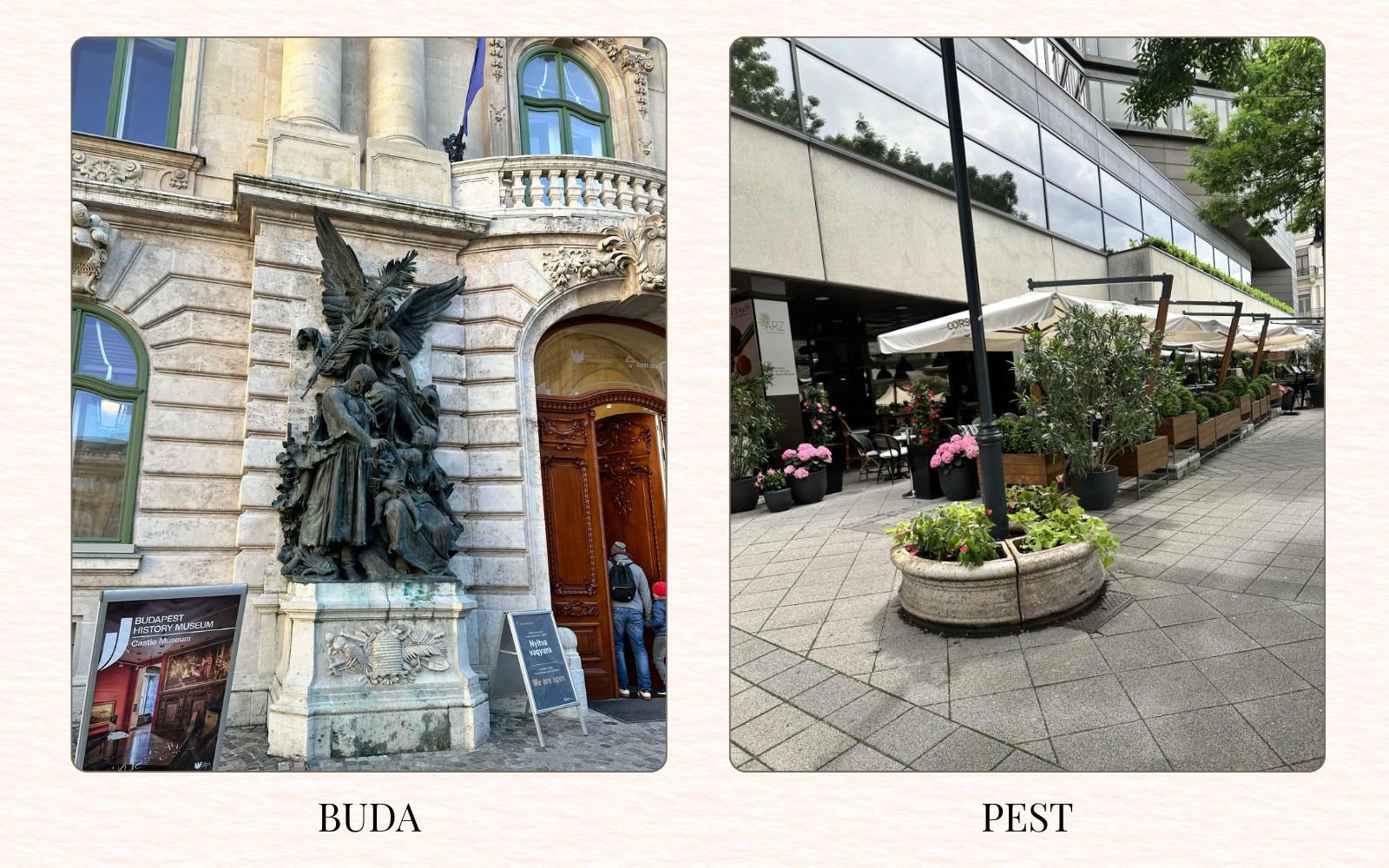
A calm comparison of convenience, atmosphere, nightlife, views and the rhythm of your Budapest stay.
The Danube divides Budapest into two sides, but choosing between Buda and Pest is about more than geography.
It changes how your mornings begin, how easily you return after dinner and what you see when you step outside your accommodation.
Pest places you closer to many restaurants, cafés, central sights and evening programmes. Buda offers hills, historic streets, quieter nights and some of the city’s most memorable views.
Neither side is better for every traveller.
The right choice depends on whether you want Budapest to feel active and immediately accessible, or quieter and more reflective at the beginning and end of each day.
Quick answer: is it better to stay in Buda or Pest?
For most first-time visitors, Pest is the more practical place to stay.
Central Pest offers a larger choice of accommodation, restaurants, cafés and evening activities. Its main visitor areas are flatter, and many important sights are connected by easy walks or direct public transport.
Choose Buda when quiet evenings, historic atmosphere and views across the Danube matter more than having Budapest’s busiest restaurant and nightlife areas outside your door.
Choose Pest for convenience and energy. Choose Buda for quiet, views and atmosphere.
Buda or Pest at a glance
| Consideration | Pest | Buda |
|---|---|---|
| First visit | Usually more practical | More atmospheric, but requires slightly more planning |
| Walking | Flatter central routes | Hillier, with slopes and steps |
| Restaurants and cafés | Larger and more spontaneous choice | Fewer in some areas, often quieter |
| Nightlife | Stronger and easier to reach | More limited |
| Views | Looks toward Buda and Castle Hill | Looks toward Pest and Parliament |
| Romantic atmosphere | Lively evenings and river walks | Historic streets and quieter panoramas |
| Public transport | Simple central connections | Good, but more river crossings may be needed |
| Short weekend | Usually the easier choice | Best when the Buda atmosphere is a priority |
| Quiet sleep | Depends strongly on the street | Often easier to find |
| Accommodation prices | Wide range | Depends on the exact neighbourhood and view |
For most short first visits, choose Pest.
Choose Buda when its quieter rhythm is part of the reason you want to visit Budapest.
The Danube divides the map, not the city
Buda and Pest have distinct characters, but they are not separate travel destinations.
Bridges, trams, metros, buses and walking routes connect the two sides. Even when you stay in Pest, you will almost certainly spend time in Buda. If you sleep in Buda, many of your meals and evening activities may still take place across the river.
Your accommodation side mainly shapes:
- the first hour of the morning;
- the final journey after dinner;
- how much spontaneous choice surrounds you;
- whether your daily routes begin on flat streets or hills;
- the atmosphere immediately outside your door.
Buda is often described as old and quiet, while Pest is described as young and lively. There is some truth in the contrast, but it is too simple.
Pest also has old courtyards, historic cafés, memorial sites and calm residential streets.
Buda is not silent or frozen in history. It contains homes, schools, restaurants, transport hubs and everyday city life.
The difference is one of rhythm, not authenticity.
Pest: when you want Budapest outside your door
Pest is usually the easier choice for a first Budapest trip.
Many of the city’s best-known central sights are here, including Parliament, St. Stephen’s Basilica, the Hungarian State Opera, Andrássy Avenue and the Jewish Quarter.
It also has a larger concentration of:
- hotels and apartments;
- restaurants;
- cafés and bakeries;
- evening venues;
- shops;
- public transport connections;
- flat central walking routes.
When you stay in central Pest, you can often begin the day without planning.
You may walk to the Danube, stop for coffee, continue toward the Opera or change direction when another street seems more interesting.
This flexibility is especially valuable during a short visit.
Why Pest works well for first-time visitors
Choose Pest if:
- this is your first Budapest trip;
- you have only two or three full days;
- you want restaurants and cafés nearby;
- evening life matters to you;
- you prefer flatter walking routes;
- you want simple transport connections;
- you enjoy leaving your plans partly open;
- you do not want every evening to end with a river crossing.
Pest is not one uniform neighbourhood.
District V is the simplest classic choice.
District VI offers a central but slightly softer balance of architecture, cafés and city life.
District VII is stronger for food and nightlife, although the exact street can make a significant difference to sleep.
The Palace District can suit travellers looking for a quieter Pest atmosphere.
For a detailed comparison, read Where to Stay in Budapest: 7 Best Areas for First-Time Visitors.
A note from Leja
I rarely return to the same apartment, but I return to the same part of Pest.
The property changes; the freedom does not.
I like waking early, making coffee and walking into the city while the streets are still quiet. From central Pest, I can reach the Danube, Parliament, the Opera, cafés and transport connections without turning the morning into a planned journey.
In the evening, I often walk back after dinner. For me, this is the real advantage of Pest: the city remains available at my own rhythm.
The Pest riverfront: movement that can still feel calming
Pest is the livelier side, but liveliness and calm are not always opposites.
The Danube embankment near Parliament can be full of walkers, trams, visitors, cyclists and city sounds. Yet the river creates space around all that movement.
A note from Leja
Every time I visit Budapest, I spend hours walking along the Pest riverfront and past Parliament. I can also remain near the docks for a long time, watching the boats arrive, leave and turn on the water.
There is always movement around me, but I find it deeply calming. The city is alive without asking me to hurry with it.
That feeling is one of the reasons I continue to choose Pest. I can step into its energy, then find stillness beside the river without leaving the centre.
When Pest may feel too busy
Pest may not be the right base if:
- you are extremely sensitive to street noise;
- quiet evenings matter more than spontaneous dining;
- you want your accommodation area to feel like a retreat;
- nightlife does not interest you;
- hills and historic views are part of your Budapest image;
- you prefer a slower residential atmosphere.
You do not necessarily need to cross to Buda to find calm.
Within Pest, consider:
- a side street instead of a main road;
- a courtyard-facing room;
- District VI rather than the busiest part of District VII;
- the Palace District;
- accommodation a short walk from the main nightlife streets.
Check the exact location and recent guest comments rather than judging an entire district by its reputation.
Buda: when the view is part of the stay
Buda rises above the western side of the Danube.
Its hills, historic streets and views give it a more spacious and reflective atmosphere than much of central Pest.
Castle Hill is the best-known part, with Matthias Church, Fisherman’s Bastion and streets that become noticeably quieter after daytime visitors leave.
Other parts of Buda feel more residential, green and removed from the busiest city routes.
Choose Buda if you want:
- quiet mornings;
- historic surroundings;
- views toward Parliament and Pest;
- a romantic setting;
- a slower end to the day;
- accommodation that feels slightly removed from nightlife;
- hills and scenic walks;
- the Buda atmosphere to be part of the trip itself.
Buda is not only a place to visit during the day.
For the right traveller, staying there changes the emotional shape of the whole trip.
A Budapest breakfast on the Buda side
Even when I stay in Pest, I cross to Buda for at least one early breakfast.
A note from Leja
On every visit, I try to have breakfast once at Nagyi Palacsintázója near Batthyány tér, opposite Parliament.
I like arriving around seven in the morning. The city still feels half asleep, and the early sun reaches the terrace. Across the Danube, Parliament stands in the soft morning light.
There are sweet and savoury pancakes—simple, filled, layered, with meat, cheese or túró. I never need anything elaborate. A warm pancake, the river and the quiet view are enough to make the morning feel complete.
At the time of writing, the Batthyány tér location is listed as open around the clock, but confirm the current hours before making an early-morning journey.
This is also a reminder that you do not need to sleep in Buda to experience its mornings.
When Buda may be the better choice
Buda can be the stronger base if:
- you are travelling as a couple;
- this is an anniversary or romantic trip;
- you want a quieter room;
- river or Parliament views matter to you;
- you do not plan to stay out in Pest every night;
- you have four or five days rather than a very short weekend;
- you enjoy hills and scenic walks;
- you want the accommodation area to feel separate from the busiest city centre.
It can also suit returning visitors who already understand Budapest’s transport and do not need to place every major sight within immediate walking distance.
For a couple-focused plan, read Romantic Weekend in Budapest: A Slow 2-Day Itinerary.
The beauty of Buda comes with a little more planning
Buda’s quiet and elevated views come with practical considerations.
Hills and steps
A distance that looks short on a map may include a steep street, stairs or an uneven route.
This matters when:
- arriving with luggage;
- travelling in summer heat;
- visiting in icy winter conditions;
- someone in the group has limited mobility;
- returning late after a long walking day.
Check the actual route between the accommodation and the nearest useful transport stop.
Evening food choices
Some parts of Buda have good restaurants and cafés, but the choice can be more limited late in the evening.
Check what remains open near the accommodation rather than assuming you will always find dinner spontaneously.
Returning from Pest
Public transport connects both sides well, but a late dinner or nightlife programme may involve:
- waiting for transport;
- changing lines;
- crossing a bridge;
- taking a taxi or ride service;
- walking farther than expected after arrival.
None of these is a reason to avoid Buda. They are simply part of the decision.
Room access
In historic or hillside properties, check:
- lift access;
- entrance steps;
- luggage arrangements;
- reception hours;
- taxi drop-off point;
- the route from the nearest stop.
A beautiful address is not automatically an easy address.
For couples: quiet Buda or lively Pest?
Both sides can create a romantic Budapest trip, but in different ways.
Choose Pest when you want to step into the evening
Pest is better for couples who enjoy:
- spontaneous dinners;
- wine bars and cafés;
- walking between neighbourhoods;
- illuminated riverfront views;
- a wider choice of evening programmes;
- returning on foot without planning transport.
A Pest stay can feel energetic and intimate at the same time, especially when the Danube is part of the evening route.
Choose Buda when you want to return from the evening
Buda works well for couples who prefer:
- quieter streets after dinner;
- a room with a city or river view;
- historic surroundings;
- slower mornings;
- fewer late-night distractions;
- the feeling of looking toward the city rather than sleeping inside its busiest part.
Choose Pest when you want to step into the evening. Choose Buda when you want to return from it.
After dark: the walk that joins both sides
Fisherman’s Bastion is beautiful, but the most powerful part of Buda is sometimes the view beyond the monument.
From Buda, Pest opens across the river. Parliament, the bridges and the central riverfront become part of one illuminated cityscape.
A note from Leja
After dark, I love walking along the Buda riverfront and then crossing the Chain Bridge on foot.
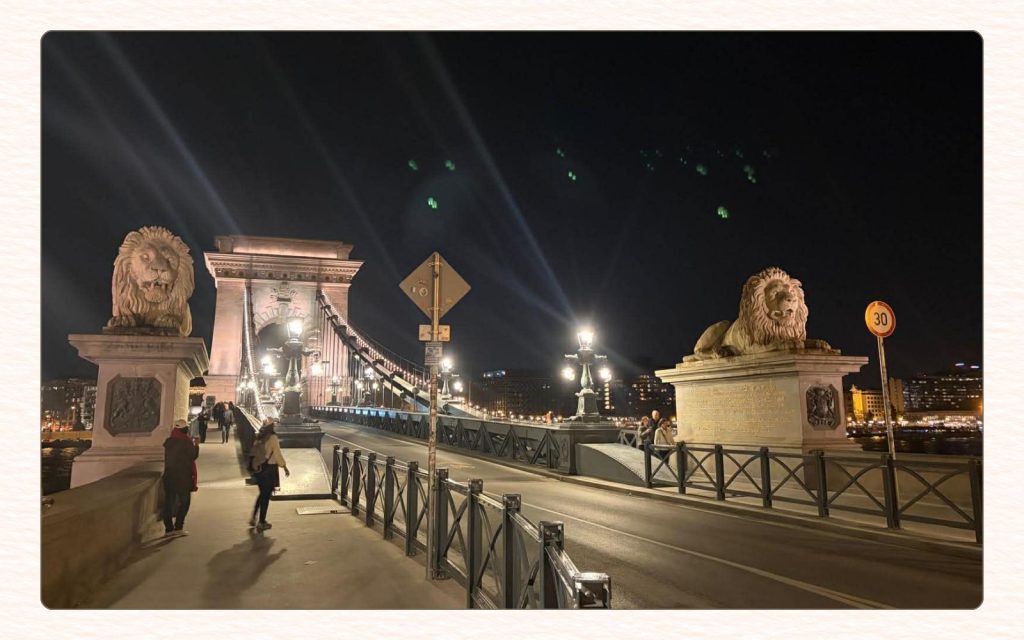
From the Buda side, I can see Parliament and Pest glowing across the water. On the bridge, both sides remain visible: the hills behind me, the city lights ahead and the Danube moving below.
It is not a hidden or private Budapest experience. Many people make the same crossing. Yet it never feels ordinary to me.
The walk gives you time to understand that Buda and Pest are not competing halves. Together, illuminated on both sides of the river, they become the city people remember.
Buda or Pest for nightlife?
Choose Pest.
District VII contains Budapest’s strongest concentration of bars, ruin pubs, restaurants and late-night venues.
District VI and District V can offer easier access to nightlife while providing more distance from the busiest streets.
Stay in Buda for nightlife only when:
- you are comfortable planning the journey back;
- you do not mind crossing the river late;
- you expect to use public transport or an occasional taxi;
- the quiet accommodation setting matters more than immediate access.
The best nightlife location is not always directly above the busiest bar.
A hotel or apartment on the edge of the Jewish Quarter may offer a better balance between evening access and sleep.
Read Jewish Quarter Budapest: History, Cafés and Evening Streets before deciding where to stay around District VII.
Buda or Pest for food and cafés?
Pest offers more spontaneous choice
Pest has the larger concentration of:
- breakfast places;
- cafés;
- traditional Hungarian restaurants;
- contemporary bistros;
- bakeries;
- street food;
- international restaurants;
- late-evening dining.
This makes it easier to walk outside and decide where to eat without planning far ahead.
Central, visitor-heavy streets can charge noticeably more for recognisable foods such as lángos and kürtőskalács. Walk away from the most photographed squares and compare menus before choosing.
Some restaurants also offer weekday lunch menus that can provide a simpler and more reasonably priced introduction to Hungarian cooking.
Buda offers quieter meals
Buda has fewer choices in some areas, but the atmosphere may be calmer.
You may find:
- residential neighbourhood restaurants;
- quiet terraces;
- panoramic dining;
- traditional cafés;
- places that feel less connected to the main visitor flow.
Buda rewards a little research. Check opening days and kitchen hours rather than assuming that every area has late-evening options.
For local food ideas, read Budapest Food Guide: What to Eat and Where to Begin.
For a slower morning, continue to Best Budapest Cafés for a Slow Morning.
Buda or Pest for thermal baths?
Both sides have important thermal baths, so the decision depends more on the experience than the riverbank.
Pest: Széchenyi and City Park
Choose Pest when you want:
- the classic Széchenyi experience;
- outdoor thermal pools;
- grand architecture;
- City Park before or after the bath;
- a livelier social atmosphere.
Széchenyi works naturally as part of a Pest-based day.
Buda: Rudas and Lukács
Choose Buda when you want:
- Ottoman-era atmosphere at Rudas;
- a rooftop Danube view;
- a quieter bathing rhythm at Lukács;
- a bath experience that feels less centred on the classic postcard image.
You do not need to stay on the same side as the bath.
Budapest’s transport makes it possible to select the bath that fits your travel style, regardless of your accommodation.
For current practical information, read Budapest Thermal Baths: What to Know Before You Go.
Buda or Pest for walking?
Pest is easier for long, unplanned walks
Central Pest is generally flatter.
This makes it well suited to:
- long riverfront walks;
- the Nagykörút;
- Andrássy Avenue;
- the Opera and Heroes’ Square route;
- moving between cafés and neighbourhoods;
- visitors who prefer fewer slopes and steps.
Walking in Pest can become part of daily life rather than a formal sightseeing activity.
Buda rewards effort with views
Buda’s slopes create some of Budapest’s strongest panoramas.
Castle Hill, the riverfront and elevated neighbourhoods offer a different relationship with the city, but even short routes can require more energy.
Allow extra time for:
- climbing;
- stairs;
- uneven streets;
- finding accessible routes;
- stops for the view.
Do not assume that a nearby bus, lift or funicular makes every destination completely step-free. Check the precise route when mobility matters.
Buda or Pest for airport arrival?
Pest is usually simpler for a first arrival by public transport.
The central airport-bus connection reaches the Deák Ferenc tér area, which provides onward access to several central Pest neighbourhoods.
A Pest stay may mean:
- fewer transfers;
- a shorter walk with luggage;
- an easier first evening;
- simpler orientation.
Buda is also accessible, but the journey may require an additional metro, bus, tram or river crossing, depending on the exact address.
A taxi or pre-booked transfer can be useful when:
- arriving late;
- carrying several bags;
- travelling with children;
- mobility is limited;
- the Buda property is on a hill or difficult route.
For the full comparison, read Budapest Airport to City Centre: A Calm Arrival Guide.
Is Buda or Pest cheaper?
Neither side is always cheaper.
Prices depend on:
- the precise neighbourhood;
- hotel or apartment type;
- season;
- weekday or weekend;
- major events;
- river or city views;
- room size;
- cancellation conditions;
- breakfast and added fees.
Castle Hill and premium Buda river views can be expensive.
District V, the Pest riverfront and the most central areas can also command high prices.
A property farther from the centre may show a lower nightly rate but require more transport, time or taxis.
Compare the final cost and the daily rhythm, not only the side of the river.
For specific options, read Best Hotels in Budapest for First-Time Visitors.
Choose Buda or Pest by the way you travel
Choose Pest if:
- this is your first visit;
- you have only a few days;
- restaurants and cafés matter;
- you enjoy evening life;
- you prefer flat walking;
- you want to begin the city on foot;
- public transport simplicity matters;
- you like making spontaneous plans.
Choose Buda if:
- quiet is a priority;
- views matter more than nightlife;
- you are travelling as a couple;
- you enjoy hills and historic streets;
- you do not plan to spend every evening in Pest;
- your accommodation atmosphere is part of the experience;
- you prefer looking toward the city to sleeping in its busiest centre.
Choose a middle ground if:
- you want a Pest hotel close to the Danube;
- you want a Buda property near the Chain Bridge;
- you want central access but a courtyard-facing room;
- you prefer a quieter District VI or Palace District street;
- you want to cross the river easily without staying in the busiest area.
Frequently asked questions
Is Buda or Pest better for first-time visitors?
Pest is generally better for first-time visitors because it offers easier access to restaurants, cafés, nightlife, central sights and flat walking routes.
Choose Buda when quiet, views and historic atmosphere are higher priorities.
Which side of Budapest is safer?
It is not useful to label one entire side as safe and the other as unsafe.
The precise street, surroundings, transport route and time of day matter more. Check recent accommodation reviews and current official travel advice, and use ordinary city awareness.
Is Buda or Pest better for nightlife?
Pest is better for nightlife.
District VII has the highest concentration of late-night venues, while District V and District VI can provide convenient access with more distance from the busiest streets.
Is Buda or Pest more romantic?
Buda feels quieter, more historic and more panoramic.
Pest offers lively dinners, cafés, illuminated river walks and more spontaneous evening choices.
The more romantic side depends on whether you prefer stillness or city energy.
Is it easy to cross between Buda and Pest?
Yes. Bridges and public transport connect the two sides.
However, crossing several times every day can add time and energy to a short trip, especially when returning late or travelling with luggage.
Which side is better for walking?
Pest is flatter and usually easier for long urban walks.
Buda is hillier and more demanding, but offers wider views and historic routes.
Which side is better for thermal baths?
Both sides have significant baths.
Choose Széchenyi in Pest for a grand, lively first experience. Choose Rudas or Lukács in Buda for historic or quieter bathing styles.
Is Buda or Pest cheaper?
Neither side is consistently cheaper.
The exact area, room, season, view and booking conditions matter more than whether the property is in Buda or Pest.
Can I stay in Buda and enjoy Pest nightlife?
Yes.
Plan the late-evening route in advance and check current public transport. An occasional taxi may be useful depending on the hour and the exact Buda address.
Should I split my stay between Buda and Pest?
For a three- or four-night visit, changing accommodation is usually unnecessary.
Choose one well-connected base and explore both sides from there. Moving hotels consumes time and interrupts the rhythm of a short trip.
Final thoughts
For most first-time visitors, Pest is the easier answer.
It offers more choice, simpler movement and the freedom to begin or end the day without much planning.
But the easier answer is not always the right answer.
Choose Buda when waking above the river, returning to quieter streets or seeing Parliament across the water matters more to you than having the largest selection of restaurants nearby.
And wherever you stay, cross the river on foot at least once after dark.
Walk beside the Danube. Look back at the side you have left. Pause on the bridge while both halves of Budapest remain illuminated around you.
The city does not ask you to choose one side and ignore the other.
It asks you to notice how they belong together.
Travel. Taste. Feel.
That is the Leja way.
Your next step: choose the neighbourhood
Decided between Buda and Pest?
Continue with Where to Stay in Budapest: 7 Best Areas for First-Time Visitors to choose the exact district.
Ready to compare accommodation?