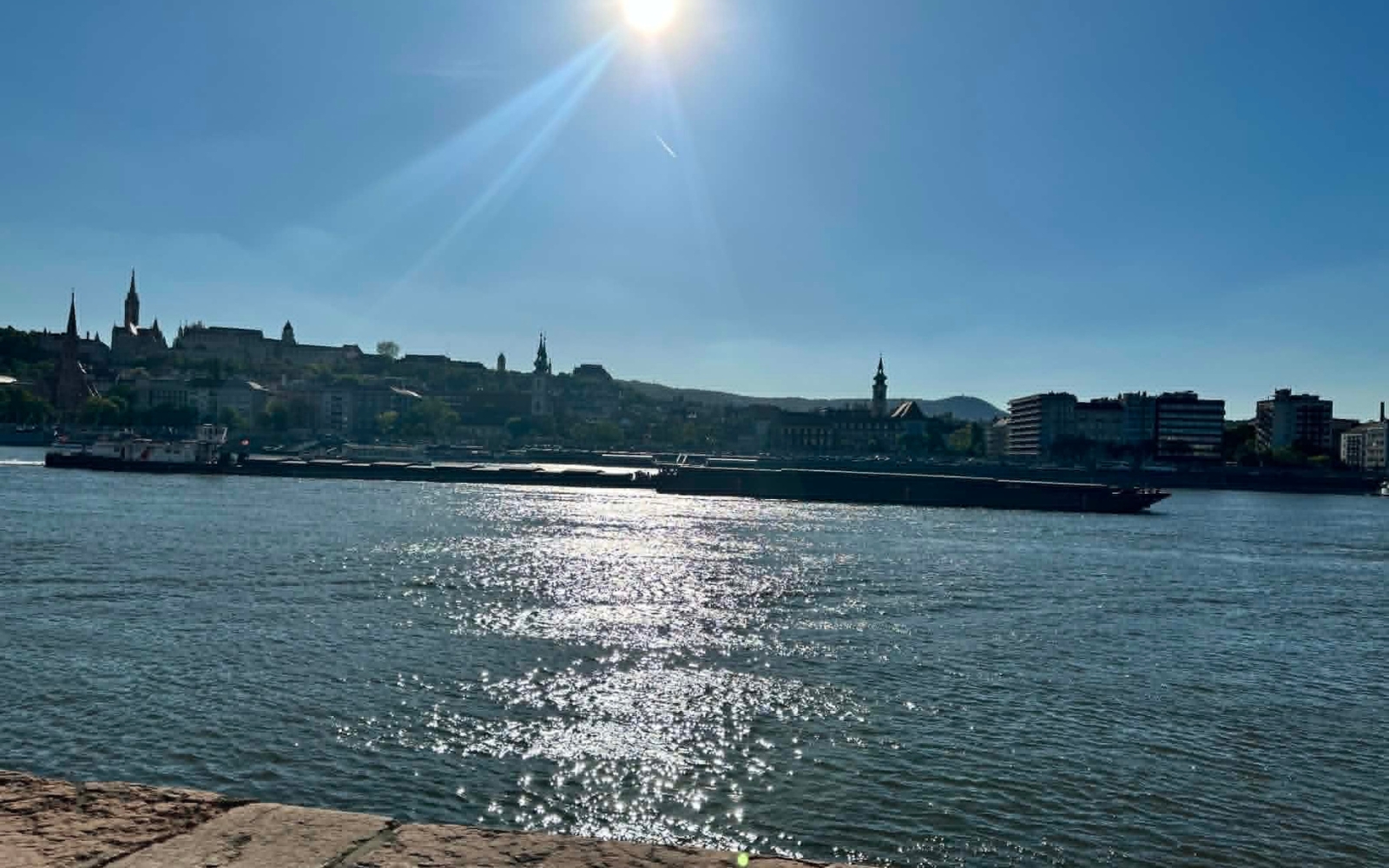
Meaningful walks, baths, cafés and neighbourhood experiences for a calm Budapest city break.
The best things to do in Budapest without overbooking yourself are often the experiences that already contain enough movement, atmosphere and time on their own.
Budapest does not need to be divided into twenty small tasks.
A walk from City Park to the Basilica can become an entire day. A thermal bath can fill an afternoon. One historic café may deserve a morning, while one neighbourhood may hold enough architecture, food and street life to keep you interested until evening.
This guide is not another long list of things to do in Budapest.
It is a selection of experiences that work well for Budapest first-time visitors, couples and anyone planning a calm Budapest city break.
The aim is not to avoid important sights.
It is to choose experiences that allow you to notice where you are.
Quick answer: what are the best things to do in Budapest without rushing?
Choose one larger Budapest experience, such as Castle Hill or a thermal bath, then add one neighbourhood walk and one place to pause nearby.
Good options for Budapest without rushing include:
- walking beside the Danube;
- spending a morning on Castle Hill;
- choosing one thermal bath;
- exploring City Park and Andrássy Avenue;
- sitting in a café;
- visiting the Great Market Hall;
- walking through the Jewish Quarter;
- crossing the Chain Bridge after dark;
- spending half a day on Margaret Island.
Do not try to combine them all.
Choose one experience to enter, one neighbourhood to walk and one place to pause.
Choose a calm Budapest day by mood
| The day you want | Main experience | Lighter addition |
|---|---|---|
| Classic first Budapest day | Parliament or Basilica | Danube walk |
| Slow Buda day | Castle Hill | Batthyány tér and riverfront |
| Wellness day | One thermal bath | Park or easy dinner |
| Cultural neighbourhood day | Jewish Quarter | Coffee and evening walk |
| Food day | Great Market Hall | Cake or café |
| Green day | Margaret Island | Danube or tram ride |
| City Park day | Széchenyi or BalloonFly | Andrássy Avenue |
| Romantic evening | Buda riverfront and Chain Bridge | Dinner or cruise |
| Rainy day | Bath, market or museum | Long café stop |
You do not need to combine the rows.
Each one can become a complete Budapest day.
1. Walk the Pest riverfront without turning it into a route to finish
The Pest riverfront is one of the simplest and most rewarding experiences in the city.
You can begin near Parliament, continue beside the Danube, watch the trams and boats, then stop whenever the walk feels complete.
You do not need a precise endpoint.
Along the way, you may see:
- Parliament;
- the Buda hills;
- bridges;
- riverboats;
- ferries and docks;
- people walking, cycling and sitting beside the water.
When you reach the Shoes on the Danube Bank memorial, approach it as a place of remembrance.
Do not treat it as a romantic backdrop or casual photo stop.
Pause, understand what the memorial represents and allow the tone of the walk to change.
A note from Leja
I can spend hours beside the Danube.
I walk past Parliament and often remain near the docks, watching the boats arrive, leave and turn on the water.
The riverfront may be busy and full of movement, but it still calms me.
I never feel that this time should have been used for another attraction.
The walk is already the experience.
This is one of the clearest examples of slow travel in Budapest: nothing needs to happen for the city to feel present.
2. Give Castle Hill a morning, not forty minutes
Castle Hill is often compressed into a short photo stop.
It deserves more space than that.
A calm Buda morning can include:
- Fisherman’s Bastion;
- the area around Matthias Church;
- quiet Castle District streets;
- viewpoints toward Pest;
- a café or early lunch;
- time to notice the residential and cultural character of the area.
Vajdahunyad Castle is in City Park, not Castle Hill, so keep the two castle experiences separate in your planning.
Castle Hill is historic, religious, residential and political.
It is not only a decorative platform for photographs.
Arriving earlier can make the experience quieter, especially before larger groups reach the main viewpoints.
A note from Leja
Fisherman’s Bastion is beautiful.
But what stays with me most is the view toward Pest, especially in the evening.
Parliament, the river and the lights across the flat city create a wider feeling than the monument itself.
Sometimes the most memorable part of a famous place is what you see from it.
3. Choose one thermal bath and let it be enough
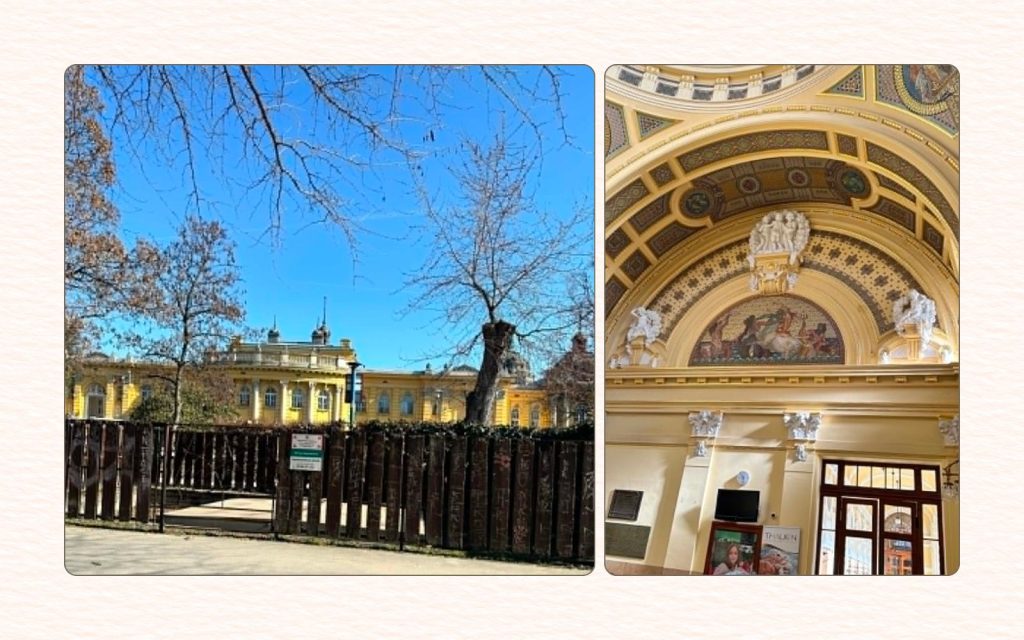
A Budapest thermal bath is not a quick attraction.
The full experience includes:
- travelling there;
- buying or checking the ticket;
- changing;
- learning the building;
- bathing;
- resting;
- showering;
- dressing again;
- adjusting to how your body feels afterward.
Treat it as a half-day experience.
Choose Széchenyi for:
- a first visit;
- outdoor pools;
- City Park;
- a lively social atmosphere;
- grand architecture.
Choose Rudas for:
- historical atmosphere;
- a Buda location;
- a rooftop Danube view;
- a more complex bathing schedule.
Choose Lukács for:
- a quieter experience;
- a more traditional rhythm;
- less emphasis on spectacle.
Do not try to visit two or three baths during a short trip simply because Budapest is famous for them.
One carefully chosen bath is enough.
For current rules, age restrictions and ticket details, read Budapest Thermal Baths: What to Know Before You Go.
4. Turn City Park into a complete Budapest day
City Park is not only the place where Széchenyi Bath happens to stand.
It can support an entire day.
A natural route may include:
- Heroes’ Square;
- City Park;
- Vajdahunyad Castle;
- the boating lake or winter ice rink;
- Széchenyi Bath;
- BalloonFly;
- a park walk;
- the beginning of Andrássy Avenue.
Vajdahunyad Castle was designed as a representation of different periods in Hungarian architectural history and now houses the Museum and Library of Hungarian Agriculture.
Winter: skate beside Vajdahunyad Castle
In winter, the City Park lake becomes a large outdoor ice rink.
The official City Park information describes it as a seasonal open-air rink with Vajdahunyad Castle behind it. Opening dates, ticket prices and exact hours change each season, so they must be checked before visiting.
Skate rental is available on site according to the current visitor information.
This is not a small decorative Christmas rink.
Allow time for:
- ticketing;
- skate rental;
- changing;
- skating;
- warming up afterward.
Warmer months: BalloonFly above City Park
BalloonFly offers a very different perspective over Budapest.
It is a tethered helium balloon rather than a free-flying hot-air balloon. It rises vertically while remaining attached to the ground and can reach approximately 150 metres, subject to weather and operating conditions.
Choose BalloonFly when:
- you want a panorama without climbing a hill;
- the weather is suitable;
- City Park is already part of your route;
- you enjoy viewpoint experiences.
Check the official weather and operation information on the day.
Do not build the whole itinerary around it, because wind and weather can affect balloon operation.
Summer alternative: boating
In warmer months, the City Park lake may operate as a boating lake, with Vajdahunyad Castle creating the background. Seasonal opening and pricing vary.
The key is not to do everything.
Choose one seasonal experience and let the park remain spacious.
5. Walk from City Park to the Basilica
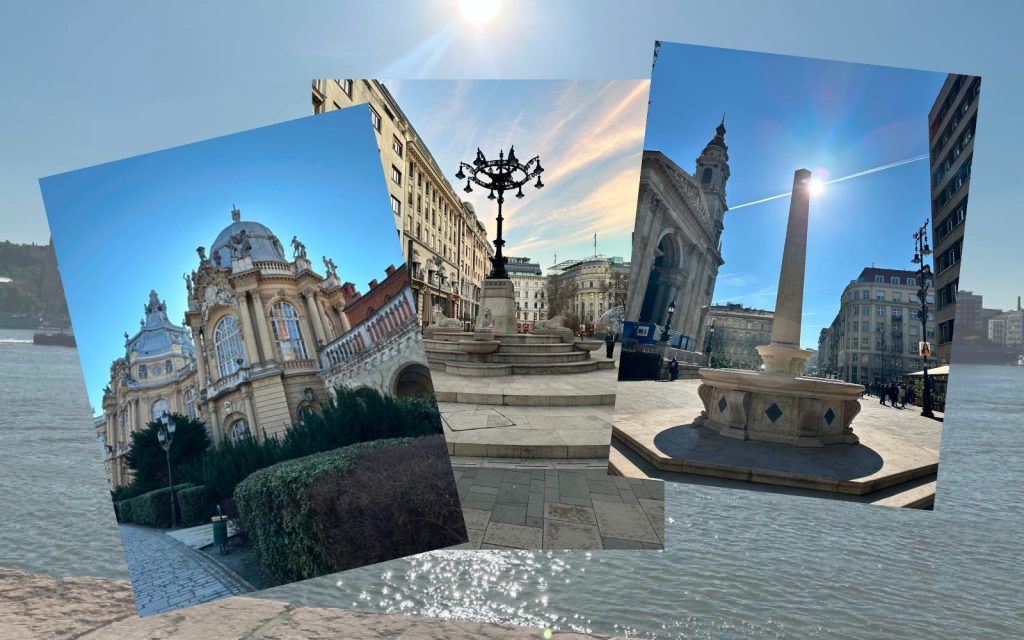
One of my favourite ways to understand central Pest is to walk from the City Park area toward the Basilica.
The route can naturally connect:
- Heroes’ Square;
- Andrássy Avenue;
- Oktogon;
- the Opera;
- central Pest;
- St. Stephen’s Basilica.
Andrássy Avenue gives the day a clear direction without making it feel like a race.
You can stop for coffee, look at façades, sit near Oktogon or leave the avenue when a side street interests you.
A note from Leja
Walking through central Pest is an experience in itself.
I like the route from Széchenyi and Heroes’ Square toward the Basilica.
Vajdahunyad Castle, Andrássy Avenue, Oktogon and the Opera do not feel like separate boxes to complete. They become parts of one long city walk.
By the time I reach the Basilica, I have not only moved between sights.
I have watched Budapest change street by street.
6. Walk Andrássy Avenue—or ride the M1
You do not have to walk the entire distance.
The M1 Millennium Underground follows the Andrássy Avenue corridor and is an experience in its own right.
The line opened in 1896 and was the first underground railway on the European continent. It remains part of Budapest’s everyday public transport system as well as a historic element of the city.
Ride it when:
- your feet need rest;
- the weather changes;
- you want to move between City Park, Oktogon, Opera and central Pest;
- transport history interests you.
Treat it as normal public transport.
Use a valid ticket or pass, allow local passengers to move freely and do not turn the carriage or platform into a private photo set.
You can also visit the Millennium Underground Museum at Deák Ferenc tér if the history interests you and the current opening hours suit your day.
7. Spend a morning in a café without apologising for it
A café can be a complete Budapest experience.
You might choose:
- New York Café for grand architecture and a formal breakfast;
- Gerbeaud for Dobos-torta;
- Szamos for an easier central cake stop;
- Zsolnay for a quieter table;
- a specialty coffee shop near the route you are already following.
You do not need to visit all of them.
One carefully chosen café may say more about the morning you want than a list of five addresses.
A note from Leja
My first coffee often belongs to the apartment.
The second belongs to Budapest.
Sometimes that means a grand coffeehouse. Sometimes it means Dobos-torta in a quiet room. Sometimes it is simply a table near the street I am already walking.
For specific café choices, read Best Budapest Cafés for a Slow Morning.
8. Visit the Great Market Hall without pretending it is a secret
The Great Market Hall at Vámház körút is both a functioning market and a major visitor attraction.
Expect:
- food stalls;
- meat and sausages;
- spices;
- produce;
- souvenirs;
- prepared food;
- crowds around popular hours.
Compare prices and look before ordering.
The upper and lower levels can feel very different.
Do not arrive expecting an untouched local secret. The market’s tourism is part of its current reality.
A note from Leja
The Vámház körúti market remains compulsory for me.
I go for véres hurka and sült kolbász—blood sausage and grilled sausage.
For me, this is direct Hungarian street food: hot, rich and filling.
I know the market is heavily visited. That does not prevent me from enjoying a specific food ritual there.
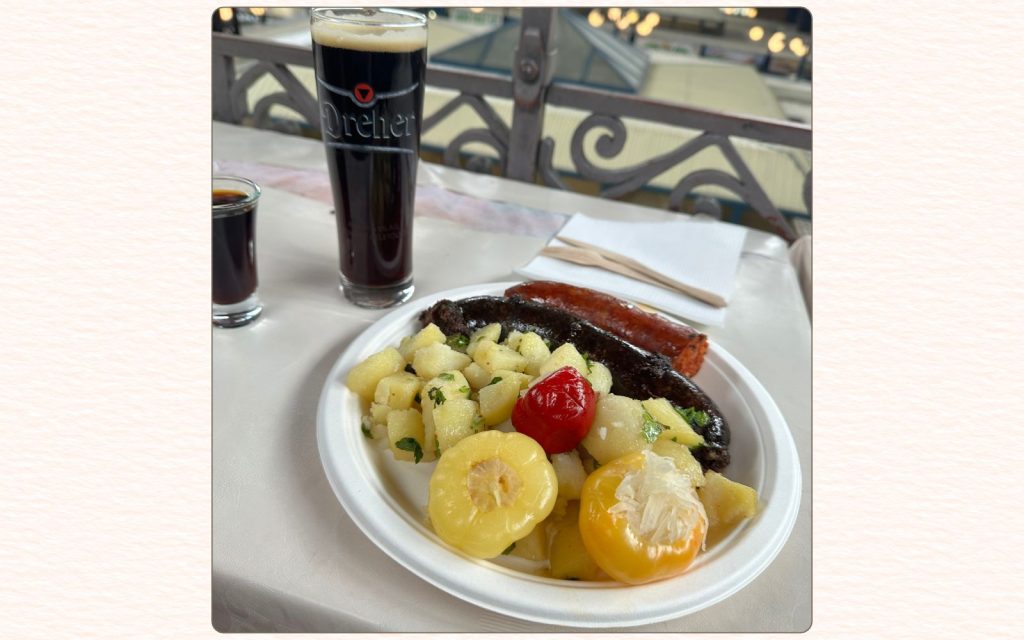
At the Great Market Hall, I return for véres hurka and sült kolbász.
Afterward, the Liberty Bridge, southern Pest or Kálvin tér can continue the day naturally.
For more food context, read Budapest Food Guide: What to Eat and Where to Begin.
9. Explore the Jewish Quarter beyond ruin bars
The Jewish Quarter is one of Budapest’s most layered areas.
It contains:
- synagogues;
- memorial sites;
- Jewish cultural and religious life;
- residential streets;
- cafés;
- restaurants;
- bars;
- nightlife;
- contemporary businesses.
Do not reduce the district to ruin pubs.
Do not reduce it to tragedy either.
A thoughtful visit can include a synagogue or historical walk earlier in the day, followed by food, a café or evening streets.
The change in tone should be conscious.
Mazel Tov
Mazel Tov describes itself as a cultural meeting place and Mediterranean restaurant in the old Pest Jewish Quarter, with an inner garden atmosphere, food, drinks and evening events. It currently accepts online table reservations.
Choose it when:
- you want a visually distinctive evening setting;
- Mediterranean food suits the group;
- you prefer a planned table to an uncertain walk-in;
- you are already spending the day in District VII.
It is not a traditional Hungarian restaurant, and it should not be used as the sole representation of Jewish–Hungarian food or history.
Gozsdu Udvar
Gozsdu Udvar is a popular nightlife and dining passage in central District VII.
It can be lively and enjoyable, but popular restaurants and terraces may involve long waiting times, especially in the evening and on weekends.
Treat the area as one possible evening layer, not a required attraction.
Check individual restaurant reservation options rather than assuming you can walk directly into any venue.
For the full neighbourhood context, continue to Jewish Quarter Budapest: History, Cafés and Evening Streets.
10. Let one Hungarian or Transylvanian meal become the programme
A full meal can be the main event of an afternoon or evening.
Traditional Hungarian and Transylvanian food is often substantial.
Allow time to eat without immediately rushing toward a bath, hill or timed tour.
Székely food in Budapest at SZÉK Restaurant & Bar
For Transylvanian and Székely food in Budapest, one of my personal favourites is SZÉK Restaurant & Bar on Andrássy Avenue.
The restaurant focuses specifically on Transylvanian cuisine and dishes connected to Székely culinary traditions, rather than treating them as a general extension of Hungarian food. It is currently located at Andrássy út 41.
A note from Leja
SZÉK Restaurant & Bar is one of the places I genuinely enjoy returning to.
The food feels close to the Transylvanian flavours I know, which is important to me because Székely cooking has its own character. The seasoning, sourness, smoked ingredients, herbs and family traditions can make it quite different from what visitors may expect from a general Hungarian restaurant.
What makes the experience especially memorable is not only the food.
The service has always felt first class to me. The meal is cared for rather than simply brought to the table, and that attention makes the restaurant feel suitable for both a relaxed dinner and a more special evening.
Because menus, opening hours and reservation conditions may change, check the current details before making a special journey.
Do not plan too much afterward
After a rich traditional meal, choose:
- a slow walk;
- tea or coffee;
- the river;
- an easy tram ride;
- the route back to the accommodation.
Do not make every meal the beginning of another programme.
Székely food in Budapest at SZÉK Restaurant & Bar
For Transylvanian and Székely food in Budapest, one of my personal favourites is SZÉK Restaurant & Bar on Andrássy Avenue.
The restaurant focuses specifically on Transylvanian cuisine and dishes connected to Székely culinary traditions, rather than treating them as a general extension of Hungarian food. It is currently located at Andrássy út 41.
A note from Leja
SZÉK Restaurant & Bar is one of the places I genuinely enjoy returning to.
The food feels close to the Transylvanian flavours I know, which is important to me because Székely cooking has its own character. The seasoning, sourness, smoked ingredients, herbs and family traditions can make it quite different from what visitors may expect from a general Hungarian restaurant.
What makes the experience especially memorable is not only the food.
The service has always felt first class to me. The meal is cared for rather than simply brought to the table, and that attention makes the restaurant feel suitable for both a relaxed dinner and a more special evening.
Because menus, opening hours and reservation conditions may change, check the current details before making a special journey.
11. Ride tram 2 one way—and walk back along the Danube
Tram 2 follows the Pest side of the Danube and connects several central riverfront areas.
It can offer views of:
- Parliament;
- the Buda riverbank;
- the Chain Bridge area;
- central Pest;
- the southern stretches of the Danube;
- working parts of the city beyond the most photographed centre.
The tram is useful when you want to rest your feet, travel along the river or understand how central Pest continues beyond its most famous landmarks.
But do not treat the journey as a short sightseeing performance.
It is normal public transport, used by people going to work, school and everyday appointments. Travel with a valid ticket or pass, keep the doors clear and allow other passengers to use the space normally.
A note from Leja
I often take tram 2 from the area near Margaret Bridge and continue along the riverfront.
But I usually make only one part of the journey by tram.
On the way back, I walk.
This is not a small addition to the day. It becomes a long programme, especially when I stop beside the Danube, look at the buildings or follow something unexpected that catches my attention.
The tram helps me understand the length of the riverfront first. Walking back allows me to experience it more closely.
It was during one of these journeys that I discovered the Zwack Unicum museum almost by accident.
Unicum is my favourite Hungarian aperitif, so once I realised what I had found, visiting felt natural rather than planned.
That accidental discovery became part of the day precisely because I had not filled every hour in advance.
Visit the Unicum House near the southern tram route
The Unicum House, also known as the Zwack Museum and Visitor Centre, is in District IX at Dandár utca 1, close to the southern part of the riverside tram corridor.
The visitor experience presents:
- the history of the Zwack family;
- the development of Unicum;
- historic bottles, posters and family objects;
- the old distillery building;
- the cellar;
- guided tastings included with certain ticket types.
Unicum has been produced at the site since the late nineteenth century, and the museum connects the history of the drink with wider chapters of Hungarian history. Visits currently take place through advertised tour times and depend on availability, so this is one discovery that should be checked and booked once you decide to enter.
Because tastings may be included, the experience is intended for adults and should be approached with responsible alcohol consumption in mind.
Leja planning note
A tram 2 journey, the Unicum House and a long walk back should not be treated as three tiny checklist items.
Together, they can become most of an afternoon.
You might combine them with:
- a simple lunch;
- the southern Pest riverfront;
- the Great Market Hall on a separate part of the route;
- one café stop;
- an easy dinner near your accommodation.
Check the current BKK route and service information before travelling, because tram operations and temporary diversions can change.
The value of tram 2 is not only the view from the window.
It is the way the line can introduce you to a longer part of Budapest—and give you somewhere unexpected to begin walking back from.
12. Spend an evening between Astoria and Ferenciek tere
Not every memorable Budapest evening needs to centre on District VII nightlife or the river.
The Astoria–Ferenciek tere area creates a different kind of city atmosphere.
You can walk through:
- Kossuth Lajos utca;
- Ferenciek tere;
- nearby side streets;
- the streets leading toward the Danube;
- the area around Párisi Udvar.
Párisi Udvar
Párisi Udvar is now home to a hotel and the Párisi Passage Café & Restaurant, inside a restored arcade with Gothic, Moorish and Art Nouveau influences. It is close to Ferenciek tere and the Danube.
You do not need to stay in the hotel to appreciate the building.
Choose it for:
- an architectural pause;
- coffee or dinner;
- a more formal evening atmosphere;
- a central stop between Astoria and the river.
Check current dining access and opening information before planning a special visit.
A note from Leja
I love the Astoria–Ferenciek tere area in the evening.
Párisi Udvar changes the mood of the walk.
The light, the arcade and the details inside create a sense of arrival even when I have only walked a few streets through the centre.
This is one of those Budapest experiences that does not need a full itinerary around it.
The building can simply become the moment when an ordinary evening turns memorable.
13. Cross the Chain Bridge after dark
The Chain Bridge connects more than two riverbanks.
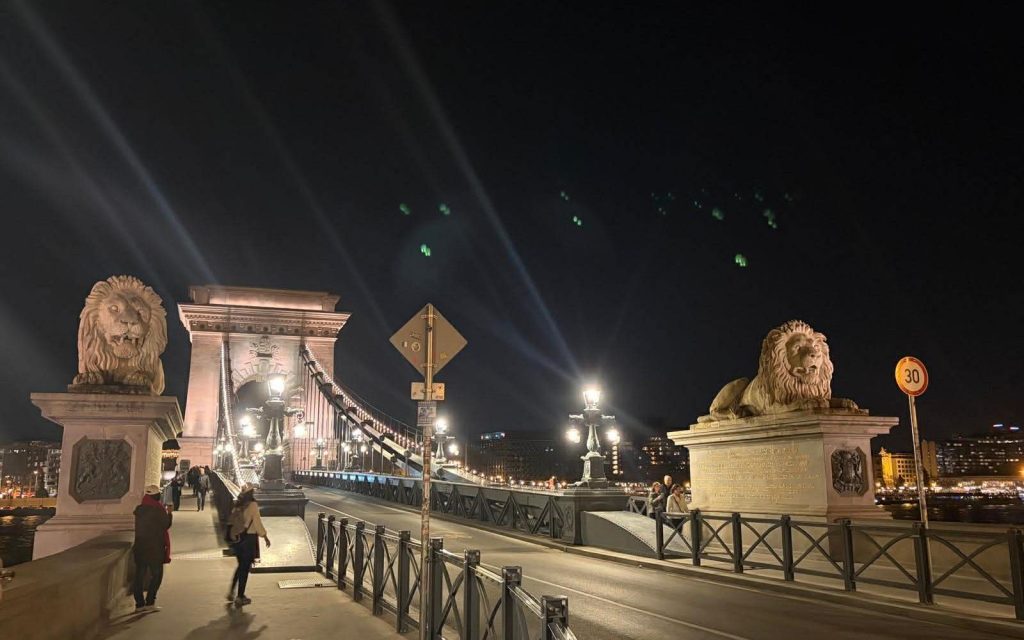
After dark, it creates one of the clearest views of Budapest as a whole.
A calm evening route can begin on the Buda riverfront, continue toward the bridge and end in central Pest.
You will see:
- Parliament across the water;
- the Buda hills;
- the bridges;
- the Pest riverfront;
- the Danube below.
Check current pedestrian access when major events or temporary restrictions affect the bridge.
A note from Leja
I repeat this walk on almost every visit.
I walk beside the Buda riverfront after dark and then cross the Chain Bridge.
From the bridge, both sides remain visible.
This is one of the few Budapest experiences I repeat without ever feeling that I am repeating myself.
The light changes, the river changes and I arrive with a different day behind me.
For a couples’ version, read Romantic Weekend in Budapest: A Slow 2-Day Itinerary.
14. Use Margaret Island as a real half-day
Margaret Island offers a slower alternative to central sightseeing.
Depending on the season, you can:
- walk;
- sit on the grass;
- visit the Rose Garden;
- continue to the Japanese Garden;
- rent a bicycle or pedal vehicle;
- have a picnic;
- stay beside the river.
In spring and summer, the Rose Garden can be especially pleasant.
Do not try to cover every marked point on the island.
Choose one or two areas and allow the green space to change the day.
Margaret Island works particularly well when:
- you need a quieter afternoon;
- the city feels intense;
- you are travelling as a couple;
- you want a low-cost experience;
- the weather is mild.
15. Return to the same place
One of the least discussed things to do in Budapest is to return.
You may want to see:
- Parliament from Pest and Buda;
- the same riverfront in the morning and at night;
- one bridge in different weather;
- the same café twice;
- a market stall you enjoyed;
- the same cake.
Repetition is not the absence of discovery.
Sometimes it is how a city becomes familiar.
A note from Leja
I have fixed places for particular foods, cakes and walks.
I return to the market, Batthyány tér, favourite Dobos-torta places and the riverfront.
At the same time, every trip includes somewhere new.
The familiar places make Budapest feel continuous.
The new places prevent it from becoming finished.
Choose Budapest experiences by the day you actually want
For a first-time visitor
Choose:
- central Pest;
- the Danube;
- Castle Hill;
- one thermal bath;
- one café.
Do not add every museum and viewpoint.
For a couple
Choose:
- Buda breakfast;
- riverfront;
- one bath;
- the Chain Bridge;
- a dinner or evening cruise.
For a food-focused traveller
Choose:
- Great Market Hall;
- one traditional meal;
- one cake;
- Jewish Quarter food and cultural context;
- an open evening.
For a quiet traveller
Choose:
- early city walks;
- a calmer café;
- Lukács;
- Margaret Island;
- Buda;
- an M1 or tram ride when energy is lower.
For a bad-weather day
Choose one indoor anchor:
- thermal bath;
- café;
- market;
- museum;
- restaurant.
Do not replace every outdoor plan with a new indoor reservation.
What should you book in advance?
Book ahead for:
- Parliament;
- private thermal-bath packages;
- special dinners;
- dinner cruises;
- synagogue or historical guided visits;
- popular small-group tours;
- celebration experiences;
- restaurants known for long waits.
Keep spontaneous:
- the Danube;
- Chain Bridge;
- Margaret Island;
- City Park walks;
- markets;
- ordinary cafés;
- tram 2;
- the M1;
- an evening around Astoria and Ferenciek tere.
Use this rule:
Book what has a door, a ticket or a fixed starting time. Leave the streets open.
What can you skip on a short Budapest trip?
You can skip:
- the second similar viewpoint;
- visiting every famous café;
- more than one thermal bath;
- several large markets;
- a distant restaurant that does not fit the route;
- multiple ruin bars;
- a museum included only because a list called it essential;
- treating every bridge as a separate attraction.
Skip according to your own interests.
Do not skip food, rest or sleep to preserve a weak item on the list.
Four relaxed Budapest itinerary ideas
One calm day in Pest
- Basilica;
- coffee;
- Parliament;
- Danube;
- dinner nearby.
One calm day in Buda
- Batthyány tér;
- Castle Hill;
- lunch;
- Buda riverfront;
- Chain Bridge.
One calm City Park day
- Heroes’ Square;
- Vajdahunyad Castle;
- seasonal skating, boating or BalloonFly;
- Széchenyi or a park walk;
- Andrássy Avenue or M1.
One calm food-and-culture day
- Great Market Hall;
- Kálvin tér or Palace District;
- Jewish Quarter;
- cake or coffee;
- Mazel Tov, a Székely meal or another deliberately chosen dinner.
These are frameworks, not commands.
For the complete planning method, read How to Plan a Budapest Trip Without Overbooking Yourself.
Frequently asked questions
How many activities should I plan per day in Budapest?
Plan one larger experience, one lighter activity and an open period.
Two major timed experiences in one day are usually enough.
What are the best things to do in Budapest for first-time visitors?
Begin with:
- the Danube;
- central Pest;
- Castle Hill;
- one thermal bath;
- one café;
- one market or neighbourhood.
Can I see Budapest without a packed itinerary?
Yes.
Central Budapest works well when explored by neighbourhood, with walking, cafés and transport connecting the larger experiences.
What can I skip during a short Budapest trip?
Skip repeated viewpoints, distant recommendations and attractions that do not match your interests.
Do not visit somewhere only because it appears on every list.
Which Budapest attractions need advance booking?
Parliament, some bath packages, dinner cruises, special restaurants and guided cultural visits may require advance booking.
Is Budapest good for slow travel?
Yes.
The Danube, parks, thermal baths, markets, cafés, historic transport and walkable neighbourhoods all support a slower rhythm.
Is tram 2 worth taking?
Yes, especially when it fits naturally into your riverfront route.
Treat it as public transport and use a valid ticket or pass.
Is the M1 worth taking?
Yes.
It is useful transport along the Andrássy Avenue corridor and a living part of Budapest’s transport history.
Can you skate in City Park in winter?
Yes, when the seasonal City Park Ice Rink is open.
Exact dates, opening hours and prices vary each winter and should be checked on the official site.
Can you go up in a balloon in City Park?
BalloonFly operates as a tethered helium observation balloon that can rise to approximately 150 metres when weather and operating conditions allow.
Is Margaret Island worth half a day?
Yes, particularly in mild weather when you want green space, walking and a quieter rhythm.
Should I visit more than one thermal bath?
For a short first trip, one is generally enough.
Choose according to atmosphere rather than trying to collect several bath visits.
What should I do in Budapest when it rains?
Choose one bath, market, café, museum or restaurant.
Keep the rest of the day simple.
Final thoughts
Budapest does not become more memorable because every hour has a destination.
Walk from City Park toward the Basilica.
Ride the M1 when your feet are tired.
Watch boats beside Parliament.
Spend an afternoon in warm water.
Eat one meal slowly.
Let Párisi Udvar change the mood of an ordinary evening.
Cross the Chain Bridge after dark.
Return to the place you liked yesterday.
A relaxed Budapest itinerary does not contain less of the city.
It gives the city more room to become visible.
Choose one experience to enter.
Choose one neighbourhood to walk.
Choose one place to pause.
Then allow the rest of the day to remain open.
Travel. Taste. Feel.
That is the Leja way.
Your next step: build a calmer plan
Continue with How to Plan a Budapest Trip Without Overbooking Yourself.
For a complete route, read First Time in Budapest: A Calm 3-Day Itinerary.
Use these supporting guides:
- Budapest Thermal Baths: What to Know Before You Go
- Best Budapest Cafés for a Slow Morning
- Budapest Food Guide: What to Eat and Where to Begin
- Buda or Pest: Which Side Should You Stay On?
- Romantic Weekend in Budapest: A Slow 2-Day Itinerary
Compare small-group cultural walks, thermal-bath tickets and evening Danube experiences.