A thoughtful first guide to Hungarian dishes, Budapest food, cafés, market flavours and Jewish–Hungarian food memories.
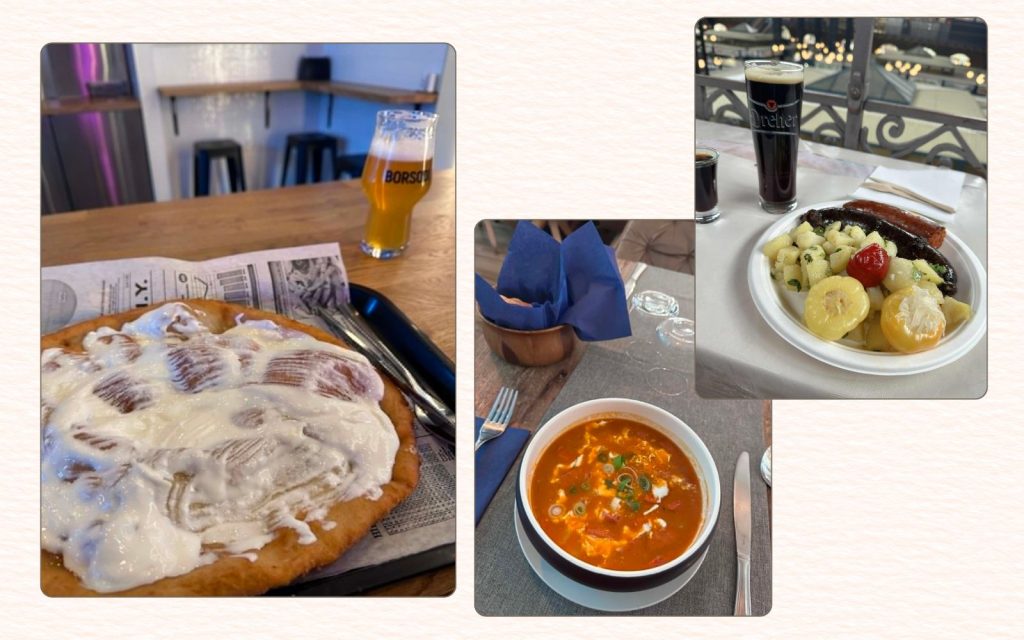
Budapest can be understood through bridges, buildings and neighbourhoods.
It can also be understood through Budapest food.
A bowl of soup may carry the memory of a family kitchen. A plate of paprikash can reveal how a familiar spice becomes soft and comforting rather than fiery. A slice of cake in a Budapest café connects the present city to its Central European coffeehouse past.
Hungarian food is often described as rich, paprika-filled and meat-heavy. That description is not entirely wrong, but it is incomplete.
Budapest’s food reflects family traditions, regional differences, Jewish–Hungarian memory, Austrian and Ottoman influences, modern urban life and recipes that change from one kitchen to another. Hungarian tourism sources similarly present dishes such as pörkölt, chicken paprikash, stuffed cabbage and fried meats as important parts of the country’s traditional cooking.
You do not need to taste everything during one weekend.
Choose a few dishes carefully. Sit down long enough to notice them. Leave room for the meal you did not plan.
Quick answer: what should you eat in Budapest for the first time?
Begin with gulyás or chicken paprikash, then try a freshly fried lángos. Make time for coffee and one traditional cake, such as Dobos-torta, rétes or krémes. For a deeper cultural layer, look for flódni or another Jewish–Hungarian pastry.
Hungarian main dishes can be filling, so avoid planning several heavy meals on the same day.
For a balanced first taste of Budapest, choose:
- one soup;
- one paprika-based main course;
- one simple street food;
- one traditional pastry;
- one slow café moment.
If you only try five things, begin here
1. Gulyás
A paprika-seasoned soup with meat, vegetables and often potatoes.
2. Chicken paprikash
A softer, creamier paprika dish, usually served with galuska or another simple accompaniment.
3. Lángos
Freshly fried dough, traditionally eaten with garlic, sour cream or cheese.
4. One classic Budapest cake
Choose Dobos-torta, rétes, krémes or another cake that genuinely appeals to you.
5. Flódni
A layered Jewish–Hungarian pastry traditionally associated with apple, walnut, poppy seed and plum jam.
These five do not represent the whole of Hungarian cuisine.
They give you a useful first language.
Choose a Budapest dish by appetite
| If you want… | Try… | What to expect |
|---|---|---|
| A warm classic beginning | Gulyás | A filling paprika-based soup |
| A softer traditional main | Chicken paprikash | Creamy, comforting and usually served with galuska |
| A richer meat dish | Pörkölt | Thick, concentrated and substantial |
| Simple street food | Lángos | Fried, savoury and best eaten immediately |
| Everyday comfort | Túrós csusza | Pasta, curd cheese, sour cream and often bacon |
| A winter or family-style dish | Stuffed cabbage | Sour, rich and slowly cooked |
| A café dessert | Dobos, rétes or krémes | Sweet food connected to Budapest café culture |
| A Jewish–Hungarian pastry | Flódni | Dense layers of fruit, nuts and poppy seed |
| A lighter lunch | Soup or főzelék | Simpler and often more everyday |
Budapest food is Hungarian—and more layered than one label
There is no single version of Hungarian food.
Recipes change between regions, generations, restaurants and family kitchens. A dish prepared in Budapest may differ from one made in the Hungarian countryside, Transylvania, Vojvodina or another part of Central Europe.
Some foods belong to several neighbouring cultures, each with its own name, seasoning and preparation.
That does not make them less Hungarian.
It means that food has travelled with families, borders, trade, migration and memory.
Budapest reflects those layers especially clearly. Traditional restaurants exist beside modern bistros, Jewish bakeries, market stalls, neighbourhood diners, cafés and contemporary kitchens that reinterpret familiar ingredients.
Approach the city’s food with curiosity rather than searching for one supposedly definitive, “authentic” plate.
Gulyás: begin here, but expect soup
Visitors often arrive expecting goulash to be a thick stew.
In Hungary, gulyás is usually a soup.
It is generally made with meat, onions, paprika, vegetables and often potatoes. The exact thickness, seasoning and ingredients vary.
A good gulyás feels warming and substantial without necessarily being as heavy as a full plate of pörkölt.
Choose gulyás if:
- you want a recognisable first Hungarian dish;
- you are visiting in cooler weather;
- you prefer soup to a heavy meat course;
- you want a traditional meal that can stand on its own.
Check before ordering
English menus sometimes use “goulash” for several different preparations.
Look for:
- gulyásleves if you want soup;
- pörkölt if you want a thicker stew;
- the type of meat;
- whether the portion is a starter or a main course;
- whether bread is included.
A famous address does not guarantee a memorable bowl.
Read recent reviews, look at guest photographs and choose a place where the dish appears to be part of the kitchen rather than an obligation on a tourist menu.
Chicken paprikash: the softer side of paprika
Chicken paprikash is often one of the easiest traditional main courses for a first visitor.
It usually combines chicken, onion, paprika and a softer sauce enriched with sour cream. It is commonly served with galuska, small Hungarian dumplings.
The dish is generally milder and creamier than pörkölt.
It may suit you if you want:
- a comforting main course;
- the flavour of paprika without intense heat;
- something traditional but less heavy than an organ-meat or pork dish;
- a meal that feels closer to home cooking than ceremonial restaurant food.
Chicken paprikash usually contains dairy.
Ask before ordering when you avoid sour cream, milk products or gluten, because the sauce and accompanying galuska may both matter.
Pörkölt: choose it when you are genuinely hungry
Pörkölt is thicker and more concentrated than gulyás.
It can be prepared with beef, pork, chicken, game or other meats. The sauce is built around onion, paprika and the flavour of the meat rather than a large amount of liquid.
It is filling.
Choose it for lunch or a relaxed dinner when you do not have a thermal-bath visit, long uphill walk or several additional tastings immediately afterward.
Check what accompanies it. Depending on the restaurant, it may arrive with galuska, potatoes, pasta or another side.
One traditional main course is often enough.
Hungarian food does not need to be experienced as an endurance test.
Some Hungarian food tastes better when more of it is cooked
A note from Leja
When I return to Budapest, I almost always choose traditional Hungarian food.
I worked in restaurants, and I can prepare many of these dishes at home. Yet some recipes seem to become richer when they are cooked in a large pot rather than a small family portion.
Pörkölt, soups and slow-cooked dishes have time to settle into themselves. The onions, paprika, meat and sauce become one flavour instead of several separate ingredients.
I have three or four places I return to, but I also try somewhere new on every visit. Familiarity gives me comfort; a new table keeps Budapest open.
Lángos: eat it hot, with less rather than more
Lángos is fried dough served hot.
The classic versions are simple:
- rubbed with garlic;
- spread with sour cream;
- topped with grated cheese;
- or served with some combination of the three.
Modern stalls may cover lángos with meat, vegetables, sauces and elaborate toppings. These can be enjoyable, but they create a different experience.
For a first taste, begin simply.
A note from Leja
I prefer lángos in its original form, with plenty of garlic and sometimes sour cream.
I do not need it covered with every available topping. When the dough is fresh, hot and properly fried, garlic and sour cream are enough.
I also return to the same non-tourist-focused place for lángos. The portion is larger and costs roughly half of what I often see in the busiest visitor areas.
The point is not to hunt for a secret location. It is to step away from the most obvious square, compare prices and choose a place where the food is being prepared continuously.
How to choose a good lángos
Look for:
- dough fried to order;
- steady turnover;
- a surface that is crisp without being hard;
- an inside that remains soft;
- simple, clearly priced toppings;
- oil that does not overpower the food.
A large lángos can easily be shared.
Eat it immediately. It loses much of its pleasure as it cools.
Kürtőskalács: begin with sugar and cinnamon
Kürtőskalács is made by wrapping dough around a cylindrical form, baking it and coating the outside.
You may see versions with:
- sugar;
- cinnamon;
- walnut;
- cocoa;
- coconut;
- sprinkles;
- fillings;
- ice cream.
For a first taste, the simpler coatings allow you to notice the warm dough and caramelised surface.
A note from Leja
My own choice is the simplest: sugar and cinnamon.
I know the filled and heavily decorated versions can be delicious, but I return to the original because I want to taste the pastry itself.
As with lángos, I buy it away from the busiest visitor streets. The one I return to is larger and noticeably less expensive than many central versions.
Simple does not always mean less special. Sometimes it means there is nowhere for poor dough or careless baking to hide.
Soups: one of the quieter strengths of Hungarian cooking
Hungarian meals often give soup a more important role than visitors expect.
Beyond gulyás, you may encounter:
- húsleves, a clear meat broth;
- bean soup;
- vegetable soup;
- fish soup;
- seasonal soups;
- chilled fruit soup.
Soup can be a starter, but some bowls are substantial enough for lunch.
A daily menu may include soup followed by a smaller main course. This can be a useful, reasonably priced way to experience more everyday Hungarian cooking.
Fruit soup can surprise first-time visitors because it may be cold, sweet-sour and served as part of the meal rather than dessert.
Do not judge it by the category you expect.
Stuffed cabbage: family, winter and regional memory
Stuffed cabbage is important in Hungarian cooking, but related dishes appear across Central and Eastern Europe.
The Hungarian version often combines minced meat and rice wrapped in cabbage leaves, then cooked with sauerkraut, seasoning and sometimes smoked meat. Sour cream may be served alongside it.
The dish is rich, slow and closely connected to winter, holidays and family tables.
Restaurant versions vary widely.
A note from Leja
Stuffed cabbage is one of my favourite dishes, yet I never order it in Budapest.
I love the Transylvanian version my mother-in-law prepared. Its seasoning is different, and that flavour became the standard stored in my memory.
A restaurant may serve an excellent Hungarian töltött káposzta, but I would still compare it with a dish that belonged to a person, a kitchen and a family.
Sometimes the food we refuse to order tells as much about memory as the food we seek out.
Túrós csusza: everyday comfort rather than spectacle
Túrós csusza is a pasta dish made with Hungarian túró, sour cream and often bacon.
Hungarian túró is a fresh curd cheese. It is generally drier and slightly sharper than the cottage cheese many English-speaking visitors imagine.
The dish is simple, filling and more closely connected to everyday comfort than glamorous restaurant dining.
Before ordering, check:
- whether bacon is included;
- whether it is served as a main or side;
- whether the restaurant can prepare it without meat;
- whether dairy is an issue for you.
Removing the bacon does not make it vegan, because túró and sour cream remain central ingredients.
Fried meat and offal: a less delicate side of Hungarian cooking
Traditional Hungarian menus often include pork, poultry, beef, duck, goose and offal.
You may see:
- rántott hús, breaded and fried meat;
- liver;
- blood sausage;
- liver sausage;
- tripe;
- marrow or brain;
- duck or goose dishes.
These foods are not unusual decorations added for visitors. Many belong to older household traditions in which more of the animal was used and little was wasted.
They are generally rich and filling.
Choose one because it genuinely interests you, not because a list says it is compulsory.
Rántott sertésvelő: the dish I do not make at home
A note from Leja
One thing I never prepare at home is rántott sertésvelő—breaded and fried pork brain.
When I am in Budapest, I almost always eat it.
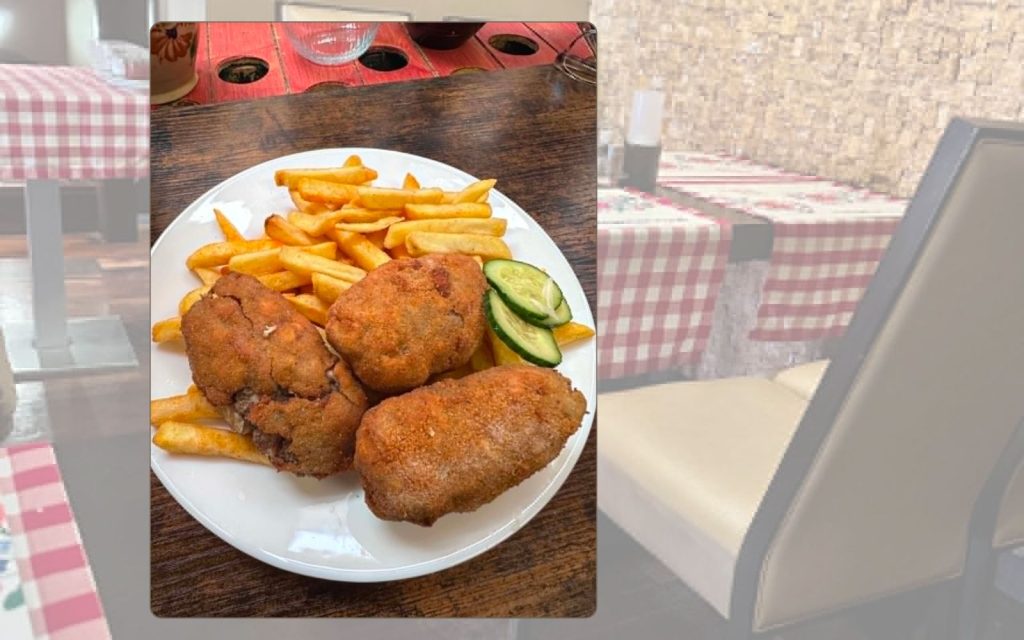
It is not the first dish I would recommend to every visitor. The texture and idea can be challenging if you did not grow up around organ meats.
For me, that is exactly why it belongs to Budapest rather than my home kitchen. It marks the visit. I look forward to it because it is specific, familiar and slightly outside my everyday life.
Cakes and pastries: part of Budapest, not only dessert
Budapest’s cakes are connected to the city’s café culture.
They deserve more than being added after an already heavy meal.
Choose one cake, order coffee or tea and sit down.
Classic café cakes
Dobos-torta
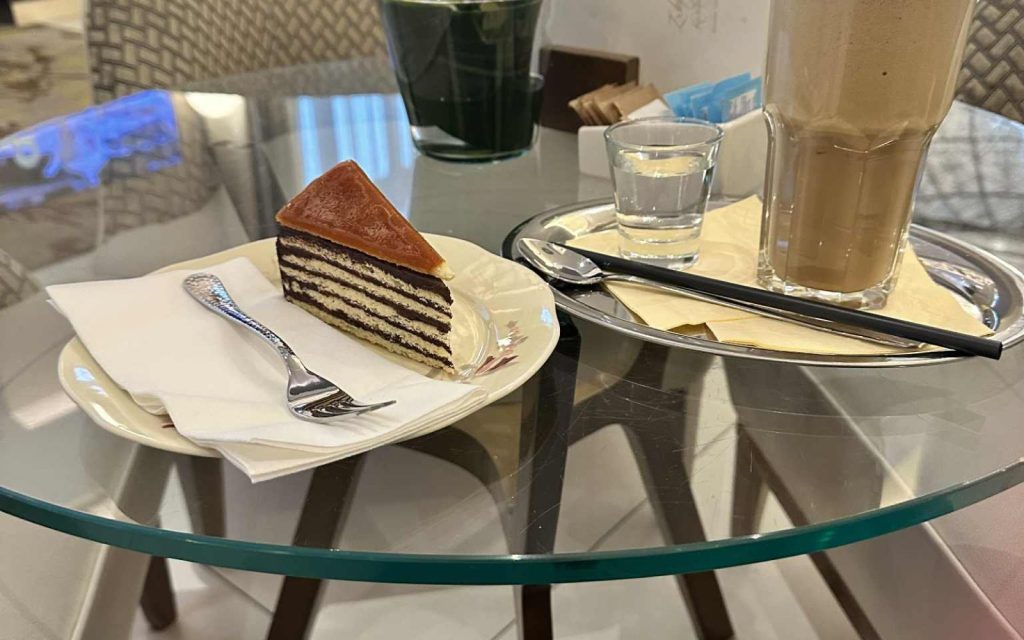
A layered sponge cake with chocolate buttercream and a caramel top.
The caramel should provide a crisp contrast to the softer cake and filling.
Eszterházy-torta
A layered nut-based cake, generally associated with a pale cream filling and decorated top.
Recipes vary, especially in the nuts used and the sweetness of the cream.
Krémes
A custard-filled pastry with delicate layers.
It can be difficult to eat neatly. That is part of the experience.
Zserbó
A layered pastry traditionally associated with walnut, apricot jam and chocolate.
Pastries and smaller bites
Rétes
Hungarian strudel may contain:
- apple;
- sour cherry;
- cottage cheese;
- poppy seed;
- cabbage;
- other seasonal fillings.
Pogácsa
Pogácsa is usually savoury rather than sweet.
These small baked pastries may contain cheese, potato, crackling or other ingredients. They work well as a snack, particularly during a travel day.
Dobos-torta: one cake, three favourite places
A note from Leja
I always eat Dobos-torta when I return to Budapest.
I have three favourite places for it. I do not need to declare one the winner because I enjoy the small differences between them—the thickness of the layers, the chocolate cream and the way the caramel breaks beneath the fork.
Dobos-torta is not only a famous cake I recommend to visitors. It is part of my own Budapest ritual.
Some people return to the same hotel. I return to particular flavours.
Flódni: sweetness, memory and Jewish–Hungarian Budapest
Flódni is a layered pastry traditionally associated with Jewish–Hungarian baking.
It commonly combines:
- apple;
- walnut;
- poppy seed;
- plum jam;
- pastry layers.
It is dense, rich and best eaten slowly.
The layers are not only culinary. Flódni belongs to family recipes, Jewish religious and cultural life, Budapest bakeries and a city history that should not be reduced to a fashionable dessert.
Do not treat the Jewish Quarter as a food theme park.
Synagogues, memorial sites, homes, businesses, nightlife and contemporary Jewish life exist beside one another. Food can help begin a conversation with that history, but it cannot replace learning about it.
For a more thoughtful introduction, read Jewish Quarter Budapest: History, Cafés and Evening Streets.
A Budapest café is a way of slowing the day
Budapest cafés range from grand historic rooms to small contemporary coffee shops.
Choose according to the experience you want.
Choose a historic café if:
- architecture is part of the visit;
- you want cake and table service;
- you understand that the setting may raise the price;
- you do not mind waiting at a popular time.
Choose a smaller modern café if:
- coffee quality matters more than ceremony;
- you prefer a quieter room;
- you want a simpler breakfast;
- you plan to write, read or talk.
Choose a bakery if:
- you are beginning early;
- you want something quick;
- pogácsa, rétes or another pastry is enough;
- you prefer to continue walking.
A café stop does not need to become another attraction.
Order one thing. Sit down. Let the street continue without you for a while.
Continue with Best Budapest Cafés for a Slow Morning.
The Great Market Hall: browse with curiosity, not nostalgia
The Central Market Hall, also known as the Great Market Hall or Vásárcsarnok, stands at Vámház körút 1–3. The market’s current official listing shows food traders and visitor-facing services within the historic building; opening hours and public-holiday closures should be checked directly before visiting.
It is both:
- a functioning market;
- and a major Budapest visitor attraction.
Do not expect every stall to represent quiet neighbourhood shopping.
You may find:
- produce;
- meat and sausages;
- spices;
- pickles;
- dairy products;
- baked goods;
- souvenirs;
- prepared food.
Compare prices between stalls and floors.
The upper level can be busy around lunch. Portions and prices may be aimed partly at visitors, so look at menus before ordering.
A note from Leja
The Vámház körúti market is compulsory for me.
My choice is not delicate café food. I look for véres hurka and sült kolbász—blood sausage and grilled sausage.
To me, this is Hungarian street food in its most direct form: hot, rich and filling, eaten in a place where food, shopping and city noise meet.
The market is tourist-visited, and I do not pretend otherwise. I still enjoy it because it gives me a particular flavour and atmosphere I associate with Budapest.
How to visit the market calmly
- arrive with enough time to look before buying;
- compare several stalls;
- check prices before ordering prepared food;
- carry only what you will realistically use;
- ask before photographing vendors closely;
- do not buy paprika or sausage only because the packaging appears traditional;
- check transport and opening hours before making a special journey.
A guided market tour may add value if you want help understanding ingredients and terminology. It is not necessary simply to walk through and eat.
Nagyi Palacsintázója at Batthyány tér
Nagyi Palacsintázója at Batthyány tér belongs to another part of my Budapest food rhythm.
The attraction is not only the long selection of pancakes.
It is the setting: early light on the Buda side, the Danube and Parliament across the water, and a city that has not fully entered the day.
The menu has traditionally included sweet and savoury palacsinta in simple, filled and layered variations.
Check current opening hours before making a special early-morning trip, as restaurant schedules can change.
This stop also fits naturally into a walk along the Buda riverfront or a morning visit to Castle Hill.
What to drink without turning the evening into a tasting marathon
Hungary has several important wine regions, including Tokaj, Eger, Villány and the Balaton area.
You do not need to taste them all at once.
Tokaj
Tokaj is associated internationally with sweet wine, but the region also produces dry wines.
Ask:
- whether the wine is dry or sweet;
- the grape variety;
- whether it is intended for food or dessert;
- the serving size.
Eger
Eger is known for Egri Bikavér, but the region produces more than one red blend.
Ask for a glass that suits the food rather than ordering only by the most famous name.
Villány
Villány is particularly associated with fuller red wines.
Alcohol-free choices
Budapest restaurants and cafés also offer:
- mineral water;
- homemade-style lemonade;
- juice;
- coffee;
- tea;
- alcohol-free beer or wine in some places.
Do not let a food guide pressure you into drinking alcohol.
A thoughtful non-alcoholic pairing is still part of the meal.
How to avoid a disappointing meal without hunting for secret places
You do not need to uncover a hidden restaurant known only to locals.
You need a place that serves the kind of meal you want with clear prices and consistent care.
Positive signs
Look for:
- a focused, understandable menu;
- seasonal or daily dishes;
- recent guest photographs;
- clearly displayed prices;
- transparent allergen information;
- staff who answer questions without pressure;
- reviews that discuss food rather than only location;
- a mix of local and international guests.
Reasons to pause
Be cautious when:
- someone aggressively tries to bring you inside;
- the menu covers too many unrelated cuisines;
- prices are difficult to find;
- every dish is labelled traditional, famous or award-winning;
- recent reviews repeatedly mention billing problems;
- the restaurant depends almost entirely on its view;
- displayed food appears to have been waiting for a long time.
A restaurant in a tourist area is not automatically bad.
A restaurant away from the centre is not automatically good.
Look at the actual evidence.
Tipping, service charges and paying the bill
Check the bill before adding a tip.
Many Budapest restaurants add a service charge to the final amount. When service is already included, an additional tip is optional rather than an automatic second charge. Current Budapest hospitality guidance commonly recommends checking the bill first, because service charges are frequently added by establishments.
A calm payment routine:
- Ask for the bill.
- Check whether a service charge is listed.
- Confirm the final amount.
- Decide whether you want to leave anything additional.
- Keep the receipt when needed.
Card payment is widespread, but smaller stalls and temporary vendors may differ.
Ask before ordering when you have only one payment method.
Avoid allowing a card terminal’s suggested percentage to make the decision for you. Read the bill and choose deliberately.
Vegetarian Budapest: easier than the traditional menu suggests
Traditional Hungarian menus can appear strongly meat-based.
Modern Budapest offers far more vegetarian and vegan choices, particularly in central Pest.
Still, the visible vegetables do not tell you everything.
A dish may contain:
- meat stock;
- bacon;
- pork fat;
- sour cream;
- cheese;
- egg;
- hidden meat garnish.
Ask specifically rather than only requesting “no meat.”
Useful phrases include:
- vegetáriánus — vegetarian;
- vegán — vegan;
- hús nélkül — without meat;
- tejtermék nélkül — without dairy products;
- Tartalmaz húslevest vagy zsírt? — Does it contain meat stock or fat?
When the dietary restriction is medically important, use a clear translated card and contact the restaurant in advance.
Food allergies: ask about more than visible ingredients
Hungarian food frequently uses:
- wheat flour;
- breadcrumbs;
- eggs;
- milk and sour cream;
- walnuts;
- other nuts;
- poppy seed;
- mustard;
- celery;
- meat stock.
Desserts may combine several allergens in one item.
Cross-contamination is also possible in small kitchens, bakeries, markets and shared fryers.
For a serious allergy:
- contact the restaurant before arriving;
- explain the severity clearly;
- carry a translated allergy card;
- ask about sauces, stock and frying oil;
- do not rely only on what the dish appears to contain;
- carry prescribed emergency medication.
No travel guide can guarantee that a restaurant is safe for an individual allergy.
What should you book—and what should stay spontaneous?
Not every Budapest meal needs a reservation.
Book ahead for:
- Friday or Saturday dinner;
- a small popular restaurant;
- fine dining;
- a birthday or anniversary;
- a large group;
- a particular table or view;
- a tasting menu;
- a cooking class or guided food tour.
Keep flexible:
- cafés;
- bakeries;
- market visits;
- lángos;
- casual lunches;
- daily menus;
- street food;
- an unplanned afternoon cake.
Reserve one or two meals that matter.
Leave the rest open enough for appetite, weather and discovery.
When a Budapest food tour may be worth it
A food tour can be useful when:
- you have limited time;
- Hungarian menu terms feel confusing;
- you want several small tastings rather than one large meal;
- cultural explanation matters;
- you want help navigating a market;
- dietary needs can be confirmed in advance.
Before booking, check:
- group size;
- number and size of tastings;
- dietary accommodation;
- market or restaurant stops;
- walking distance;
- whether drinks are included;
- cancellation conditions;
- whether the guide explains history and context.
A tour should give you more than food you could buy alone.
It should help you understand what you are eating and why it belongs to Budapest.
Compare thoughtful Budapest food tours.
Food by Budapest neighbourhood
District V
Central and convenient, with many elegant restaurants and visitor-oriented menus.
Prices can be higher near the busiest squares and riverfront locations.
District VI
Good for cafés, brunch, restaurants and a balance between central convenience and a softer street atmosphere.
District VII
Strong for restaurants, bakeries, bars, contemporary food and Jewish–Hungarian connections.
The area should not be reduced to ruin bars or street food.
The Palace District
Quieter cafés and restaurants in a more residential and cultural setting.
Buda
Fewer spontaneous choices in some areas, but quieter terraces, neighbourhood restaurants and memorable views.
For a detailed neighbourhood comparison, read Where to Stay in Budapest: 7 Best Areas for First-Time Visitors.
A calm three-day Budapest food rhythm
Day 1: begin with one recognisable classic
Choose gulyás or chicken paprikash for an easy first dinner.
Do not cross the whole city after travelling simply because one restaurant appears on every list.
Eat near your accommodation and let the evening remain simple.
Day 2: café, lighter lunch and one substantial meal
Begin with coffee and a pastry.
If you are visiting a thermal bath, eat more lightly beforehand. Save pörkölt, fried food or a large sausage plate for afterward or another day.
Read Budapest Thermal Baths: What to Know Before You Go before planning the timing.
Day 3: market, Jewish Quarter and one sweet memory
Visit the Great Market Hall or another food market.
Later, explore the Jewish Quarter with enough cultural context to understand it beyond restaurants and nightlife.
Choose flódni, Dobos-torta or another cake and allow time to sit down.
For the complete trip structure, read First Time in Budapest: A Calm 3-Day Itinerary.
Frequently asked questions
What food is Budapest most famous for?
Budapest is associated with gulyás, chicken paprikash, pörkölt, lángos, stuffed cabbage, rétes, Dobos-torta and other café cakes.
The city also has important Jewish–Hungarian food traditions and a growing modern restaurant scene.
Is Hungarian goulash a soup or a stew?
In Hungary, gulyás is generally a soup.
The thicker meat dish visitors sometimes call goulash is closer to pörkölt.
What should I eat on my first day in Budapest?
Choose one understandable classic such as gulyás or chicken paprikash.
Add coffee or one cake if you still want something sweet. Avoid planning several heavy dishes immediately after travelling.
Where should I try lángos?
Choose a place where it is fried continuously and served immediately.
Markets, neighbourhood stands, baths and casual food stalls can all be good options. Freshness matters more than whether the address is famous.
What is flódni?
Flódni is a layered Jewish–Hungarian pastry commonly made with apple, walnut, poppy seed and plum jam.
Recipes vary between families and bakeries.
Is Budapest good for vegetarians?
Yes, particularly in central Pest and modern restaurants.
Traditional dishes may contain meat stock, bacon, pork fat or dairy even when they appear vegetable-based, so ask clearly.
Is Budapest good for vegan travellers?
Budapest has dedicated vegan restaurants and vegan choices, but traditional Hungarian menus require more careful checking.
Sour cream, cheese, egg, lard and meat stock are common.
Is the Great Market Hall worth visiting for food?
Yes, when you understand that it is both a market and a major visitor attraction.
Compare prices and stalls, and do not assume every prepared-food option is inexpensive.
Should I book Budapest restaurants in advance?
Book popular restaurants, fine dining, weekend dinners and special occasions in advance.
Cafés, bakeries, markets and casual lunches can usually remain more spontaneous.
How much should I tip in Budapest?
Check whether the bill already contains a service charge.
When service is included, an additional tip is optional. When it is not included and you want to reward good service, choose an amount deliberately rather than automatically accepting a card-terminal suggestion.
What is a typical Hungarian breakfast?
There is no single universal Hungarian breakfast.
People may eat bread, cold cuts, cheese, eggs, pastries or something simple with coffee. Budapest also has modern brunch cafés, bakeries and traditional palacsinta options.
Are Hungarian foods very heavy?
Many traditional dishes are filling and rely on meat, offal, fat, sour cream, pasta or dumplings.
Soups, főzelék, vegetable dishes, pastries and modern restaurant menus provide other options. Balance heavier meals across the trip rather than eating several in one day.
Final thoughts
Budapest food does not need to become a checklist.
You do not need gulyás, pörkölt, lángos, stuffed cabbage, sausage and three cakes before Sunday evening.
Choose what speaks to you.
Eat a simple lángos while it is still hot. Sit with a slice of Dobos-torta instead of carrying it between sights. Let a bowl of soup be enough for lunch. Try an organ-meat dish only when curiosity is stronger than obligation.
Some of my own Budapest food traditions are fixed.
I return to particular places for lángos, kürtőskalács, rántott sertésvelő and Dobos-torta. I visit the Great Market Hall for blood sausage and grilled sausage. I cross to Batthyány tér for palacsinta.
Other meals remain open.
That balance—between returning and discovering—is how I continue to taste Budapest without making the city feel finished.
Begin with the classics.
Leave room for the table, bakery or market stall you did not plan.
That may become the flavour you remember.
Travel. Taste. Feel.
That is the Leja way.
Your next step: choose one food experience
For a slower morning, continue with Best Budapest Cafés for a Slow Morning.
For food, history and neighbourhood context, read Jewish Quarter Budapest: History, Cafés and Evening Streets.
Planning the whole visit? Continue with First Time in Budapest: A Calm 3-Day Itinerary.
Compare Budapest food tours, market walks and cooking classes.