Calm Budapest trip: simple method for slow travel in Budapest, with fewer daily activities, better neighbourhood planning and enough space for the city to surprise you.
Learning how to plan a Budapest trip is not only about choosing what to see.
It is also about deciding what not to place on the same day.
Budapest makes overplanning easy. Parliament, Castle Hill, thermal baths, cafés, markets, river cruises and the Jewish Quarter can all appear close together on a map. A short travel guide may describe each one as essential.
But a map shows distance.
It does not show hills, queues, tired feet, long lunches, changing weather or the moment when you find a street you want to follow instead of continuing toward the next reservation.
A good Budapest itinerary gives you structure without making every hour fragile.
This guide offers a calmer method of Budapest itinerary planning: one area, two main experiences and one open period per day.
You will still see the city.
You may simply notice more of it.
Quick answer: how do you plan a Budapest trip without rushing?
Plan no more than two main experiences per day, and group them in the same neighbourhood or on the same side of the Danube.
Leave at least one open period for lunch, a café, a river walk, rest or an unexpected discovery.
Book only the experiences that are time-sensitive or genuinely important to you. Keep cafés, markets, parks and ordinary meals more flexible.
A useful calm Budapest itinerary follows this structure:
One area, two main experiences and one open period per day.
The calm Budapest itinerary method
Use these three steps for each day.
1. Choose one area
Begin with geography rather than a list of attractions.
For example:
- central Pest;
- Parliament and the Danube;
- District VI and the Jewish Quarter;
- Buda and Castle Hill;
- City Park and Széchenyi;
- the Great Market Hall and southern Pest.
One neighbourhood can contain enough culture, food and walking for an entire day.
2. Choose two main experiences
A main experience takes time, energy or preparation.
Examples include:
- a Parliament visit;
- Castle Hill;
- a thermal bath;
- a museum;
- a guided walk;
- a Danube cruise;
- a long special dinner;
- a food tour.
Choose two, not five.
3. Leave one period open
Your open period may become:
- a longer lunch;
- a café stop;
- an unplanned river walk;
- time at your accommodation;
- a second look at a place you enjoyed;
- a response to weather;
- a conversation with someone who gives you a new idea.
This open time is not an empty space in the itinerary.
It is part of the itinerary.
Why Budapest is so easy to overplan
Budapest can look unusually compact when you first study the map.
Buda and Pest sit opposite each other. Bridges appear to make every crossing simple. Famous places seem to form one continuous central route.
In practice, each day contains more than the distance between points.
You may need time for:
- walking to a transport stop;
- waiting;
- buying or validating a ticket;
- climbing hills or steps;
- finding an entrance;
- standing in a queue;
- eating;
- returning to the accommodation;
- changing clothes;
- resting;
- deciding that you want to remain somewhere longer.
Thermal baths are a good example.
A bath may look like one item on the list, but the full experience includes travel, changing, finding your way through the building, bathing, showering and recovering afterward.
It is often a half-day experience, not a quick stop.
The same is true of Castle Hill, a large museum or a special meal.
This is why Budapest without rushing begins with realistic energy rather than optimistic map distances.
How many things to do in Budapest per day?
Many visitors ask how many things to do in Budapest per day.
For most people, a good starting point is:
- two main experiences;
- one or two lighter stops;
- one open period.
Main experiences
These may include:
- Parliament;
- Castle Hill;
- Széchenyi Bath;
- Rudas Bath;
- a large museum;
- a guided food tour;
- a long cruise;
- a special dinner;
- a concert or evening event.
Lighter stops
These can fit naturally around the main plan:
- coffee;
- a bakery;
- a short river walk;
- a market browse;
- one church;
- a park;
- a viewpoint;
- a tram ride;
- a small gallery;
- a single cake.
The difference is not only duration.
A light stop does not control the whole day. It can be shortened, moved or removed without creating stress.
A useful daily test
Ask:
If lunch lasts an hour longer than expected, does the rest of the day still work?
If the answer is no, the day is probably too full.
Plan the map before you plan the hours
The strongest Budapest trip planning tips often have less to do with exact times and more to do with geography.
Central Pest day
A calm central Pest day might include:
- St. Stephen’s Basilica;
- coffee nearby;
- Parliament;
- a Danube walk;
- dinner in District V or VI.
These places connect naturally.
Jewish Quarter and District VI day
You might combine:
- a synagogue or historical walk;
- a café;
- the Opera area;
- Andrássy Avenue;
- dinner or an evening bar.
Avoid crossing to distant Buda between these activities.
Buda day
A slower Buda day can include:
- breakfast near Batthyány tér;
- Castle Hill;
- lunch in Buda;
- the riverfront;
- an evening Chain Bridge crossing.
This route allows Buda to feel like a place rather than a brief viewpoint stop.
City Park and thermal-bath day
Combine:
- Heroes’ Square;
- City Park;
- Széchenyi Bath;
- a nearby café or simple dinner.
Do not add Parliament, Castle Hill and the Jewish Quarter simply because they are also important.
For a concrete three-day route, read First Time in Budapest: A Calm 3-Day Itinerary.
For the city-side decision, continue to Buda or Pest: Which Side Should You Stay On?.
Stop crossing the city for every recommendation
Budapest travel lists can make every café, restaurant and viewpoint sound irreplaceable.
They are not.
A famous coffee shop may be excellent, but it may not be worth a long journey away from the neighbourhood you are already enjoying.
A highly recommended restaurant may create a complicated evening if it sits far from your daytime route and accommodation.
A social-media-famous dessert may be less valuable than the unplanned bakery you find while walking.
The city is not a ranking.
You do not need to travel across Budapest for every “best” recommendation.
The best café is sometimes the one that lets you stay in the neighbourhood you are already enjoying.
Use recommendations as possibilities, not commands.
What should you book in advance?
Advance booking can reduce uncertainty.
Too many bookings can create a different kind of pressure.
Book ahead when missing it would genuinely disappoint you
Consider booking:
- a timed Parliament visit;
- a popular thermal-bath package;
- a private spa or massage;
- a special Friday or Saturday dinner;
- a dinner cruise;
- a small-group tour;
- a concert;
- an anniversary or birthday experience;
- a complex airport transfer.
Keep these experiences flexible
Leave room for:
- cafés;
- bakeries;
- markets;
- ordinary lunches;
- river walks;
- parks;
- tram rides;
- a simple dinner;
- a second visit to somewhere you liked.
A useful rule is:
Book the experience that would disappoint you to miss. Leave the rest open.
A booking should reduce uncertainty.
It should not make you spend the whole day checking the time.
Keep your first evening simple
The first evening is one of the easiest parts of a trip to overbook.
Even a flight or train that arrives on time does not guarantee a smooth transition into the city.
You may still need to:
- collect luggage;
- reach the centre;
- find the accommodation;
- understand the entrance;
- check in;
- buy water;
- eat;
- charge your phone;
- rest.
For the first evening, consider:
- dinner near the accommodation;
- a short local walk;
- tea or one glass of wine;
- an early night;
- a simple view of the Danube if it is nearby.
Avoid placing a non-refundable cruise or important dinner too close to your scheduled arrival.
For practical arrival planning, read Budapest Airport to City Centre: A Calm Arrival Guide.
Build meals into your Budapest itinerary planning
Food is not the empty space between attractions.
A proper meal takes time.
A café may take longer because the room feels good, the conversation continues or you decide to order cake.
A market visit may become lunch.
A useful planning estimate might be:
- coffee or breakfast: 45–90 minutes;
- lunch: around 60–90 minutes;
- relaxed dinner: 90 minutes or more;
- market visit: enough time to browse before deciding what to eat.
These are not strict rules.
They are reminders that eating is part of the Budapest experience.
Do not schedule a heavy traditional lunch immediately before a thermal bath simply because the two places appear close.
Do not book dinner at the other end of the city immediately after a long tour.
For local food planning, read Budapest Food Guide: What to Eat and Where to Begin.
For slower café mornings, continue to Best Budapest Cafés for a Slow Morning.
Use your accommodation as part of the plan
Many visitors behave as though returning to the hotel or apartment during the day means losing travel time.
Sometimes it gives the day back to you.
A central accommodation can allow you to:
- rest;
- change clothes;
- drop off shopping;
- make coffee or tea;
- charge your phone;
- prepare for the evening;
- wait through heat or rain;
- leave again with more energy.
This is one reason location matters.
A property farther away may cost less, but it can make a midday return impractical.
A central apartment or hotel can become part of the rhythm rather than only a place to sleep.
A note from Leja
I usually choose a Budapest apartment with a separate bedroom and a small kitchen.
I do not cook full meals there. I eat in the city.
But I like making coffee before an early walk and tea whenever I return in the evening. The apartment allows me to follow my own rhythm.
I do not stay in the same property every time. The apartment changes, but I return to the same central area.
For me, the neighbourhood is more important than loyalty to a particular address.
For area guidance, read Where to Stay in Budapest: 7 Best Areas for First-Time Visitors.
A note from Leja: the riverfront is a real programme
Some of my longest Budapest memories do not contain a ticket, reservation or formal attraction entrance.
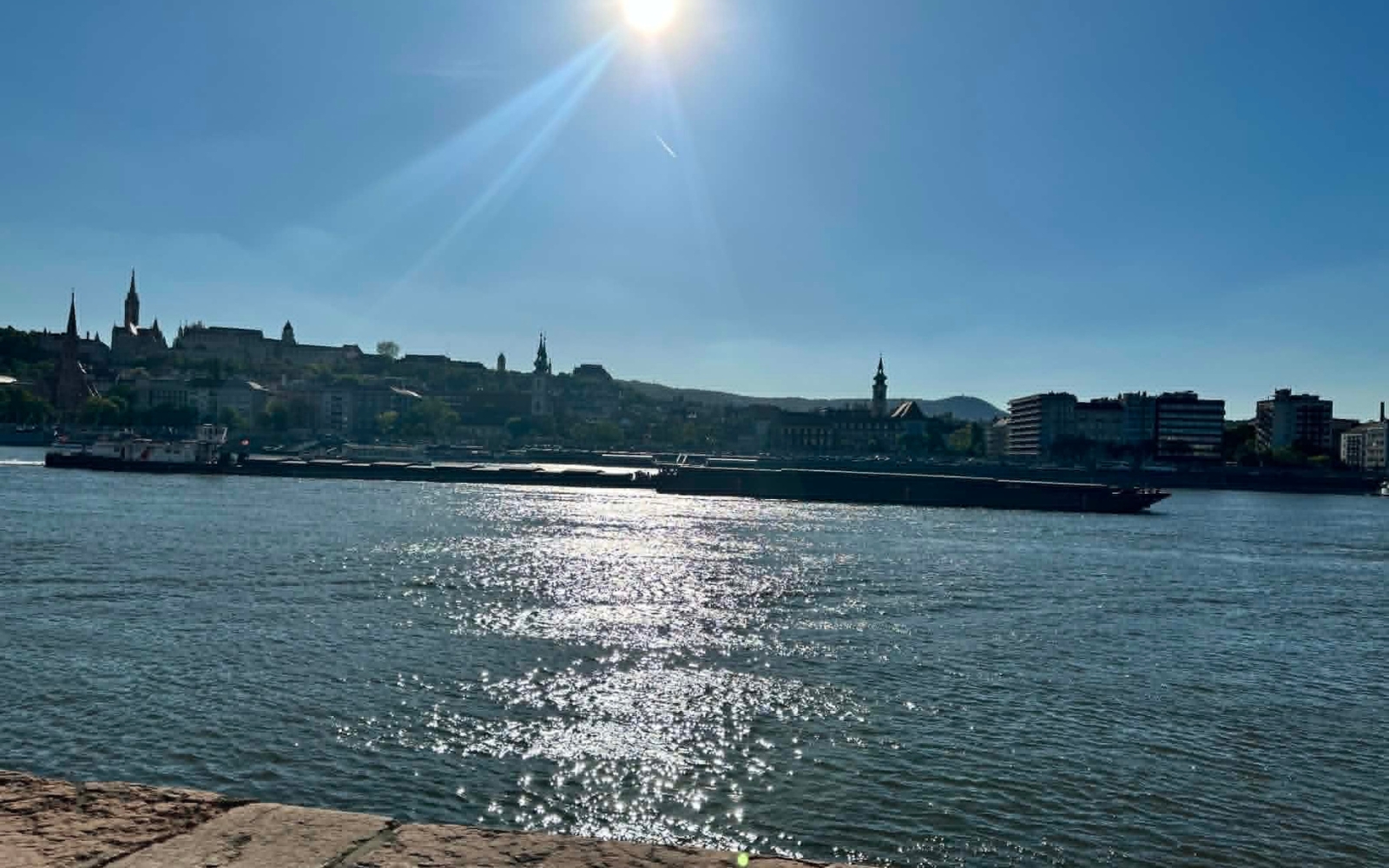
I spend hours walking beside the Danube, passing Parliament and watching boats near the docks.
The riverfront may be busy and full of life, but it still makes me feel calm.
I do not consider this time lost because I could have visited another place.
The walk is the experience.
This is one of the central ideas of slow travel in Budapest: not every meaningful part of the trip needs a named attraction or a completed booking.
Leave room for spontaneity
A plan is useful.
It helps you know what matters, how the city fits together and what you would regret missing.
But do not make the plan so rigid that Budapest cannot change it.
A note from Leja
I like knowing what I want to see and do before I arrive.
At the same time, I always leave room for new ideas.
When you are in Budapest, possibilities appear differently than they do at home. You notice a building, a street or a place you had not considered.
Sometimes the best ideas come from conversations.
You meet another traveller over breakfast, on a train, in a café or while waiting somewhere. They tell you what they enjoyed, where they have just been or what surprised them.
Not every recommendation will suit you.
But some may become part of your trip because you left enough space to say yes.
How much spontaneous time should you leave?
Try to leave:
- one open afternoon across a three-day trip;
- or at least two to three unscheduled hours each day;
- or one evening without a fixed reservation.
You do not need to leave the whole journey unplanned.
Structure creates confidence.
Spontaneity gives the trip life.
Leave space for repetition
Travel advice often tells us to avoid repeating anything.
But returning can deepen the experience.
You may want to go back to:
- the same stretch of river;
- the café where you felt comfortable;
- the Parliament view from Buda;
- a favourite market stall;
- the same cake;
- a bridge after dark.
Repetition is not wasted time.
It is often how a place becomes familiar.
A note from Leja
I return to several of the same Budapest places.
I have favourite stops for lángos, kürtőskalács, rántott sertésvelő and Dobos-torta. I return to the Great Market Hall and to Batthyány tér.
At the same time, I try new places on every trip.
I do not see a contradiction between the two.
Familiar places give the city continuity. New places keep it open.
How to recognise an overbooked Budapest day
A day is probably too full when:
- it contains three or more timed reservations;
- it requires several distant neighbourhoods;
- it crosses between Buda and Pest repeatedly;
- there is no real meal break;
- one delayed activity destroys the rest of the schedule;
- you cannot return to the accommodation;
- taxis are necessary only to make the plan possible;
- every walk has become a transfer;
- you feel anxious about missing the next thing before the current one has ended.
Use this simple test:
If one late lunch ruins the whole day, the day is too full.
What should you remove first?
When your Budapest itinerary feels too crowded, do not remove sleep, food or rest first.
Remove the least meaningful repetition.
Start with:
- the second viewpoint;
- the café on the opposite side of the city;
- the second similar museum;
- the evening booking you chose only because it was popular;
- the stop included mainly for a photograph;
- the restaurant that does not fit the day’s route.
Keep the experience that matters most.
Let the weaker item go without trying to force it into the following day.
A flexible three-day calm Budapest itinerary
This is not a strict schedule.
It is a structure you can adapt.
Day 1: central Pest
Choose:
- one central landmark;
- the Danube;
- one relaxed meal;
- an open evening.
Example:
- Basilica;
- coffee;
- Parliament;
- riverfront;
- dinner near the accommodation.
Day 2: Buda
Choose:
- an early Buda start;
- Castle Hill;
- a long lunch;
- a river walk or bridge crossing.
Example:
- breakfast near Batthyány tér;
- Fisherman’s Bastion and surrounding streets;
- lunch in Buda;
- evening Chain Bridge walk.
Day 3: one theme
Choose one main theme.
Thermal Budapest
- City Park;
- Széchenyi Bath;
- light meal;
- early evening.
Jewish Quarter and food
- cultural or historical visit;
- café;
- neighbourhood walk;
- dinner.
Market and cafés
- Great Market Hall;
- southern Pest;
- pastry or coffee;
- open afternoon.
Green Budapest
- Margaret Island;
- river;
- a long lunch;
- no large attraction.
This is how a calm Budapest itinerary remains useful without becoming rigid.
Can you visit Buda and Pest on the same day?
Yes.
The two sides are well connected, and crossing the river can be part of the experience.
The problem is not one crossing.
The problem is using the bridges as constant transfers between unrelated plans.
A balanced day may begin in Pest and end in Buda.
For example:
- central Pest in the morning;
- lunch;
- Buda riverfront in the late afternoon;
- Chain Bridge after dark.
An unbalanced day might move:
- Pest;
- Buda;
- Pest;
- City Park;
- Buda again;
- District VII for dinner.
The map may allow it.
Your energy may not.
What to do when the plan changes
A flexible itinerary is not a failed itinerary.
It is one that can survive real life.
When it rains
Choose one indoor anchor:
- a thermal bath;
- a café;
- a market;
- a museum;
- a long lunch.
Keep the rest light.
Do not replace every outdoor item with a new paid reservation.
When you are tired
Remove one programme.
Return to the accommodation.
Eat nearby.
Do not push every missed item into the next day.
Fatigue does not mean you are travelling badly.
When something is delayed
Keep the activity that matters most.
Remove the stop that is geographically inconvenient.
Check cancellation conditions.
Avoid punishing the evening for a late morning.
During summer heat
Plan hills and exposed walks earlier.
Rest in the warmest part of the day.
Move the Danube walk toward evening.
During winter
Allow more time for clothing, slippery streets and warm indoor stops.
Do not treat a cold riverfront walk as though it requires the same energy as a mild spring day.
Slow travel in Budapest does not mean doing nothing
Slow travel is sometimes misunderstood as avoiding famous places or spending the whole day in a café.
That is not necessary.
You can visit Parliament, Castle Hill, Széchenyi and the Great Market Hall.
The difference is how you place them.
Slow travel in Budapest means:
- choosing fewer things with more intention;
- staying long enough to notice where you are;
- reducing unnecessary crossings;
- respecting your own energy;
- allowing meals to be part of the day;
- letting the weather change the plan;
- leaving space for a conversation or recommendation;
- accepting that one trip cannot contain the whole city.
You are not trying to finish Budapest.
You are trying to experience it.
Frequently asked questions
How many activities should I plan per day in Budapest?
Plan around two main experiences per day, plus one or two lighter stops.
Leave at least one open period for food, walking, rest or a spontaneous discovery.
Is three days enough for Budapest?
Three full days are enough for a strong first introduction when you group sights by area.
You can experience central Pest, Buda and one themed day without trying to cover every major attraction.
Should I book Budapest attractions in advance?
Book timed or high-priority experiences, such as Parliament, a special thermal-bath package, a dinner cruise or an important restaurant.
Keep cafés, markets, parks and ordinary meals more flexible.
How do I group Budapest sights by area?
Build days around natural clusters:
- central Pest and Parliament;
- District VI and the Jewish Quarter;
- Buda and Castle Hill;
- City Park and Széchenyi;
- Great Market Hall and southern Pest.
Can I visit Buda and Pest on the same day?
Yes.
One planned crossing works well. Repeated crossings between unrelated attractions can make the day unnecessarily tiring.
How much free time should I leave?
Leave at least two or three unplanned hours each day, or one larger open afternoon during a three-day trip.
Is Budapest good for slow travel?
Yes.
Budapest supports long walks, cafés, thermal baths, markets, neighbourhood exploration and repeated riverfront visits.
What should I skip on a short Budapest trip?
Skip the second similar viewpoint, distant café or attraction you included only because it is popular.
Keep the places that genuinely interest you.
Should I return to my hotel or apartment during the day?
Yes, when it helps.
A midday break can improve the evening and prevent the whole trip from becoming exhausting.
How can I see Budapest without missing important sights?
Choose one or two major priorities each day and group them geographically.
You may miss some places, but you will experience the ones you choose more fully.
What should I do if it rains?
Choose one indoor anchor, such as a café, market, museum or thermal bath, and simplify the rest of the day.
Is a detailed Budapest itinerary better than being spontaneous?
The best approach combines both.
Use a clear structure for important places and transport, then leave enough open time for new ideas and changes.
Final thoughts
A Budapest trip needs a plan.
Without one, you may spend too much time deciding where to go or crossing the city inefficiently.
But the plan should remain a support, not a set of instructions you are afraid to change.
Choose one area.
Choose two main experiences.
Leave one part of the day open.
Allow lunch to take longer.
Return to the river.
Listen when another traveller tells you about somewhere they loved.
Go back to the same cake if you want to.
Remove the place that no longer fits.
Budapest does not become more meaningful because you visited more addresses.
It becomes more meaningful when you had enough time to notice where you were.
Plan enough to feel secure.
Then leave enough space for Budapest to become more than the plan.
Travel. Taste. Feel.
That is the Leja way.
Your next step: choose a simple three-day structure
Continue with First Time in Budapest: A Calm 3-Day Itinerary.
Then use these supporting guides: