If this is your first time in Budapest, this guide will help you experience the city without trying to see everything at once.
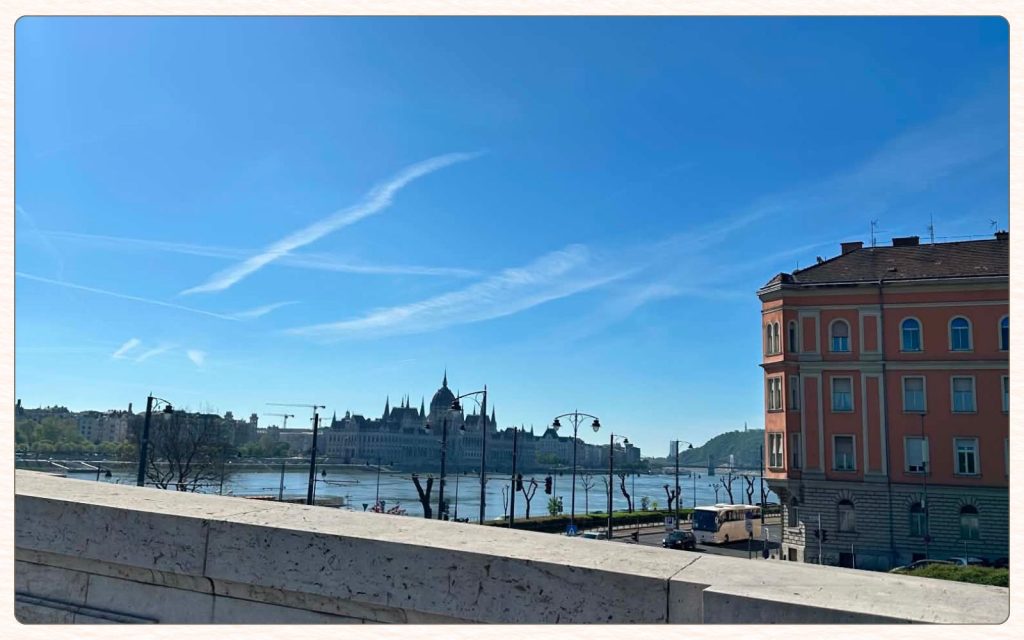
Budapest is not a city you need to conquer.
It is a city to cross slowly, bridge by bridge, coffee by coffee, bath by bath. On a first visit, it is easy to fill every hour with Parliament, Buda Castle, thermal baths, ruin bars, river cruises, markets, museums, cafés and viewpoints.
All of these can be meaningful. But Budapest becomes easier to understand when you leave space between them.
This calm three-day Budapest itinerary gives you enough structure to feel oriented, while leaving time for the quieter details: tiled entrances, old staircases, tram bells, warm pastries, river light and the subtle change in atmosphere when you cross from Pest to Buda.
For a gentler approach to planning the whole trip, read How to Plan a Calm Budapest Trip Without Overbooking Yourself.
Quick answer: how should you spend your first 3 days in Budapest?
Spend your first day exploring central Pest, St. Stephen’s Basilica, Parliament and the Danube. On the second day, cross to Buda for Castle Hill, a slower lunch and one thermal bath. Use the third day for the Jewish Quarter, Hungarian food, a café and one flexible cultural stop.
For most travellers, two main activities per day are enough. Leave space for walking, resting and changing your plans when a street, café or view invites you to stay longer.
Your Budapest itinerary at a glance
Day 1: Central Pest, Basilica, Parliament and the Danube
Day 2: Castle Hill, Buda and a thermal bath
Day 3: Jewish Quarter, Hungarian flavours and a slower final afternoon
Who this Budapest itinerary is for
This guide is a good fit if:
- this is your first visit to Budapest;
- you enjoy city walks, architecture and cafés;
- you want to experience a thermal bath;
- you prefer two meaningful activities to six rushed ones;
- you are interested in both the famous sights and the everyday atmosphere of the city;
- you want a flexible framework rather than a strict checklist.
You may need to adapt the itinerary if you are travelling with very young children, have limited mobility, want a nightlife-focused weekend or have only two complete days.
The aim is not to complete Budapest. It is to begin understanding it.
Before you arrive: Buda or Pest?
Budapest grew from two distinct sides of the Danube.
Buda is hillier, quieter and more scenic. It is home to Castle Hill, historic streets, viewpoints and residential neighbourhoods with a slower rhythm.
Pest is flatter, livelier and usually more practical for a first visit. It has Parliament, the Basilica, the Jewish Quarter, many cafés and restaurants, a wide range of hotels and convenient public transport connections.
For most first-time visitors, Pest is the easiest base. District V, District VI and carefully chosen parts of District VII keep many sights, restaurants and evening walks within easy reach.
A note from Leja
Whenever I return to Budapest, I usually stay in central Pest. I love its energy: the streets remain lively into the evening, there is always somewhere to eat or walk, and most of the places I want to revisit are close by. I still choose the exact street carefully, especially when travelling alone or returning late. For me, the best central base combines atmosphere, convenience and the feeling that I can move around comfortably.
For a detailed comparison of Budapest neighbourhoods, read Where to Stay in Budapest: Best Areas for First-Time Visitors.
Still deciding between the two sides of the river? Read Buda or Pest: Which Side Should You Stay On?.
Where to stay for this three-day itinerary
Your hotel area shapes the rhythm of the trip more than most visitors expect.
| Your travel style | Area to consider |
|---|---|
| The simplest first visit | District V or the Deák Ferenc tér area |
| Cafés, architecture and elegant walks | District VI |
| Restaurants and evening energy | District VII, with careful attention to the exact street |
| River views and romance | The Danube area |
| Quiet mornings and historic atmosphere | Buda or the Castle District |
Choose the neighbourhood before choosing the hotel. A beautiful room in the wrong area can make a short trip more tiring, while a simple, central stay can make the whole city feel easier.
When you are ready to compare specific stays, continue to Best Hotels in Budapest for First-Time Visitors.
Arriving in Budapest without making the first evening complicated
After a flight or train journey, you do not need to begin sightseeing immediately.
Check in, drink some water, eat something warm and take a short walk near your accommodation. Save the longer routes and major landmarks for the next morning.
Budapest Airport is connected to the centre by public transport, while taxis and pre-booked transfers can be more comfortable in certain situations. Always check current ticket conditions, routes and arrival information before travelling.
A private transfer may be genuinely useful when:
- you arrive late at night;
- you are carrying several bags;
- you are travelling with children;
- someone in your group has limited mobility;
- you prefer to reach your hotel directly after a long journey.
It is not necessary for every visitor. The right arrival option is the one that reduces stress without adding an unnecessary expense.
For a full comparison, read Budapest Airport to City Centre: A Calm Arrival Guide.
Day 1: Pest, the Danube and your first feeling of the city
Your first day should help you understand the shape and rhythm of central Budapest.
Do not begin with a long list. Begin with the river, a few important landmarks and enough time to look around.
Morning: begin where central Pest opens gently
Start near St. Stephen’s Basilica.
Before going inside, pause in the square. Notice how the dome appears between the surrounding streets and how the centre moves around it. Budapest often reveals itself through these small changes in perspective: a grand façade at the end of an ordinary street, a tram passing behind a row of trees, or a quiet entrance beside a busy café.
After the Basilica, stop for coffee. Your first morning does not need to be efficient. It needs to help you arrive.
Choose a café that feels welcoming rather than one you selected only because it appears on every social media list. Sit down, order something sweet if you like and watch the city begin around you.
This is the Leja way: travel, taste and feel before collecting attractions.
Late morning: let the Danube orient you
Walk from the Basilica area toward the Hungarian Parliament Building.
Parliament is one of the city’s most recognisable landmarks, but its setting matters as much as the building itself. From this part of Pest, the Danube opens the view toward Buda, Castle Hill and the hills beyond.
Spend time by the river instead of taking one photograph and leaving.
The Danube helps first-time visitors understand Budapest. It separates the city, connects it and gives both sides their sense of scale.
Walk a section of the riverside at your own pace. Depending on your energy, continue toward the Chain Bridge or turn back into the streets of central Pest.
Afternoon: choose one quieter street
Váci utca is one of Budapest’s best-known shopping streets. It can be useful for orientation, but it is busy and tourist-focused.
For a softer afternoon, explore the side streets between the Danube, Ferenciek tere and Károlyi Garden. These smaller routes often show a more intimate side of the centre: residential façades, courtyards, bookshops, bakeries and neighbourhood restaurants.
You do not need a famous destination for every hour.
A note from Leja
I lived in Budapest for eight years, and some of my strongest memories are not connected to major sights. In our free time, my partner and I walked constantly, often without a detailed plan. We discovered courtyards, small cafés, old buildings and streets we had passed many times without really seeing. Those walks made me fall in love with Budapest. The city’s hidden treasures rarely announce themselves; you usually find them by slowing down.
Evening: an easy dinner and the river after dark
Keep your first dinner simple.
Hungarian food can be rich and comforting, but Budapest also has modern bistros, Jewish-Hungarian flavours, bakeries and international restaurants. You do not need to reserve the most famous table in the city for your first evening.
Choose somewhere close to your hotel or along a route you already know. A calm dinner is often a better beginning than crossing the city for a restaurant chosen months earlier.
After dinner, return to the Danube if you still have energy.
Budapest after dark feels theatrical without requiring a ticket. Parliament, the bridges, Castle Hill and their reflections create one of the city’s most memorable views.
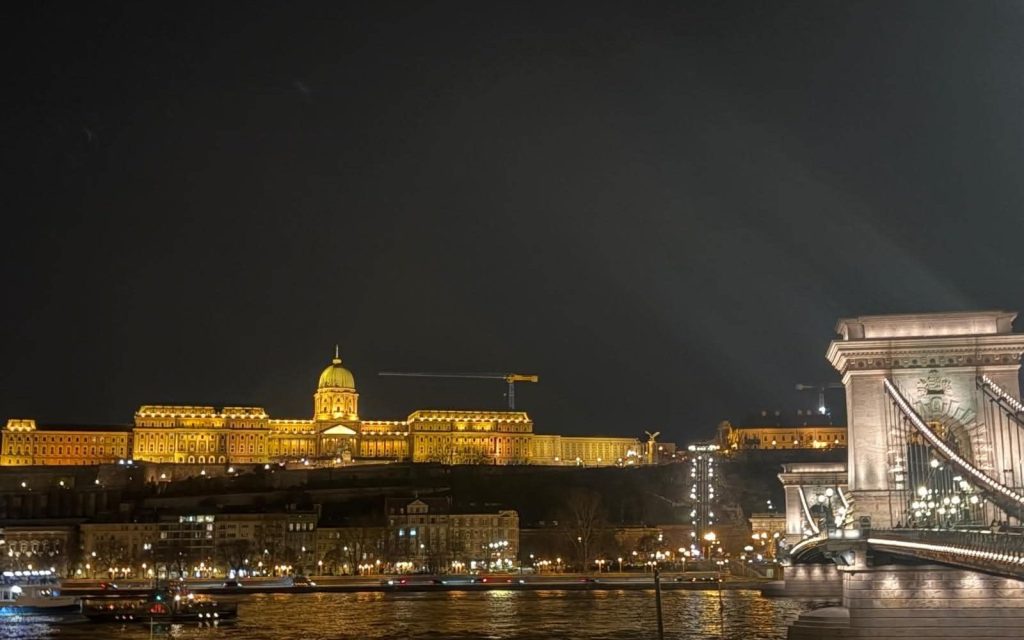
A river cruise can be worthwhile if you want to see the illuminated riverfront with less walking. But it is not essential. A quiet evening walk can be just as meaningful.
Day 2: Buda, Castle Hill and a thermal bath
Your second day moves across the river.
Buda feels different from Pest. The streets rise, the views open more slowly and the atmosphere often becomes quieter as you move away from the busiest viewpoints.
Morning: see Budapest from the quieter side
Cross the Danube and make your way toward Castle Hill.
Visit the area earlier in the day when possible. Fisherman’s Bastion and the surroundings of Matthias Church become busy, but the district is more than a viewpoint.
Walk through the smaller streets behind the main landmarks. Notice the coloured façades, old doorways and the quieter residential corners. The best way to experience Castle Hill is not to race between photo stops, but to let the district unfold gradually.
Choose the sights that matter most to you. You do not have to enter every museum or historic building on the hill.
Lunch: stay in Buda a little longer
Many visitors cross back to Pest immediately after seeing the Castle District. Instead, consider staying in Buda for lunch.
A slower meal gives your feet a rest and allows the morning to settle before the thermal bath.
Choose a restaurant or café that fits your route rather than adding another distant destination. This is especially useful on a three-day trip, when crossing the city repeatedly can quietly consume more energy than expected.
Afternoon: choose one thermal bath and give it time
A thermal bath is one of Budapest’s defining experiences, but it should not feel like a quick sightseeing stop.
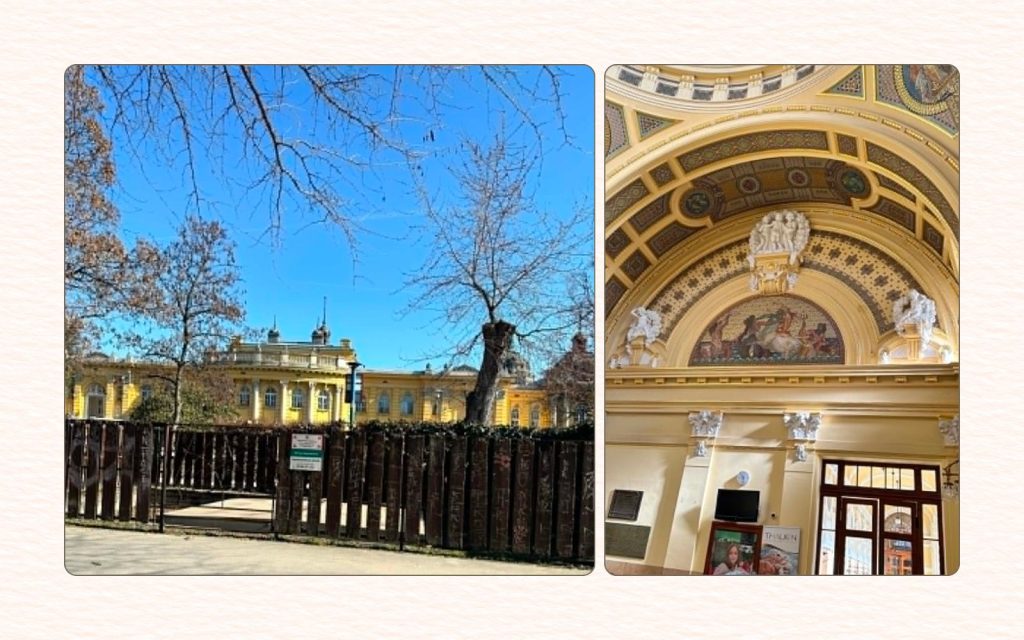
For many first-time visitors:
- Széchenyi offers the most recognisable, classic Budapest bath experience;
- Rudas may suit travellers looking for a more historic and atmospheric setting;
- Lukács can appeal to those who prefer a quieter and more traditional character.
The best bath depends on your travel style, the day of your visit and the atmosphere you want.
Do not plan another demanding activity immediately afterward. Allow time to change, find your way through the building and rest in the water without watching the clock.
Booking ahead may help when:
- you are visiting on a busy weekend or holiday;
- you have only one possible bath day;
- you need a particular ticket or changing option;
- the bath visit is the most important fixed experience in your itinerary.
Otherwise, avoid paying in advance simply because a booking platform creates a sense of urgency.
Opening hours, access conditions, services and renovation schedules can change. Check official information shortly before visiting.
For practical advice on tickets, etiquette and choosing the right bath, read Budapest Thermal Baths: What to Know Before You Go.
Evening: return to the river slowly
After the bath, keep the evening light.
Have dinner near your accommodation or take a gentle tram ride through central Budapest. This is not the night to add a museum, a long walking tour and several nightlife stops.
When the river appears again after dark, Budapest may already feel more familiar than it did the previous evening.
Day 3: Jewish Quarter, food memories and a softer final day
Your third day brings you back to Pest and closer to one of the city’s most layered neighbourhoods.
The Jewish Quarter is not only a nightlife district or a collection of ruin bars. It is a living neighbourhood shaped by religious heritage, memory, architecture, restaurants, residents, visitors and contemporary city life.
Approach it with curiosity and respect.
Morning: begin with the history of the Jewish Quarter
Start earlier in the day, before the busiest afternoon and evening hours.
Depending on your interests, you may visit one synagogue, take a thoughtful heritage walk or explore the streets independently while reading about the district’s history.
Do not try to compress every synagogue and memorial into one morning. Choose one central experience and give it your full attention.
A well-researched guided walk may be worthwhile if you want cultural and historical context that is difficult to understand from the street alone. Look for tours that treat the neighbourhood respectfully rather than using Jewish heritage as a backdrop for entertainment.
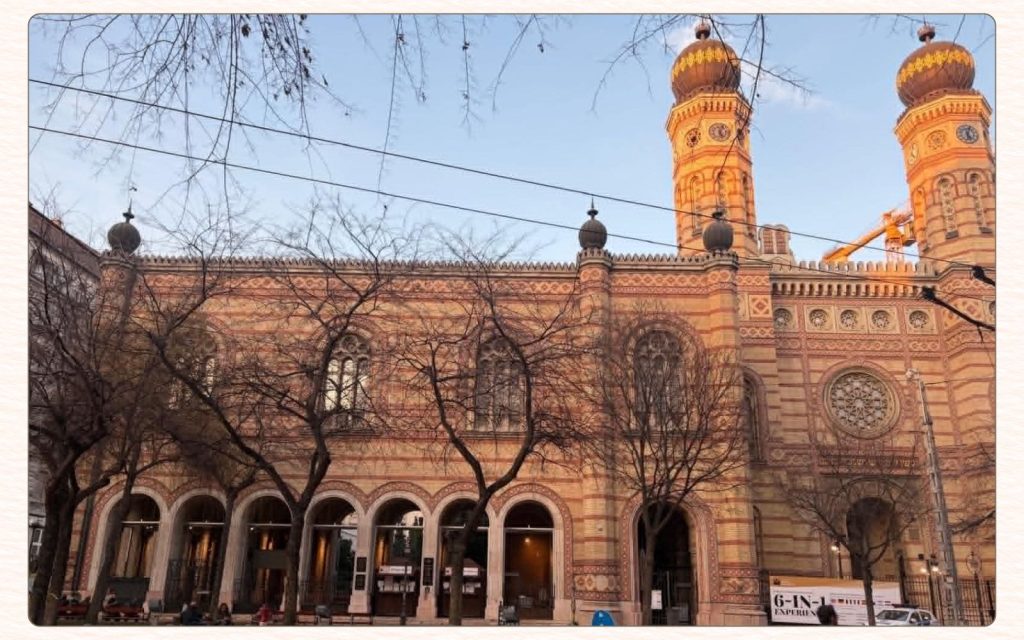
Continue with Jewish Quarter Budapest: History, Cafés and Evening Streets before planning this part of your visit.
Lunch: choose one Budapest food memory
Let lunch be part of the day rather than a gap between attractions.
You might choose gulyás, chicken paprikash, a comforting soup, a Jewish-Hungarian pastry or a traditional dish you have never tried before.
You do not need to taste every famous Hungarian food during one weekend. One meal remembered clearly is more meaningful than a checklist of dishes eaten too quickly.
For a thoughtful introduction to local flavours, read Budapest Food Guide: What to Eat and Where to Begin.
A note from Leja
The inner city and the Jewish Quarter are full of life, movement and evening energy, but they also hold small, quiet places where the city slows down. I love finding tucked-away cafés and restaurants where traditional Hungarian food is served without ceremony and conversations begin naturally. Sometimes the people at the next table come from a completely different culture, yet for an hour you share the same room, flavours and curiosity about Budapest. That mixture of local memory and new encounters is one of the things I love most about the city.
Afternoon: choose a café, market or museum
For the final afternoon, choose only one main direction.
Choose a café if you need to pause
Sit somewhere without turning the break into another task. Write a few notes, look through your photographs or simply observe the street.
Choose a market if food and everyday life interest you
A market can offer a different perspective on Hungarian flavours, ingredients and daily routines. Visit with curiosity, but remember that not every market needs to become a shopping trip.
Choose a museum if one subject genuinely interests you
Do not add a museum simply because the weather changes or because an itinerary says you should. Select one that connects with your interests and give it enough time.
Final evening: leave room for your own Budapest discovery
For your last evening, return to a place you liked or follow a street you noticed earlier.
You may want another Danube walk, a relaxed dinner, a small wine bar or a quiet café. You may decide that your best final plan is no plan at all.
The purpose of the third evening is not to complete Budapest. It is to leave with a personal memory that was not entirely organised in advance.
Getting around Budapest calmly
Budapest has a useful network of trams, metros, buses and trolleybuses.
For a first visit, combine public transport with walking. The centre looks compact on a map, but hills, river crossings and long sightseeing days can add up.
Trams are particularly enjoyable because they allow you to see the city while moving through it. They are not only practical; some routes become part of the experience.
A few simple principles help:
- use public transport before you become tired, not only after;
- allow extra time when travelling to Castle Hill;
- check current ticket and validation rules;
- keep your ticket or pass accessible during the journey;
- use official transport information for current routes and disruptions.
Walking is one of the best ways to know Budapest, but you do not need to prove anything by walking every distance.
How much should you plan each day?
For a calm three-day trip, plan around two main experiences per day.
A balanced day may include:
- one important morning sight;
- one substantial afternoon experience;
- a long lunch or café break;
- one flexible period with no reservation;
- an evening plan that can be shortened when you are tired.
Try not to book:
- several museums on the same day;
- a long walking tour immediately before a thermal bath;
- fixed dinner reservations every evening;
- a river cruise, late nightlife and an early tour within the same twelve hours;
- attractions in distant neighbourhoods without accounting for travel time.
Budapest is a city of atmosphere as much as monuments. Leave enough room to notice it.
For more ideas, read Things to Do in Budapest Without Overbooking Yourself.
Your calm three-day Budapest plan
| Day | Main focus | Keep it calm by… |
|---|---|---|
| Day 1 | Pest, Basilica, Parliament and the Danube | choosing an easy dinner instead of a full evening programme |
| Day 2 | Castle Hill and a thermal bath | avoiding another major attraction after the bath |
| Day 3 | Jewish Quarter, food and one cultural stop | choosing a café, market or museum—not all three |
This itinerary gives you a classic first experience of Budapest without asking you to hurry through it.
Frequently asked questions
Is 3 days enough for a first trip to Budapest?
Three days are enough to experience the main contrasts of Budapest: Pest and Buda, the Danube, Castle Hill, a thermal bath and one or two neighbourhoods. You will not see the whole city, but you can leave with a strong first impression without rushing.
Four nights will feel more spacious, especially if you enjoy cafés, museums and slower mornings.
Where should a first-time visitor stay in Budapest?
For most first-time visitors, central Pest is the most practical choice. District V offers classic central convenience, District VI combines architecture and cafés, and selected parts of District VII provide easy access to restaurants, nightlife and the Jewish Quarter.
Check the exact street and recent accommodation reviews, especially if quiet sleep is important.
Should I stay in Buda or Pest?
Stay in Pest if you want central convenience, restaurants, nightlife and easy access to many first-time sights.
Choose Buda if you prioritise quieter evenings, hill views and a more residential atmosphere. For a short first visit, Pest is usually the easier base.
Which thermal bath is best for a first-time visitor?
Széchenyi is the classic first choice for many travellers. Rudas offers a more historic and atmospheric experience, while Lukács may suit visitors looking for a quieter, more traditional feeling.
Check current schedules and access conditions before choosing.
Do I need to book Budapest attractions in advance?
Not everything needs to be booked.
Advance planning can be useful for timed Parliament visits, certain thermal bath tickets, popular guided tours and special evening programmes. Ordinary walks, cafés and many neighbourhood experiences are better left flexible.
Book when it solves a genuine problem, not because you feel pressured to organise every hour.
How much should I plan each day?
Two main activities per day are usually enough.
Add a meal, café or evening walk, but leave at least one open period. Budapest is more enjoyable when you have time to change direction, sit down or stay somewhere longer than expected.
Final thoughts
Your first time in Budapest does not need to be perfect.
You may miss a museum. You may choose a café that is only ordinary. You may spend longer beside the Danube than you planned and leave something on your list for another visit.
That is not a failure of the itinerary. It is often the moment the trip becomes your own.
Budapest does not disappear after one weekend. It remains in flavours, bridges, thermal water, old streets, courtyard sounds and the feeling that another layer is still waiting.
Travel. Taste. Feel.
That is the Leja way.
Your next step: choose where to stay
Before booking individual hotels, decide what kind of neighbourhood will support the rhythm of your trip.
Continue with Where to Stay in Budapest: Best Areas for First-Time Visitors, then compare the Best Hotels in Budapest for First-Time Visitors.