Choosing where to stay in Budapest can shape the rhythm of your entire trip.
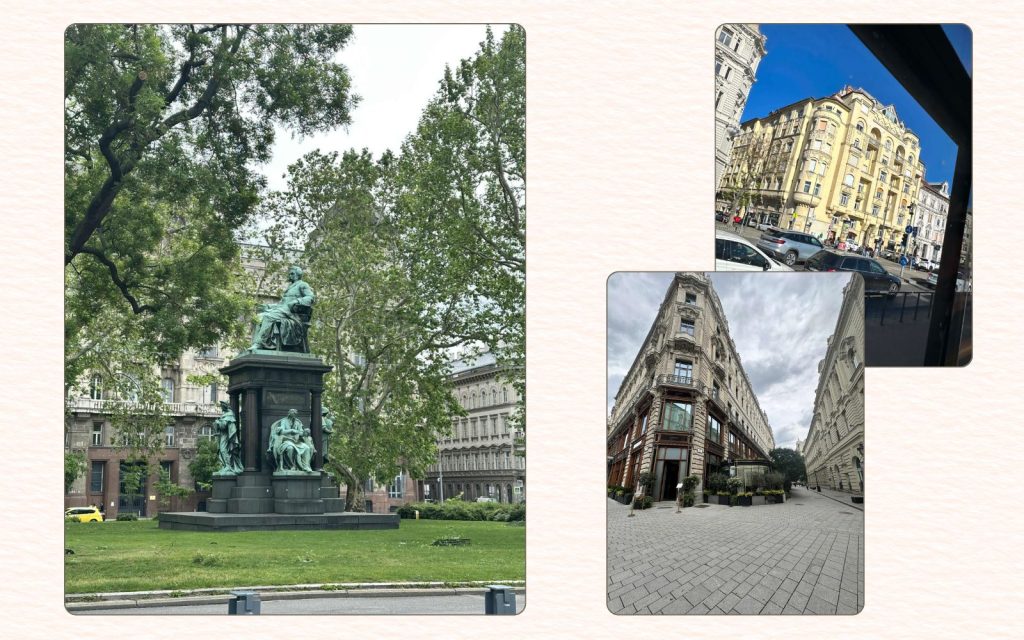
A central Pest hotel can make the city feel easy from the first morning. A room near the Danube can turn an ordinary evening walk into one of your strongest Budapest memories. Staying in the Jewish Quarter can place restaurants, cafés and nightlife outside your door, while a Buda hotel may give you quieter evenings and views across the river.
There is no single best Budapest neighbourhood for every traveller.
The right area depends on how long you are staying, how much walking you enjoy, whether nightlife matters to you and whether you prefer convenience, atmosphere or quiet.
This guide compares seven of the best areas to stay in Budapest for first-time visitors. It will help you choose the neighbourhood before you begin comparing individual hotels.
For a complete plan for your first visit, begin with First Time in Budapest: A Calm 3-Day Itinerary.
Quick answer: what is the best area to stay in Budapest for the first time?
For most first-time visitors, Pest is the easiest side of Budapest to stay on.
Choose District V for the most convenient and classic central stay. Choose District VI for cafés, architecture and a slightly softer city rhythm. Choose District VII for restaurants, nightlife and easy access to the Jewish Quarter, but check the exact street carefully.
Choose Buda when quiet evenings, old streets and river views matter more than being close to Pest’s nightlife.
For a short first trip, District V or District VI is usually the safest general choice.
Budapest areas at a glance
| Area | Best for | Main advantage | What to check |
|---|---|---|---|
| District V | First visits and short stays | Central, elegant and easy to explore | Higher prices and tourist-heavy streets |
| District VI | Cafés, culture and couples | Central with a more balanced atmosphere | The character varies by street |
| District VII | Food, nightlife and the Jewish Quarter | Energetic, walkable and full of choices | Late-night noise and room position |
| Danube area | Views and romantic trips | Memorable walks and river atmosphere | Whether the room has a genuine river view |
| Buda Castle | History and quiet evenings | Old streets, views and a slower mood | Hills, steps and fewer late-night options |
| Deák Ferenc tér | Transport and short trips | Excellent city and airport connections | Crowds and less neighbourhood intimacy |
| Palace District | Slower and more cultural stays | Quieter streets and a lived-in city rhythm | Slightly farther from some classic sights |
Still uncertain?
Choose District V for simplicity, District VI for balance or District VII for energy.
Buda or Pest: begin with the rhythm you want
The Danube divides Budapest into two sides with distinct landscapes and moods.
Pest: practical, lively and easy for a first visit
Pest is flatter, busier and generally more convenient for first-time travellers.
It contains many of the places visitors associate with central Budapest, including Parliament, St. Stephen’s Basilica, Andrássy Avenue, the Hungarian State Opera, the Jewish Quarter, shopping streets, restaurants and a large selection of hotels.
Public transport connections are strong, and many central areas can be explored on foot. It is also easier to find dinner, coffee or an evening drink without planning a long journey back to your accommodation.
Choose Pest if you want:
- easy public transport;
- cafés and restaurants close by;
- nightlife or lively evenings;
- flat, central walking routes;
- convenient access to several major sights;
- a simple base for a short first visit.
Buda: quieter, hillier and more atmospheric
Buda is known for Castle Hill, residential streets, viewpoints and a gentler evening rhythm.
It can be romantic and beautiful, especially after day visitors leave the Castle District. Depending on the exact location, however, you may cross the river more often for restaurants, nightlife and some of the classic Pest sights.
Choose Buda if you want:
- quiet evenings;
- historic streets;
- hill and river views;
- a more residential atmosphere;
- romance rather than nightlife;
- a slower start and end to each day.
A useful first rule is:
Choose Pest for convenience. Choose Buda for atmosphere.
For a deeper comparison, read Buda or Pest: Which Side Should You Stay On?.
A note from Leja
When I return to Budapest, I usually stay in the inner city on the Pest side. Public transport is excellent, the Danube is only a short walk away and I can reach most of the places I love without needing a taxi. I also enjoy the feeling of walking back through the city after dinner. I have generally felt comfortable doing this, but I still choose the exact street carefully, check recent reviews and use the same awareness I would in any busy European capital.
1. District V: when you want Budapest to feel easy
District V is the classic choice for a first visit.
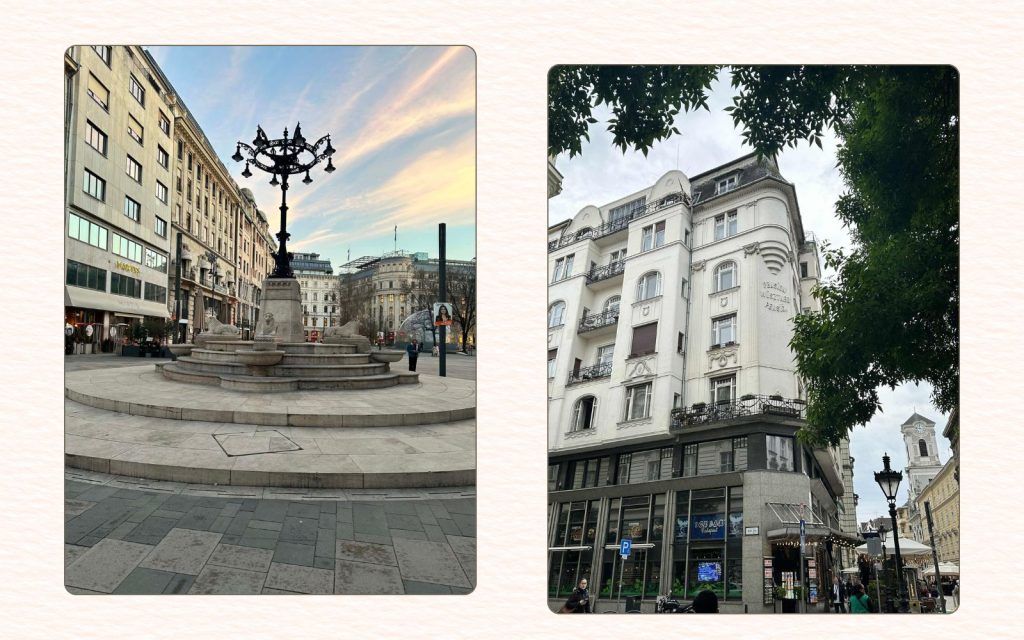
This is the heart of inner Pest, close to the Danube, Parliament, St. Stephen’s Basilica, Vörösmarty tér and several well-known streets and squares.
Staying here reduces logistics. You can walk to many sights, return to your hotel during the day and reach restaurants or public transport without spending much time studying the map.
District V works especially well when you have only two or three full days in Budapest.
Choose District V if:
- this is your first visit;
- you want the simplest central base;
- you prefer walking to frequent transport changes;
- you are staying for a short city break;
- you want Parliament, the Basilica and the Danube nearby;
- you enjoy elegant central streets and evening river walks.
Consider another area if:
- accommodation price is your main concern;
- you want a less visitor-focused neighbourhood;
- nightlife is one of your main priorities;
- you prefer small residential streets to grand central squares.
The most famous parts of District V can feel busy and polished. Step a few streets away from the busiest routes, however, and the atmosphere may become quieter.
What to check before booking
Look beyond the phrase “central Budapest.”
Check:
- the exact street;
- how close the hotel is to a metro or tram stop;
- whether the room faces a busy road;
- recent comments about street noise;
- whether the rate includes breakfast and local fees;
- the real walking time to the places you want to visit.
District V is not always the cheapest area for food. Lángos, kürtőskalács and other recognisable Hungarian foods can cost noticeably more near the busiest visitor routes than they do a few streets farther away.
You do not need to leave the centre completely to find fairer prices. Often, walking away from the most photographed square is enough.
2. District VI: central, cultured and slightly softer
District VI is one of the best choices for travellers who want to remain central without staying in the most tourist-focused part of Budapest.
The district includes Andrássy Avenue, the Hungarian State Opera and many side streets with restaurants, cafés and older residential buildings.
Its location creates an appealing balance. You can walk toward the Basilica and District V, reach the Jewish Quarter easily or travel along Andrássy Avenue toward Heroes’ Square and City Park.
Choose District VI if you enjoy:
- architecture;
- theatre and cultural sights;
- cafés and terraces;
- central walks;
- elegant streets;
- easy public transport;
- a city atmosphere that feels lively without always being intense.
District VI changes from street to street. Some parts feel grand and formal, while others are more everyday, busy or residential. The exact hotel location matters.
An easy walk through central Pest
One of the pleasures of staying in this part of Budapest is that an ordinary walk can connect several very different city moods.
You can begin near the Opera, continue along Andrássy Avenue toward Heroes’ Square or turn toward the central streets filled with restaurants, cafés and terraces.
A walk along the Nagykörút, Budapest’s Grand Boulevard, is also an experience in itself. Trams move beside old façades, local shops sit between cafés and theatres, and the city feels less staged than it can around the most famous landmarks.
Some restaurants offer several weekday lunch menus at more reasonable prices than their evening à la carte selection. These menus can be a practical way to try Hungarian dishes without turning every meal into a major expense.
A note from Leja
During the eight years I lived in Budapest, my partner and I spent much of our free time walking. From the inner districts, we could reach the Opera, Andrássy Avenue, Heroes’ Square, the river and streets lined with restaurants and terraces without making every outing into a planned excursion. These walks were how I discovered the Budapest I eventually fell in love with: not only the landmarks, but the courtyards, façades, cafés and small places between them.
For slow café ideas around this part of the city, read Best Budapest Cafés for a Slow Morning.
3. District VII: energy and quiet corners, street by street
District VII includes much of Budapest’s Jewish Quarter.
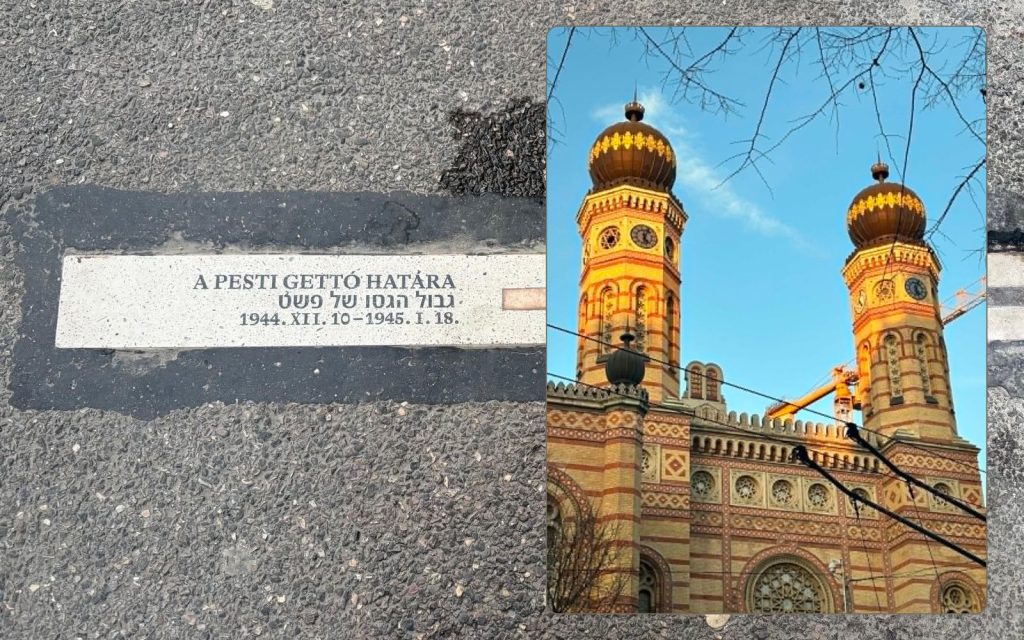
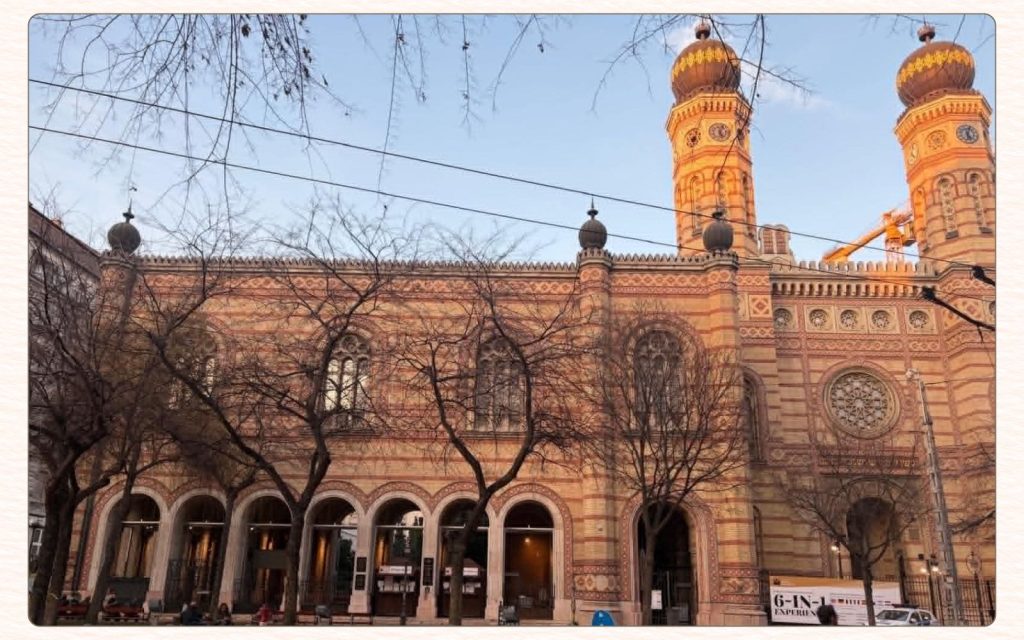
It is one of the city’s most energetic and culturally layered areas. Synagogues, memorials, courtyards and family histories exist beside restaurants, cafés, bakeries, small shops, bars and contemporary nightlife.
The district should not be understood only through ruin bars.
It is a living neighbourhood shaped by Jewish heritage, city memory, residents, visitors and constant change.
District VII can be a very practical place to stay if food, evenings and central walking matter to you.
Choose it if you want:
- restaurants close to your accommodation;
- nightlife and evening energy;
- easy access to the Jewish Quarter;
- cafés and breakfast places;
- a lively central atmosphere;
- short walks to District V and District VI.
The exact street matters
Some parts of District VII remain active until late at night.
Before booking, check:
- recent reviews mentioning noise;
- whether the room faces the street or an inner courtyard;
- whether windows are soundproofed;
- how close the building is to late-night bars;
- whether reception or self-check-in feels secure and straightforward;
- photographs uploaded by recent guests;
- comments about weekend noise rather than only weekday stays.
A hotel can be in an excellent area and still be wrong for a light sleeper.
The quieter edges of District VII or nearby parts of District VI and District V may offer easier access to the neighbourhood without placing you directly above its busiest nightlife streets.
A note from Leja
What I love about the inner city and the Jewish Quarter is the contrast. The streets can be full of movement, music and evening life, yet nearby there are quiet cafés and small restaurants where the city slows down. I have eaten traditional Hungarian food in places where conversations began naturally with visitors from completely different cultures. That mixture of local memory, old flavours and new encounters is part of what makes this neighbourhood special to me.
For a more culturally thoughtful introduction, read Jewish Quarter Budapest: History, Cafés and Evening Streets.
Food lovers can also continue to Budapest Food Guide: What to Eat and Where to Begin.
4. The Danube area: when the view is part of the reason you came
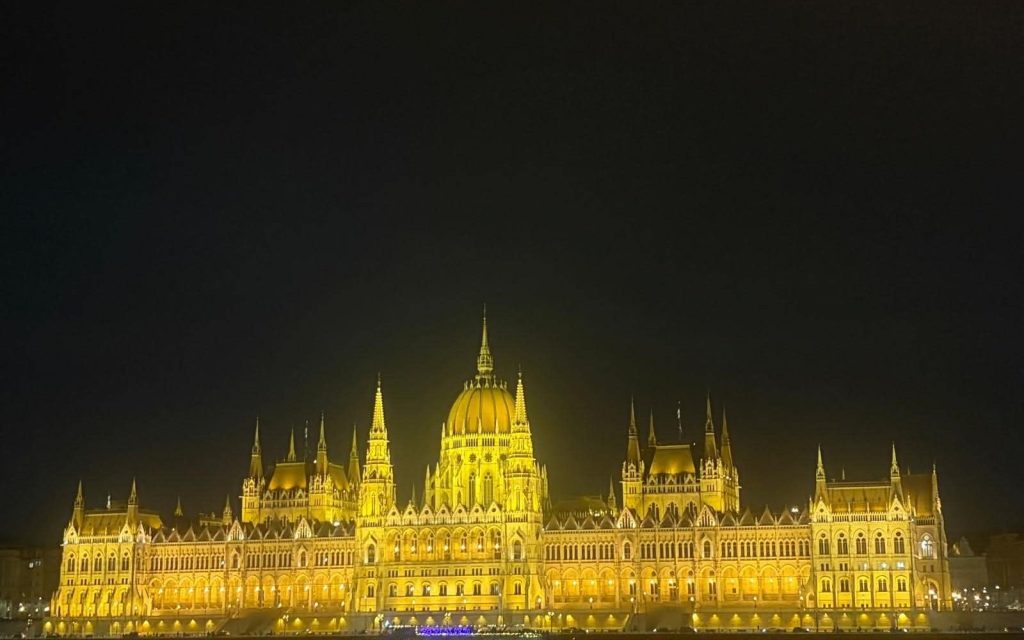
The Danube is the emotional centre of Budapest.
Staying near the river gives you easy access to evening walks, bridge views and the changing relationship between Buda and Pest.
This can be one of the most memorable choices for couples, photographers and travellers who want the city’s atmosphere to continue after sightseeing ends.
The experience differs depending on the side of the river.
Pest riverfront
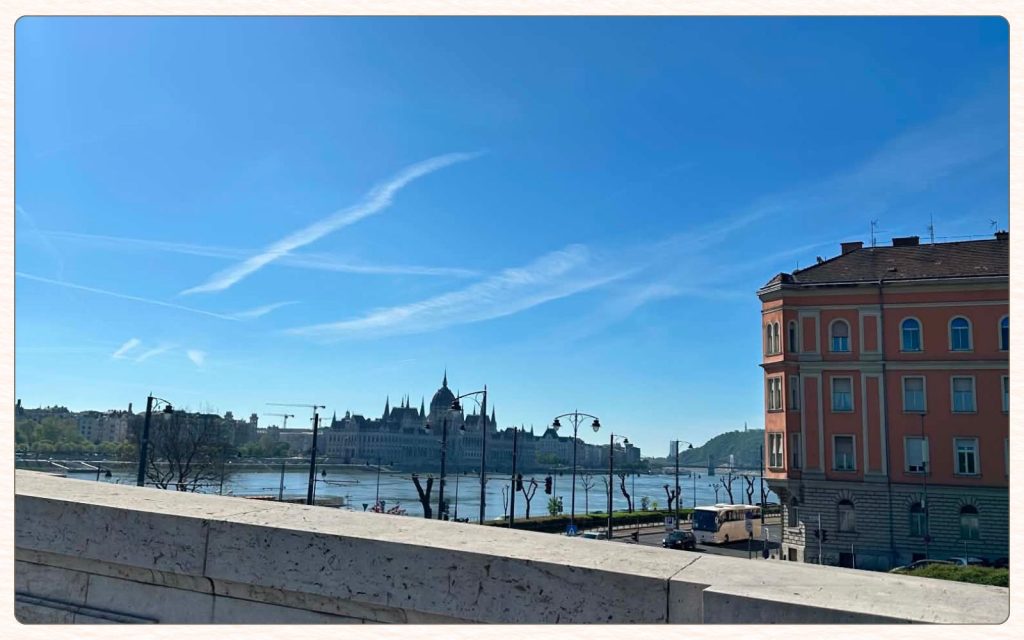
The Pest side can place you close to Parliament, the Chain Bridge, District V and the central restaurant areas.
It is practical, elegant and well connected.
Buda riverfront
The Buda side may offer direct views toward Parliament and Pest. It can feel more peaceful in the evening, although your restaurant and nightlife choices may be more limited depending on the precise location.
Choose the Danube area if:
- evening river walks are important to you;
- this is a romantic or special trip;
- you want classic Budapest views;
- you are comfortable paying more for location or atmosphere;
- you prefer the river to be part of your everyday route.
Before paying for a river view
“Near the Danube” and “river view” are not the same thing.
Check:
- the exact room category;
- whether the view is full, partial or side-facing;
- which floor the room is on;
- whether buildings or trees block the view;
- guest photographs rather than only professional hotel images;
- possible road, tram or riverfront noise;
- whether the hotel guarantees that view for the room you are booking.
A riverfront hotel is not automatically better than a quieter hotel two streets away. Decide whether you are paying for a view you will genuinely use.
For a couples’ itinerary, read Romantic Weekend in Budapest: A Slow 2-Day Itinerary.
5. Buda Castle: quiet evenings above the river
The Buda Castle area feels very different after the daytime crowds leave.
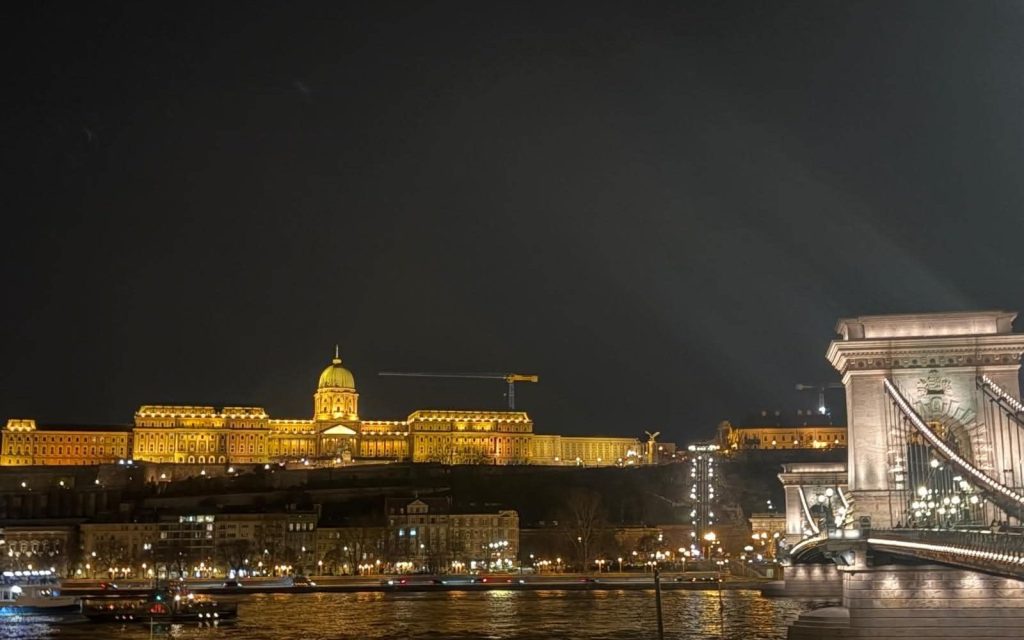
Its old streets, historic façades and elevated views can create a beautiful setting for a romantic or slower Budapest stay.
Choose the Castle District if you want:
- historic atmosphere;
- quieter evenings;
- old streets and architecture;
- views toward Pest;
- a more reflective city break;
- easy access to Castle Hill sights.
The area is less practical for travellers who want to spend every evening in Pest’s restaurant and nightlife districts. Crossing the river is simple, but repeated journeys can add time and energy to a short trip.
Practical details to consider
The area is hilly, and some routes include steps, slopes or uneven surfaces.
Before booking, check:
- how you will arrive with luggage;
- the walking route from the nearest transport stop;
- whether the hotel has a lift;
- whether restaurants remain open near the hotel at the times you need them;
- how late you expect to return from Pest;
- whether the quieter evening atmosphere is a benefit or a limitation for you.
Buda Castle is a strong choice when you want your accommodation area to feel like part of the historic experience.
It is less suitable when your main priorities are nightlife, flat walking and spontaneous late dinners.
6. Deák Ferenc tér: choose connection over neighbourhood intimacy
Deák Ferenc tér is one of the most practical transport points in central Budapest.
Several metro lines meet here, the airport bus connection is nearby and Districts V, VI and VII are all within easy reach.
This makes the area especially useful for:
- short visits;
- early departures;
- late arrivals;
- travellers who want simple public transport;
- first-time visitors who do not want to study complex routes;
- people planning day trips or moving around frequently.
Deák Ferenc tér is busy, central and functional.
It may not have the intimate neighbourhood character of a quiet side street in District VI or the Palace District, but it reduces travel friction.
Check whether the hotel is directly beside the busiest roads or a few streets away. A short distance can make a meaningful difference to noise and atmosphere.
For airport planning, read Budapest Airport to City Centre: A Calm Arrival Guide.
7. The Palace District: a slower side of central Pest
The Palace District lies in District VIII, close to the Hungarian National Museum and several university buildings, historic houses and smaller cultural spaces.
It offers a quieter alternative to the busiest parts of inner Pest while remaining reasonably central.
The neighbourhood can appeal to travellers who enjoy:
- old buildings;
- less visitor-focused streets;
- small cafés and restaurants;
- a more everyday city rhythm;
- cultural and literary atmosphere;
- quiet evenings;
- exploring beyond the most obvious districts.
The Palace District is not remote, but it may require slightly more walking or public transport than District V.
It works particularly well for repeat visitors and slower travellers who do not need to sleep beside the main landmarks.
Choose it when you value atmosphere and calm over maximum sightseeing convenience.
Avoid describing any neighbourhood as a place where visitors can automatically “live like a local.” A hotel stay remains a visitor experience. What this area can offer is a quieter and less tourism-dominated side of central Pest.
When staying farther from the centre can make sense
A central hotel is not always the right choice.
Staying farther away may work well if:
- you are visiting Budapest for a week or longer;
- you already know the city;
- you are attending a specific event;
- you are visiting friends or family;
- you find much better accommodation near a direct metro line;
- you prefer residential mornings to central nightlife;
- you are willing to travel into the centre each day.
For a first trip of only two or three days, however, central accommodation often saves more than time. It also saves energy.
A lower hotel price may become less attractive when it requires long journeys, several transport changes or frequent taxis.
Compare the total experience rather than the nightly room rate alone.
Choose your Budapest area by travel style
For the easiest first trip
Choose District V.
It places the classic sights, the Danube and central transport within easy reach.
For the best balance of culture and convenience
Choose District VI.
It works well for cafés, architecture, couples and travellers who want a central but slightly softer atmosphere.
For food and nightlife
Choose District VII.
Stay near the energy, but check the exact building, room position and recent noise reviews.
For romance and views
Choose the Danube area or Buda Castle.
Decide whether you value Pest convenience or Buda quiet more.
For transport simplicity
Choose Deák Ferenc tér.
It is especially practical for short stays, airport connections and travellers planning to use several metro lines.
For a slower cultural stay
Choose the Palace District.
It offers quieter streets without placing you far outside central Budapest.
A note for Jewish heritage travellers
Some visitors come to Budapest not only for sightseeing, but because of family history, Jewish heritage, memory or cultural curiosity.
Staying in or near District VII can make synagogues, memorial sites and heritage walks easier to reach. At the same time, the neighbourhood’s nightlife means that the closest hotel is not always the most comfortable choice.
Nearby parts of District VI and District V can offer a useful compromise:
- walking access to Jewish Quarter sites;
- quieter sleep;
- easy public transport;
- central restaurants and cafés;
- respectful access without staying directly in the busiest nightlife streets.
Choose accommodation based on both emotional purpose and practical comfort.
The district’s Jewish heritage should never be treated as decorative atmosphere. Give yourself enough time to understand the neighbourhood beyond its restaurants and bars.
How to check the exact hotel location before booking
The neighbourhood name is only the beginning.
Two hotels listed in the same district can offer completely different experiences.
Before booking, open the map and check the following.
Walking distance
Look at the real route to the places you plan to visit.
A hotel may appear close to the Danube or Opera on a map but require a longer walk than expected because of large roads, hills or indirect crossings.
Public transport
Check:
- the nearest metro, tram or bus stop;
- whether the route requires transfers;
- how you will reach the hotel from the airport or station;
- late-evening transport options;
- planned disruptions or construction close to your dates.
Noise
Read the most recent reviews and search for words such as:
- noise;
- street;
- bar;
- tram;
- courtyard;
- soundproof;
- weekend;
- construction.
Do not rely only on the hotel’s general rating.
Room position
An inner-courtyard room may be quieter than a street-facing room, but it may also receive less natural light.
A high floor can improve a view without necessarily solving street noise. Ask the hotel directly when the room position matters to you.
Hills and steps
This is especially important in Buda.
Check the route rather than assuming that a short distance is an easy walk. Consider luggage, summer heat, winter conditions and the mobility needs of everyone travelling with you.
Food and evening options
Look at what remains open around the hotel after the main sightseeing hours.
A beautiful, quiet location can feel less convenient when you return late and discover that nearby kitchens have closed.
Current reviews
Neighbourhoods, streets and buildings change.
Recent reviews can reveal:
- renovation work;
- nightlife noise;
- changes in breakfast;
- air-conditioning problems;
- lift access;
- road construction;
- temporary closures;
- the real atmosphere around the hotel.
My calm recommendation for a first visit
For most first-time visitors, I would begin with these three areas:
District V
Choose it for the simplest and most classic central Budapest experience.
District VI
Choose it for a balanced stay with architecture, cafés and excellent access to several sides of Pest.
District VII
Choose it when food and nightlife are central to the trip, and you are willing to research the exact street carefully.
Beyond these three:
- choose the Danube for views;
- choose Buda Castle for quiet historic atmosphere;
- choose Deák Ferenc tér for transport;
- choose the Palace District for a slower and less obvious central stay.
Frequently asked questions
What is the best district to stay in Budapest for the first time?
District V is the simplest general choice for first-time visitors. It is central, close to the Danube and within walking distance of several major sights.
District VI is a strong alternative when you want cafés, architecture and a slightly more balanced neighbourhood atmosphere.
Is it better to stay in Buda or Pest?
Pest is usually more practical for a first visit because it has more central hotels, restaurants, cafés, nightlife and flat walking routes.
Buda is better for travellers who prioritise views, quiet evenings and historic atmosphere.
Is District VII a good place to stay?
Yes, District VII can be an excellent base for restaurants, nightlife and Jewish Quarter access.
The exact street matters. Check recent noise reviews and look for courtyard-facing or well-soundproofed rooms when sleep is important.
Which Budapest district is best for couples?
The Danube area, District V, District VI and Buda Castle can all suit couples.
Choose the Danube or Buda for views and atmosphere. Choose District V or VI for easier access to restaurants, cafés and central walks.
Where should I stay in Budapest for nightlife?
District VII offers the easiest access to ruin bars, restaurants and late-night venues.
Consider staying on the edge of the busiest streets so you can enjoy the nightlife without sleeping directly above it.
Which Budapest area is best for quiet sleep?
Buda, the Palace District and quieter side streets in District V or VI can work well.
No central district is uniformly quiet. Always check recent reviews for the exact hotel and room category.
Is Budapest easy to explore from one hotel?
Yes. First-time visitors do not need to change hotels during a short Budapest trip.
A central base allows you to reach the main neighbourhoods by walking, tram, metro or bus.
How many nights should I stay in Budapest?
Three nights is a useful minimum for a first visit.
Four nights gives you more time for Buda, Pest, a thermal bath, the Jewish Quarter, cafés and slower walks without making every day feel crowded.
Final thoughts
The best area to stay in Budapest is not necessarily the most famous or most expensive one.
It is the area that supports the trip you actually want.
For one traveller, that means walking from a central Pest hotel to the Danube after dinner. For another, it means waking on a quiet Buda street. Someone else may prefer the energy of District VII, the cafés of District VI or the historic calm of the Palace District.
Choose the rhythm first.
Then choose the neighbourhood.
Only after that should you compare individual hotels.
Budapest becomes easier to experience when your accommodation supports your days instead of complicating them.
Travel. Taste. Feel.
That is the Leja way.
Your next step: compare hotels in the area that fits your trip
Once you have chosen your preferred neighbourhood, continue to Best Hotels in Budapest for First-Time Visitors.
For a deeper Buda–Pest decision, read Buda or Pest: Which Side Should You Stay On?.